
Table of contents
- TLDR
- The three sites at a glance
- Coro and its Port (1993)
- Canaima National Park (1994)
- Ciudad Universitaria de Caracas (2000)
- Venezuela’s tentative list
- Visiting: what to know first
TLDR
Venezuela has three UNESCO World Heritage Sites. Coro and its Port (1993) is a Spanish colonial town built largely from earth. Canaima National Park (1994) holds Angel Falls and the table-top mountains called tepuis. Ciudad Universitaria de Caracas (2000) is a modernist university campus by Carlos Raúl Villanueva. Two are cultural, one is natural, and Coro has been on the List of World Heritage in Danger since 2005.
The three sites at a glance
| Site | Region | Year inscribed | Type |
|---|---|---|---|
| Coro and its Port | Falcón state | 1993 | Cultural (in danger since 2005) |
| Canaima National Park | Bolívar state | 1994 | Natural |
| Ciudad Universitaria de Caracas | Caracas | 2000 | Cultural |
That’s the full list. The count hasn’t changed since 2000, so any page claiming four or five is counting something else, usually national parks or tentative-list candidates.
Coro and its Port (1993)
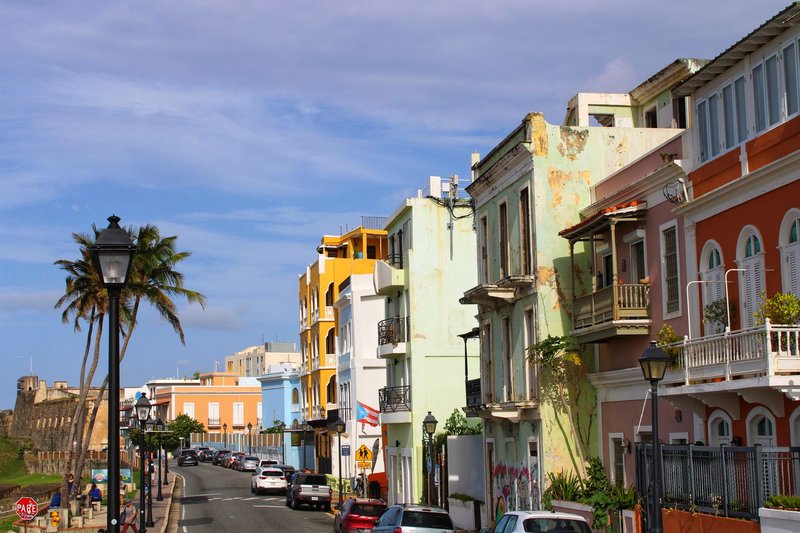
Coro, in the arid northwest, was founded in 1527 and served as the first capital of the Spanish province of Venezuela. Its old center still has more than 600 historic buildings, and what makes them unusual is the material. Walls are built of mud, using techniques like bahareque and tapial, then combined with Spanish Mudejar details and Dutch-influenced forms brought in from nearby Curaçao. UNESCO listed it under criteria (iv) and (v): a blend of local, Spanish and Dutch building traditions, and a standing example of earth construction.
The standouts are easy to find on foot. The cathedral, begun in the 16th century, is among the oldest in the country. The Casa de las Ventanas de Hierro (House of the Iron Windows) is a colonial mansion that now houses an art museum. The Jewish cemetery, dating to 1832, is one of the oldest in South America. A short drive away is the port of La Vela de Coro, where Francisco de Miranda landed in 1806 and raised what became Venezuela’s tricolor flag.
Earth walls and heavy rain don’t mix, and that’s the problem. Floods in 2004 damaged a large share of the historic fabric, and UNESCO moved the site onto the List of World Heritage in Danger in 2005. It’s still there. Abandoned buildings, weak maintenance funding and unchecked alterations keep the threat alive, so expect to see some streets in rough shape.
The dunes are the best add-on. The Médanos de Coro national park sits on the edge of town, a strip of shifting sand where you can walk out among the ridges. Go early; midday heat on the Falcón coast is brutal.
Canaima National Park (1994)
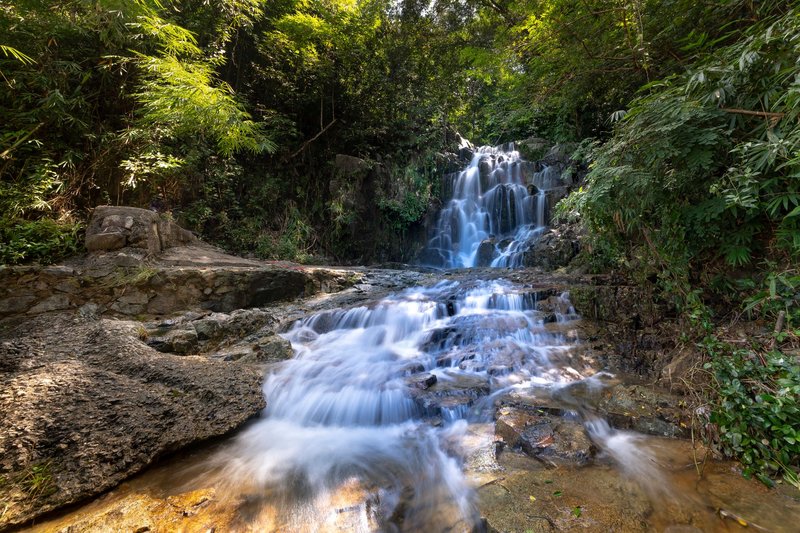
Canaima is the big one, in every sense. The park covers about 3 million hectares in the southeast, roughly the size of Belgium, and UNESCO inscribed it under all four natural criteria: superlative natural phenomena, earth history, ecological processes and biodiversity. That’s rare. Most natural sites qualify under two or three.
The draw is the tepuis, flat-topped sandstone mountains with sheer cliffs that rise from the savanna. They’re remnants of a plateau that’s more than a billion years old, and their summits have evolved their own plants and animals, many found nowhere else. Mount Roraima, at 2,810 meters, is the best known and sits where Venezuela, Brazil and Guyana meet.
Then there’s Angel Falls. Its total height is 979 meters, with an uninterrupted drop of 807 meters, which makes it the tallest waterfall on Earth. The Pemón people call it Kerepakupai Merú. The name in English comes from Jimmie Angel, the American pilot who flew over it in 1933 and later landed a plane on Auyán-tepui. In the dry season the falls thin out to a ribbon that can vanish into mist before it reaches the ground, so timing matters (more on that below).
Canaima is also Pemón land. The Pemón have lived in the Gran Sabana for centuries, and much of the tourism, from river boats to guided treks, runs through their communities. Booking with Pemón guides puts money where it should go.
The park isn’t unthreatened. Illegal gold mining along the Caroní basin and the edges of the park has become a documented problem, with mercury contamination and deforestation. Don’t expect it to be visible from the falls, but it’s part of the picture.
Ciudad Universitaria de Caracas (2000)
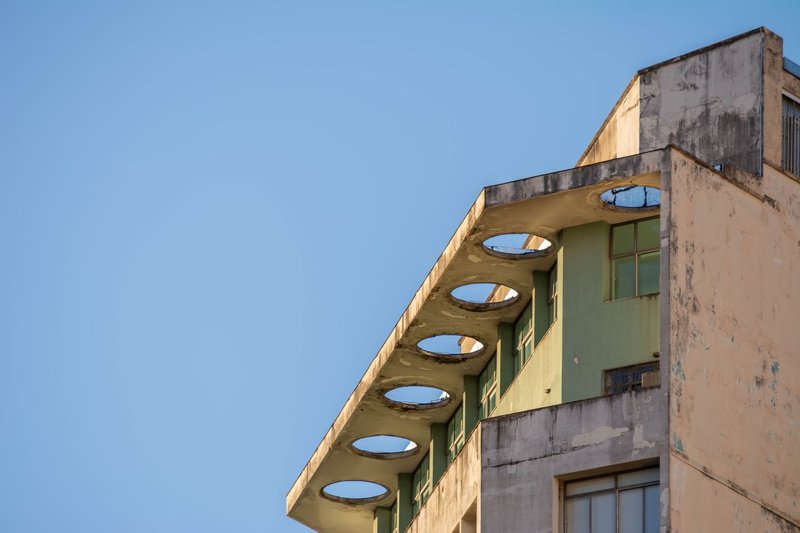
The Caracas campus of the Central University of Venezuela is the odd one out on this list. There’s no colonial history and no wilderness. It’s a 20th century university built as a single design, mostly between the 1940s and the 1960s by architect Carlos Raúl Villanueva. UNESCO inscribed it under criteria (i) and (iv), calling it a masterpiece of creative genius and an outstanding example of Latin American modernism.
Villanueva’s idea was what he called the “synthesis of the arts”: architecture, sculpture, painting and landscape designed to work together. The campus is full of proof. The covered walkways link the buildings and shade you from the tropical sun. The Aula Magna auditorium has Alexander Calder’s “Clouds,” a set of colorful panels hanging from the ceiling that double as acoustic reflectors. Fernand Léger’s mosaic mural decorates the library. Works by Jean Arp, Victor Vasarely and other European and Venezuelan artists sit scattered along the paths.
It’s also a working university with tens of thousands of students, not a museum. Funding shortages have taken a toll on maintenance in recent years, and some buildings show it. But the campus is easier to visit than the other two sites: it’s in the capital, it’s free to walk around, and a half day covers the highlights.
Venezuela’s tentative list
A site can’t be inscribed without first appearing on a country’s tentative list. Venezuela’s list includes candidates such as Hacienda Chuao, the port of La Guaira and the historic center of Ciudad Bolívar.
Hacienda Chuao is a cacao estate and village in the coastal mountains of Aragua, reachable by boat or a long drive from the Choroní area, and it has produced some of the country’s most prized cacao for centuries. La Guaira is Caracas’s main port, with a line of Spanish colonial fortifications. Ciudad Bolívar, on the Orinoco, is where the 1819 Congress of Angostura took place, and it’s also the traditional jumping-off point for flights into Canaima.
Being on the tentative list is a first step and nothing more. None of these has been formally nominated, and no timeline has been announced.
Visiting: what to know first
Safety comes first. Several governments, including the US, have advised against or restricted travel to Venezuela in recent years, and conditions vary by region. Check the latest US State Department advisory or your own government’s before you plan anything, and consider a local operator for any trip outside Caracas.
A few practical points:
- Canaima: Most visitors fly in from Ciudad Bolívar or Puerto Ordaz to the Canaima camp, then take a motorized canoe up the Carrao and Churún rivers to see Angel Falls. The rainy season, roughly June through November, gives the river enough depth for the boat trip and the falls their full flow. For Roraima, the trek takes five to six days and starts from the Pemón community of Paraitepui, reached via the Gran Sabana road.
- Coro: Reached by road from Caracas or Maracaibo, or by domestic flight. The historic center is walkable. Go in the cooler morning hours.
- Caracas: The campus is open to walkers during the day. Ask locally about which areas are safe at the moment, and avoid walking around at night.
Three sites in a country this size is a small number, and it reflects more than size. Between a mud-built colonial city, the world’s tallest waterfall and a modernist campus, it covers a lot of range.


