Most “things to do in Micronesia” lists hand you the same five attractions and call it a day: Nan Madol, the Truk Lagoon wrecks, some stone money, done. Fair enough — those are the heavyweights. But the Federated States of Micronesia spreads across four states and roughly 600 islands, and the history stacks up in layers most roundups skip: a basalt city older than the Aztec capital, a sunken Japanese fleet still leaking oil, German bell towers, Spanish walls, and petroglyphs nobody has fully explained.
This is the longer list. Fifteen sites, sorted by state, with the era, what you’re actually looking at, and the part the brochures leave out — whether you can just show up or need someone’s permission first.
Table of Contents
- Quick reference table
- Pohnpei
- Chuuk (Truk)
- Yap
- Kosrae
- How to plan a historical trip through Micronesia
- FAQ
Quick reference table {#quick-reference-table}
| Site | State | Era | Type |
|---|---|---|---|
| Nan Madol | Pohnpei | c. 1200–1600 CE | Megalithic ruins |
| Pohnpaid Petroglyphs | Pohnpei | Pre-contact | Rock art |
| Sokehs Rock & rebellion sites | Pohnpei | 1910–1911 | Colonial conflict |
| German Bell Tower | Pohnpei | c. 1900s | Colonial building |
| Spanish Wall (Fort Alphonso XIII) | Pohnpei | 1899 | Colonial fort |
| Truk Lagoon Ghost Fleet | Chuuk | 1944 | WWII wrecks |
| Tonoas (Dublon) fortifications | Chuuk | 1939–1945 | WWII relics |
| Japanese Lighthouse, Tonoas | Chuuk | WWII | WWII relic |
| Yap stone money banks | Yap | Pre-contact–1900s | Cultural monument |
| Traditional men’s houses (faluw) | Yap | Ongoing tradition | Cultural architecture |
| German-Spanish era Colonia sites | Yap | 1885–1914 | Colonial remains |
| Lelu Ruins | Kosrae | c. 1250–1850 | Megalithic city |
| Menke Ruins | Kosrae | Pre-contact | Sacred site |
| Japanese WWII relics, Kosrae | Kosrae | 1941–1945 | WWII fortifications |
| Sapwtakai | Pohnpei | Pre-contact | Hilltop fortress |
Pohnpei {#pohnpei}
Pohnpei is the political capital of the FSM and, conveniently, home to its single most important archaeological site. It also carries the heaviest colonial fingerprint — Spanish, German, and Japanese administrators all ran the island in turn, and each left something behind.
1. Nan Madol
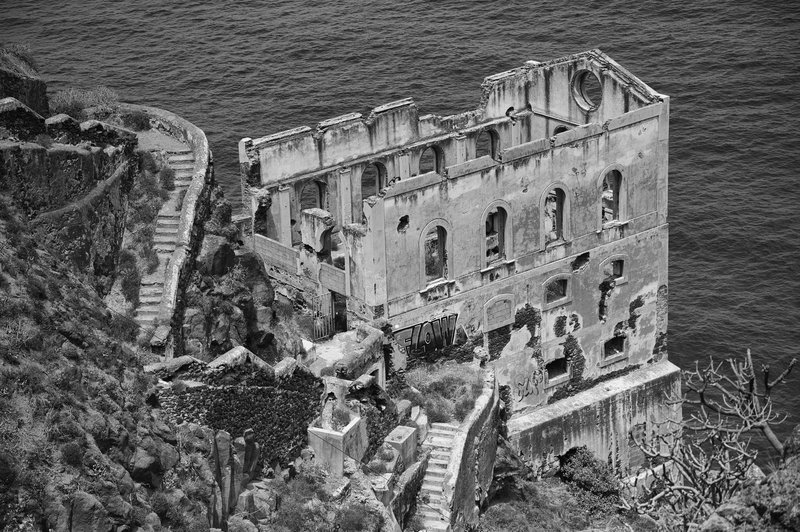
The headline act, and it earns it. Nan Madol is a city of about 90 artificial islets built on a coral reef off Pohnpei’s southeast coast, threaded by canals — which is why people keep calling it the “Venice of the Pacific.” The construction is the part that stops you: stacked columns of basalt, some weighing several tons, hauled from quarries across the island and laid in crisscrossed log-cabin courses. No mortar. No wheels. No draft animals.
It was the ceremonial and political seat of the Saudeleur dynasty, which ruled Pohnpei from roughly 1100 to 1628 CE. The most imposing structure, Nandauwas, has outer walls reaching around 25 feet. UNESCO inscribed it as a World Heritage Site in 2016, and simultaneously placed it on the list of World Heritage in Danger because the mangroves and tides are slowly winning.
How to visit: It sits on private land belonging to Madolenihmw chiefs. You’ll pay an access fee (typically a modest sum in cash) and most visitors go with a local guide who arranges the permission. Time it with the tide — at low water you can walk and wade; higher tides mean a boat or kayak. Bring shoes you don’t mind soaking.
2. Pohnpaid Petroglyphs
Inland and far less visited, Pohnpaid is a cluster of basalt boulders carved with hundreds of petroglyphs — geometric shapes, footprints, and figures that predate the Saudeleur era. Archaeologists haven’t tied them to a single clear meaning, which is exactly why they’re interesting: this is raw, unpolished prehistory, not a curated monument.
How to visit: It’s on private land near Madolenihmw. You need local permission and realistically a guide who knows the path, because there’s no signage and the site isn’t set up for tourism.
3. Sokehs Rock and the Sokehs Rebellion sites
Sokehs Rock is the dramatic basalt headland looming over Kolonia harbor — the closest thing Pohnpei has to a postcard skyline. The history underneath it is darker. In 1910–1911, Pohnpeians on Sokehs rose against German colonial labor demands. The Germans crushed the Sokehs Rebellion, executed the leaders, and exiled survivors to Palau. Hiking trails climb the rock, and you can still find German-era gun positions and graves in the area.
How to visit: The hike up Sokehs Rock is open and popular; it’s steep and gets slippery after rain. A guide helps you find the rebellion-related relics, which aren’t marked.
4. German Bell Tower
In Kolonia, a stone bell tower is nearly all that survives of a Catholic church the Spanish built and the Germans later used, the rest flattened by WWII bombing. It’s a quiet, five-minute stop, but it’s the most legible piece of European architecture left standing in town and a useful anchor for understanding the Spanish-then-German handover of 1899.
How to visit: Public, in central Kolonia, free. Easy to combine with the Spanish Wall.
5. Spanish Wall (Fort Alphonso XIII)
Also in Kolonia, the Spanish Wall is the surviving rampart of Fort Alphonso XIII, built in 1899 in the final months of Spanish rule before Spain sold the Carolines to Germany. It later served German and Japanese administrations in turn — a single wall that watched three colonial flags come and go.
How to visit: Public and free, a short walk from the bell tower.
6. Sapwtakai
Less famous than Nan Madol but worth knowing about: Sapwtakai is a hilltop site in the Kitti area with stone walls, terraces, and what’s interpreted as a fortified residential and ceremonial complex. It offers a counterpoint to Nan Madol — inland and defensive rather than coastal and ceremonial.
How to visit: Remote and overgrown; this is a guide-and-permission site, not a drive-up.
Chuuk (Truk) {#chuuk-truk}
Chuuk is one giant lagoon ringed by islands, and its history is almost entirely written underwater. In WWII the Japanese turned it into their main forward naval base in the Central Pacific — the “Gibraltar of the Pacific.” Then came Operation Hailstone.
7. Truk Lagoon Ghost Fleet
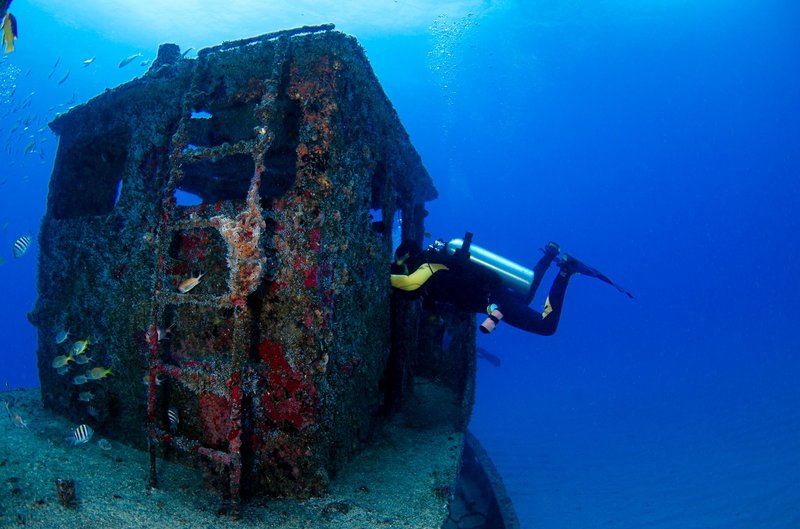
Over two days in February 1944, American carrier aircraft sank the bulk of the Japanese fleet anchored here — more than 40 ships and 250-plus aircraft. They never moved them. The result is the densest concentration of WWII wrecks on Earth, and the reason serious divers put Chuuk on a bucket list they rarely get to cross off. The Pacific War scarred island after island across the region — the historical sites of the Marshall Islands carry their own battlegrounds and bunkers — but nowhere else concentrated the wreckage like this.
The wrecks are time capsules. The Fujikawa Maru still holds fighter aircraft fuselages in its hold. The San Francisco Maru — the “Million Dollar Wreck,” deep at around 50–60 meters — sits with tanks and trucks still lashed to its decks. Coral has claimed the hulls, sea fans the gun barrels. Jacques Cousteau’s 1969 documentary turned the lagoon into a diving legend, and it has stayed one.
How to visit: You dive it, full stop, with a licensed operator out of Weno. Many wrecks sit deep enough to demand advanced or technical certification. The site is a war grave — Japanese remains are still inside some hulls — so removing artifacts is prohibited and treated seriously.
8. Tonoas (Dublon) fortifications
Tonoas, called Dublon under the Japanese, was the administrative heart of the base. On land you’ll find gun emplacements, bunkers, a hospital ruin, and overgrown roads — the above-water half of the story the wrecks tell below.
How to visit: Reached by boat from Weno; arrange a local guide. Sites are unmarked and on community land, so go with someone who can ask the right people.
9. Japanese Lighthouse, Tonoas
A standing Japanese-built lighthouse on Tonoas is one of the better-preserved land structures from the base era, with views back across the lagoon. It’s a short, sweaty hike up.
How to visit: Boat plus guide, usually bundled with a Tonoas land tour.
Yap {#yap}
Yap is the keeper of tradition in the FSM — the place where the old culture is least diluted. Its most famous “monuments” aren’t ruins at all. They’re money.
10. Yap stone money banks
Rai are giant limestone discs with a hole in the center, some over 12 feet across and weighing several tons, quarried in Palau — an archipelago with its own layered languages and colonial past — and ferried home by canoe across open ocean, a journey dangerous enough that the risk became part of each stone’s value. A rai’s worth depends on its size, age, craftsmanship, and the story of how it was acquired, including whoever died getting it.
The genius of the system: the stones rarely move. Ownership transfers by spoken agreement, while the disc stays put in a village “stone money bank” — a lineup of rai along a village path. Economists still cite Yap as a real-world model for how money is really just a shared ledger of who owns what. Villages like Balabat near Colonia have accessible banks.
How to visit: Stone money banks sit within villages, so this is etiquette territory. Yap has a strong custom that you ask permission before entering village land or photographing — many visitors carry a small gift of tobacco or betel nut as a customary courtesy. A guide smooths all of this.
11. Traditional men’s houses (faluw and pebay)
Yap’s villages still maintain traditional meeting houses — the faluw (men’s house, often near the shore) and pebay (community house) — built with steep thatched roofs and elaborate joinery, no nails. These aren’t reconstructions for tourists; they’re living community structures, which is exactly why access is governed by custom.
How to visit: Permission-only, with a guide. Some faluw are off-limits to women by tradition. Ask first, always.
12. German-Spanish era Colonia sites
Colonia, Yap’s main town, holds scattered remnants of the Spanish (post-1885) and German (post-1899) administrations, plus Japanese-era foundations — less dramatic than Pohnpei’s, but they fill in Yap’s colonial chapter for anyone keeping the timeline straight.
How to visit: Public, around Colonia. Easy to fold into a day in town.
Kosrae {#kosrae}
The “Sleeping Lady” island is the greenest and quietest of the four states, and home to a ruined royal city that deserves far more attention than it gets.
13. Lelu Ruins
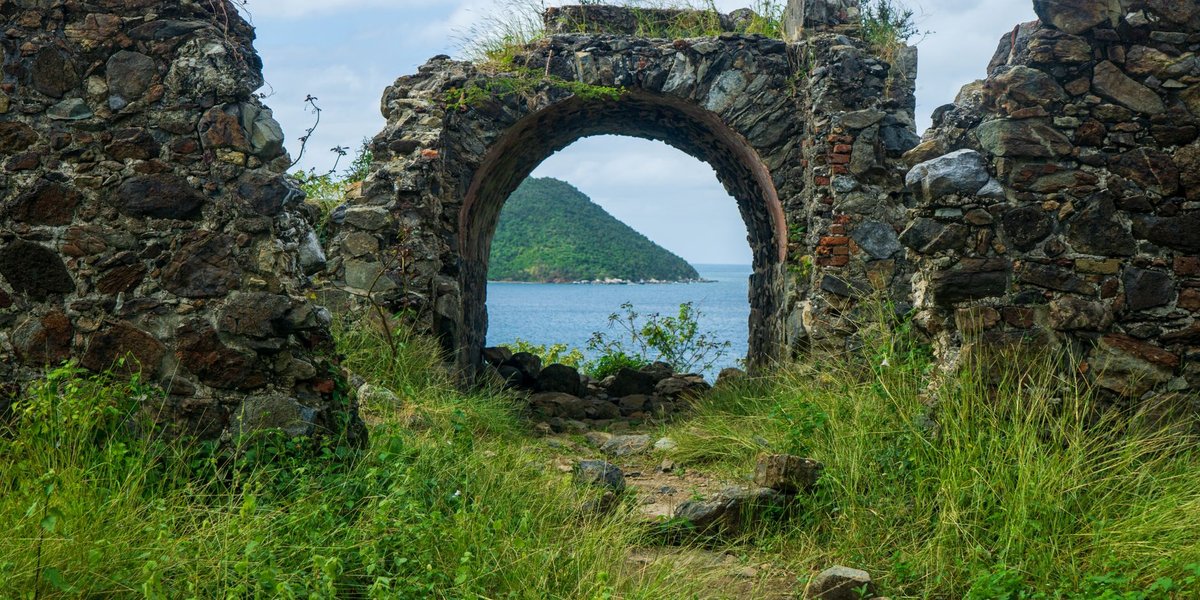
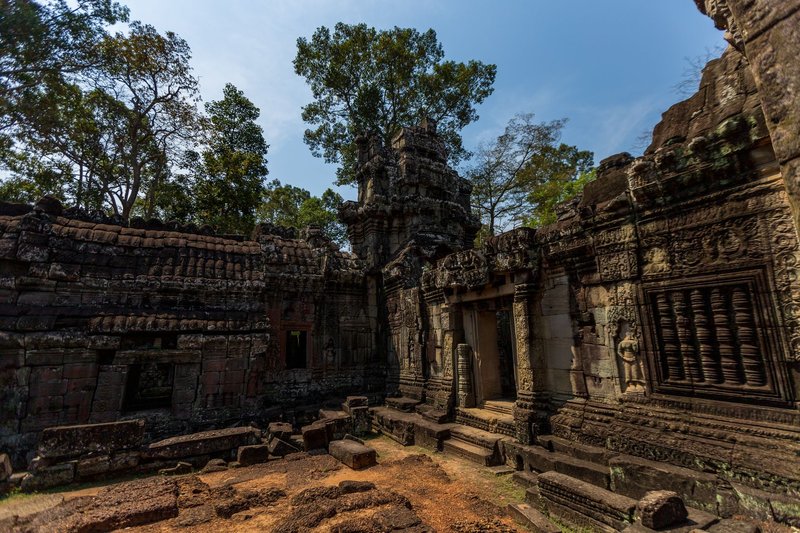
Lelu was the walled royal city of the Kosraean kingdom, occupied from roughly the 13th century and at its height home to the high chiefs and nobility — the kind of island monarchy whose monuments still anchor other Pacific histories, like Tonga’s. Like Nan Madol, it’s built of stacked basalt and coral — high walls, ceremonial compounds, royal tombs, and processional avenues, now wrapped in jungle and threaded through a modern village. The two cities are close cousins in technique, and archaeologists debate which influenced which.
How to visit: Lelu sits inside a living village on Lelu Island, connected by causeway to the main island. It’s more accessible than Nan Madol — you can walk in — but a guide is well worth it, both for the history and because some areas are sensitive. A small fee is customary.
14. Menke Ruins
Up the Finkol River in the Yela area, the Menke Ruins are a sacred site associated with the worship of Sinlaku, a Kosraean goddess, set among one of the last untouched ka (Terminalia) tree forests in the world. Reaching it is a muddy jungle trek, which keeps the casual crowds away.
How to visit: Guided hike only, arranged locally. Wear boots and expect mud; conditions depend on the river.
15. Japanese WWII relics, Kosrae
Kosrae saw less action than Chuuk but was still garrisoned. You’ll find Japanese fortifications, gun positions, and a few aircraft remnants scattered around the island — minor compared to Truk Lagoon, but part of the same Pacific War story.
How to visit: Various locations; ask local guides, as several sites are on private land.
How to plan a historical trip through Micronesia {#how-to-plan}
The single biggest thing the listicles don’t tell you: the four states are far apart, and you reach them by the slow island-hopper flights. United Airlines runs the “Island Hopper” route that connects the FSM states to Guam and Honolulu, and seats are limited, so book early. You won’t do all four states in a long weekend.
If you have to pick:
- For ancient ruins: Pohnpei (Nan Madol) and Kosrae (Lelu) — pair them, they’re a short hop apart and tell a connected story.
- For WWII diving: Chuuk, and only Chuuk. Don’t go for the wrecks unless you dive.
- For living culture: Yap, where the stone money and traditional villages are the draw.
And the recurring theme across all four states: permission. Most of these sites sit on private or community land, and the custom of asking — and often paying a small access fee — is real and expected. Going with a local guide isn’t an upsell here. It’s how you get in at all, and it’s how the money reaches the families who keep these places standing.
FAQ {#faq}
What is the most famous historical site in Micronesia? Nan Madol on Pohnpei — a UNESCO World Heritage Site and a megalithic city of around 90 basalt islets built on a reef, the former seat of the Saudeleur dynasty.
Can you actually visit Nan Madol? Yes, but it’s on private land. You pay a small access fee to the local chiefs and almost always go with a guide. Plan around the tide — low tide lets you walk and wade; high tide needs a boat or kayak.
Do you have to dive to see Truk Lagoon? Effectively, yes. The famous “Ghost Fleet” of WWII wrecks lies underwater, and many wrecks are deep enough to require advanced or technical certification. There are land-based Japanese relics on islands like Tonoas if you can’t dive.
Why is Yap stone money historically important? The rai discs are one of the world’s clearest examples of money as a social ledger: ownership of a multi-ton stone transfers by agreement while the stone itself never moves. Economists still use Yap as a teaching case.
Is Lelu Ruins similar to Nan Madol? Very. Both are basalt-and-coral megalithic cities built by Pacific island kingdoms in roughly the same centuries, and scholars debate the connection between them. Lelu on Kosrae is generally easier to walk into than Nan Madol.
Do I need permission to visit historical sites in the FSM? Often, yes. Many sites — Nan Madol, the Pohnpaid petroglyphs, Yap’s villages, Menke on Kosrae — are on private or community land. Asking permission and paying a customary fee is standard, and a local guide handles it for you.