TLDR
- Erupting most often: Etna (Sicily), Stromboli (Aeolian Islands) and the volcanic systems of Iceland, especially the Reykjanes Peninsula.
- Restless but quiet: Campi Flegrei and Vesuvius near Naples, Santorini and its submarine neighbors in Greece.
- Active in the last few years: La Palma in the Canary Islands (2021) and Reykjanes in Iceland (2021 onward).
- Visitable: Etna, Stromboli, Vesuvius, Teide and Santorini all have guided or regulated access. Iceland’s eruption sites open and close with the hazard.
- Status changes by the week. Check the monitoring agencies linked below before you book anything.
Table of Contents
- What “active” actually means
- Does Europe count Iceland and the Caucasus?
- Italy: the busiest volcanic country on the continent
- Iceland: a volcano system on a plate boundary
- Greece: Santorini and the Aegean arc
- Portugal, Spain and the Atlantic islands
- Romania and Norway: the outliers
- Quick reference table
- Can you visit active volcanoes in Europe safely?
- Summary
What “active” actually means
Volcanologists use three labels, and they don’t match how most people use them.
An active volcano has erupted within the Holocene, roughly the last 10,000 years, or shows ongoing unrest such as gas emissions, ground swelling or earthquake swarms. A dormant volcano is active by that definition but hasn’t erupted in a long time. An extinct volcano is one with no magma supply left and no expectation of erupting again.
The catch: dormant and extinct are judgment calls. Vesuvius was treated as quiet for centuries before it buried Pompeii in 79 CE. That’s why the Smithsonian Global Volcanism Program tracks Holocene eruptions rather than guessing which volcanoes are finished. By that yardstick, Europe has several dozen active volcanoes, and the exact number depends on where you draw the border.
Does Europe count Iceland and the Caucasus?
Iceland does, by convention. It’s a European country, even though it sits on the Mid-Atlantic Ridge between two tectonic plates. Most lists, including this one, include it, and it hosts the most eruptions on the continent.
The Caucasus is murkier. Mount Elbrus, usually called Europe’s highest peak at 5,642 m, is a dormant volcano, and its last eruption is dated to roughly 2,000 years ago. Whether Elbrus is “in Europe” depends on which Caucasus boundary you accept, so we leave it out of the active entries below. The same applies to Turkey’s volcanoes, which are mostly in Asia.
Overseas territories count separately. The Canary Islands belong to Spain but sit off the African coast, and the Azores belong to Portugal in the middle of the Atlantic. Both are included here because travelers and search results treat them as European.
Italy: the busiest volcanic country on the continent
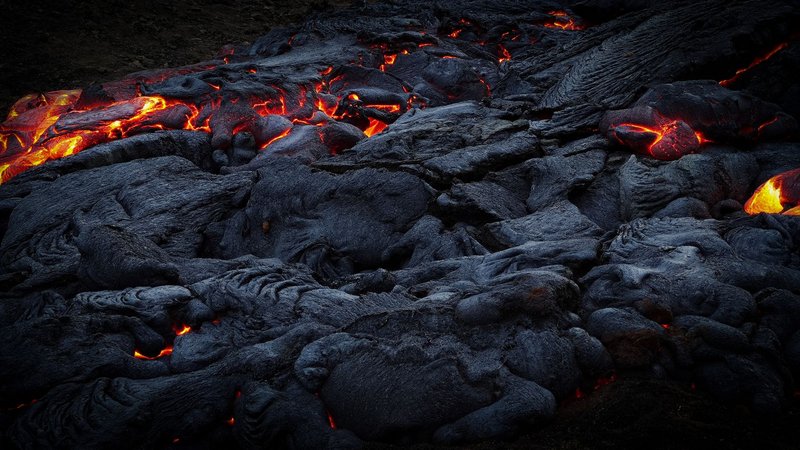
Italy has more recently active volcanoes than any other European country on the mainland side of the Atlantic, and they’re monitored by the Istituto Nazionale di Geofisica e Vulcanologia (INGV).
Etna (Sicily). At about 3,350 m, it’s Europe’s tallest active volcano and its most consistently active one. Etna has summit-crater activity, lava fountains and flank eruptions in most years, and ash regularly forces Catania airport to close for hours. It’s the answer to “most active volcano in Europe” for anyone who counts eruption frequency and volume.
Stromboli (Aeolian Islands). It rises 924 m above the sea and has erupted in small bursts every 10 to 20 minutes or so for roughly two millennia, which is why sailors called it the lighthouse of the Mediterranean. Most of the time the eruptions are mild. In 2019 a paroxysm killed a hiker and set fire to the island’s vegetation, which is the reason access rules tightened afterward.
Vesuvius (Campania). At 1,281 m, it last erupted in March 1944. It’s considered quiet but dangerous, because about 600,000 people live in the official red zone around it. Evacuation plans exist and are rehearsed.
Campi Flegrei (west of Naples). This is a caldera, not a single cone, and it’s the one volcanologists have been watching most closely. The ground there has been rising for years in a process called bradyseism, with earthquake swarms increasing, including magnitude 4.6 events in 2025. There’s no eruption, but it’s the most-discussed unrest in Europe.
Vulcano. The island’s last eruption ended in 1890, and today it vents sulfurous fumaroles, which you can smell from the ferry. The crater walk takes about an hour.
Iceland: a volcano system on a plate boundary
Iceland has roughly 30 active volcanic systems and averages an eruption every few years. The Icelandic Met Office publishes eruption status, hazard maps and gas forecasts.
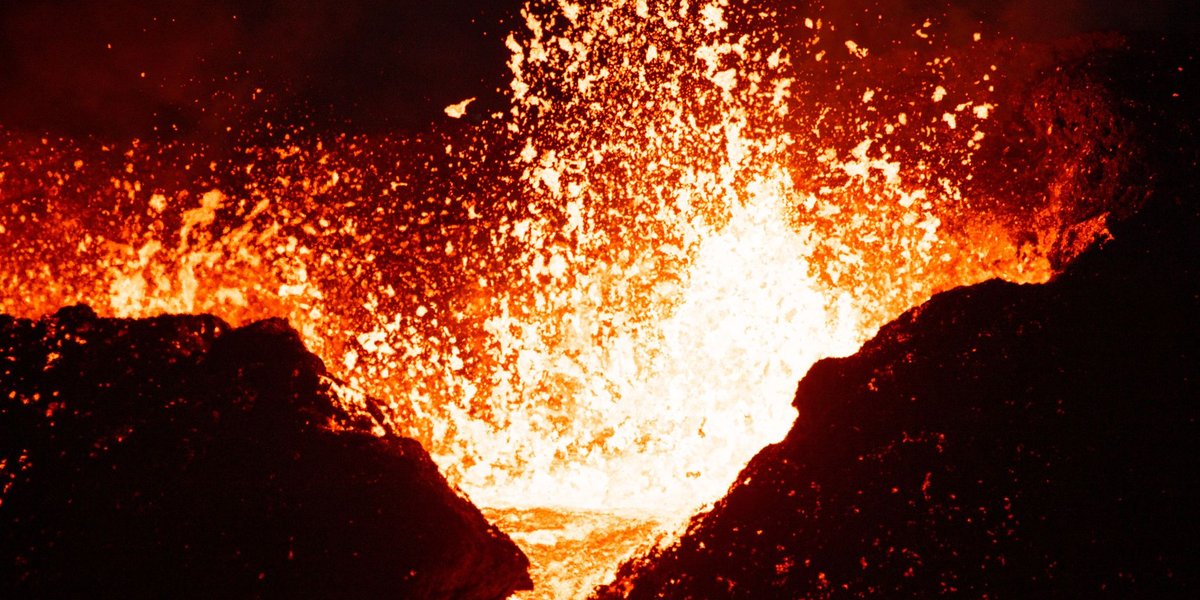
Reykjanes Peninsula. After roughly 800 years of quiet, eruptions resumed in 2021 and have repeated since 2023 along the Sundhnúkur crater row near Grindavík, a fishing town that was evacuated and partly damaged. These are fissure eruptions: lava flows rather than explosions, close to the Blue Lagoon and the main airport road.
Hekla. At 1,491 m, it has erupted about every 10 years in the twentieth century, last in 2000. Seismologists note it now gives little warning, so it is a candidate for the next big surprise.
Katla. It sits under the Mýrdalsjökull glacier and last erupted in 1918. A Katla eruption would melt ice and trigger floods and ash. It’s overdue by historical frequency, though volcanoes don’t keep schedules.
Grímsvötn and Bárðarbunga. Grímsvötn is Iceland’s most frequently erupting volcano, last active in 2011. Bárðarbunga produced the Holuhraun lava field in 2014 and 2015, the biggest Icelandic eruption in over 200 years.
Eyjafjallajökull. The 2010 eruption of this small volcano shut down European airspace for days and made its name unpronounceable and famous at the same time. It’s the case study for flight disruption risk.
Greece: Santorini and the Aegean arc
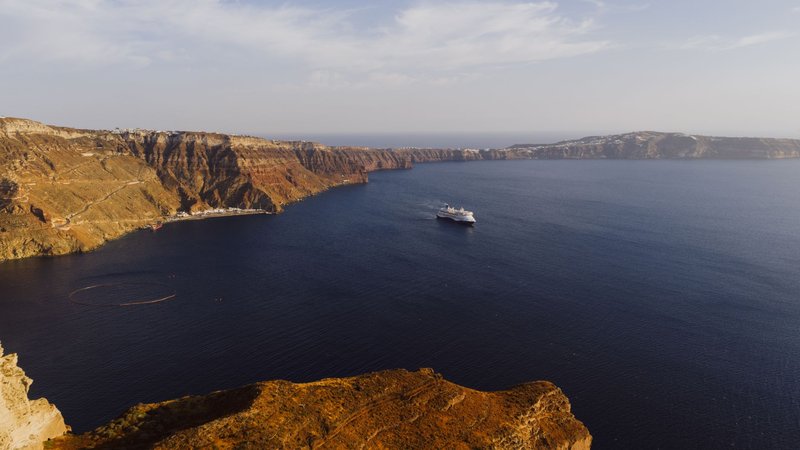
Greece’s volcanoes form the South Aegean arc, where the African plate sinks under Europe. The country is home to some of the Mediterranean’s most active volcanoes.
Santorini. Yes, it’s active. The island is the rim of a caldera left by the Minoan eruption, roughly 3,600 years ago, one of the biggest of the last 10,000 years. The central islands, Nea Kameni and Palea Kameni, grew from later eruptions, the most recent in 1950. In early 2025, thousands of earthquakes struck between Santorini and Amorgos, and many residents left temporarily. Scientists tied the swarm to magma movement at depth, not an imminent eruption. Boats to Nea Kameni’s crater run most of the year.
Nisyros. A small island in the Dodecanese with a walkable caldera floor, fumaroles and a history of steam explosions. It’s the cheapest way to stand inside a Greek volcano.
Methana and Milos. Methana, in the Peloponnese, last erupted around 230 BCE, and Milos has hot springs and geothermal activity. Both are classed as potentially active.
Portugal, Spain and the Atlantic islands
The Azores. Nine islands sit on a triple junction of tectonic plates. Faial’s Capelinhos eruption in 1957 and 1958 added new land to the island and pushed thousands of residents to emigrate to the US. Terceira had a submarine eruption off its coast between 1998 and 2001. Sete Cidades on São Miguel and Fogo, also on São Miguel, are caldera volcanoes with lakes in their craters.
Canary Islands. The Cumbre Vieja eruption on La Palma ran for 85 days from 19 September to 13 December 2021, destroyed about 3,000 buildings, and displaced thousands of people. It was the island’s longest recorded eruption. Teide on Tenerife, at 3,715 m, is Spain’s tallest mountain. Its last flank eruption, at Chinyero, was in 1909. Teide has seismic and gas monitoring, and it’s classed as active.
Romania and Norway: the outliers
Ciomadul (Romania). It’s the youngest volcano in the Carpathians and the only one in mainland Eastern Europe with a plausible case for being active. Its last eruption was about 30,000 years ago, well outside the Holocene, but gases still vent from the crater area, and research suggests magma remains at depth. Official lists tend to call it dormant or potentially active. It holds Lake Sfânta Ana, in a crater, and you can hike to it.
Beerenberg (Jan Mayen, Norway). At 2,277 m, it’s the northernmost active volcano on Earth above sea level, with its last eruption in 1985. Jan Mayen has no permanent population beyond a small Norwegian military and weather station, so visiting is a logistics puzzle few people attempt.
Quick reference table
| Volcano | Country | Elevation | Last eruption | Status | Monitoring |
|---|---|---|---|---|---|
| Etna | Italy | ~3,350 m | Ongoing activity | Frequently erupting | INGV |
| Stromboli | Italy | 924 m | Ongoing activity | Continuous mild activity | INGV |
| Vesuvius | Italy | 1,281 m | 1944 | Quiet | INGV |
| Campi Flegrei | Italy | Caldera | 1538 | Unrest (ground uplift) | INGV |
| Reykjanes | Iceland | Low fissures | Repeated since 2021 | Eruptive episodes | Icelandic Met Office |
| Hekla | Iceland | 1,491 m | 2000 | Quiet, short warning | Icelandic Met Office |
| Katla | Iceland | 1,512 m | 1918 | Quiet, monitored | Icelandic Met Office |
| Santorini | Greece | Caldera | 1950 | Periodic unrest | Greek institutions |
| La Palma (Cumbre Vieja) | Spain | ~1,950 m | 2021 | Quiet since 2021 | IGN (Spain) |
| Teide | Spain | 3,715 m | 1909 (Chinyero) | Restless, monitored | IGN / INVOLCAN |
| Beerenberg | Norway | 2,277 m | 1985 | Quiet | Norwegian authorities |
Status labels reflect the situation at the time of writing. Eruption states shift, so confirm with the agency before relying on them.
Can you visit active volcanoes in Europe safely?
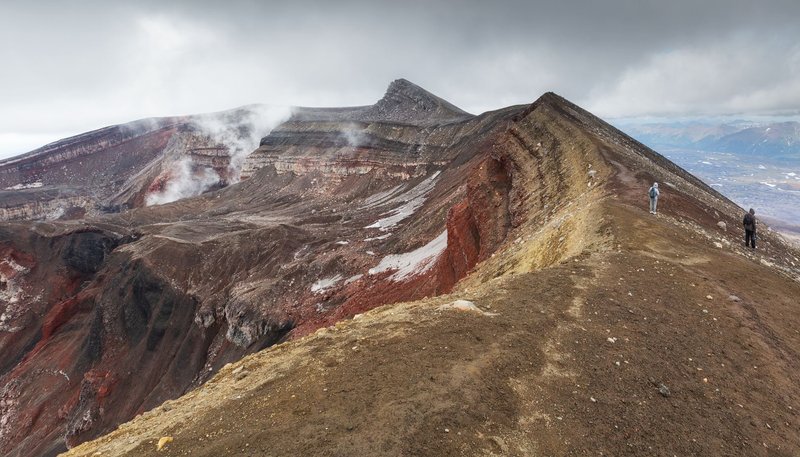
Mostly yes, with rules. Here’s what the access actually looks like.
Etna. You can ride the cable car and 4×4 buses up to roughly 2,900 m and walk the old craters on your own. Beyond that, you need a certified guide, and the authorities often close the summit zone during activity.
Stromboli. After the 2019 accident, hiking above 290 m needs a licensed guide, and the top viewpoint is closed or restricted depending on activity. The usual plan is a sunset climb, watching the explosions at dusk, and descending by headlamp.
Vesuvius. The crater rim is an easy walk from a car park near the top, and tickets are booked online in advance. It’s the lowest-effort active volcano on the list.
Iceland. Eruption sites are managed case by case. Police and civil protection teams close trails when gas or lava is a hazard, and the eruption area is often only reachable on foot. Gas is the invisible risk: sulfur dioxide pools in low spots on calm days. Follow Safetravel.is and the Met Office’s gas forecast.
Teide. A cable car goes up to 3,555 m, and a permit is required to reach the summit crater at 3,715 m. Altitude is the main issue.
Flights are the practical risk. Ash from Etna or an Icelandic eruption can close airports for hours or days, so leave slack in your itinerary, and don’t book a same-day connection after a volcano excursion.
Summary
Europe’s active volcanoes cluster in four places: the Italian arc from Naples to Sicily, Iceland’s plate boundary, the Aegean arc in Greece and the Atlantic island chains of the Azores and Canaries. Etna and Stromboli are the standing eruptors, Iceland produces the eruptions that make headlines, Campi Flegrei and Santorini are the places to watch for unrest, and Ciomadul and Beerenberg are the quiet outliers. If you want to see one up close, Etna, Stromboli and Vesuvius are the most accessible, and every option gets safer when you follow the local monitoring agency rather than a travel blog, this one included.