TLDR
- Wales has two official languages: Welsh and English.
- In the 2021 census, 17.8% of people aged three and over (538,300) said they could speak Welsh.
- Nearly everyone in Wales speaks English. You can travel the whole country without Welsh.
- Welsh is strongest in the north and west, especially Gwynedd, Anglesey and Carmarthenshire.
- Polish, Arabic and British Sign Language are the most visible community languages.
Contents
- Is Welsh an official language in Wales?
- How many people speak Welsh?
- Why the census and the survey disagree
- Where Welsh is spoken most
- How English overtook Welsh
- Other languages spoken in Wales
- Languages in Wales for visitors
Is Welsh an official language in Wales?
Yes. Welsh and English are both official, and the Welsh-language status is written into law. The Welsh Language (Wales) Measure 2011 made Welsh an official language of Wales and created the post of Welsh Language Commissioner, who investigates complaints when organisations fail to provide services in Welsh.
In practice this means public bodies must offer Welsh-language services, official documents are published in both languages, and every child in Wales studies Welsh at school. The Welsh Government’s stated goal, Cymraeg 2050, is a million Welsh speakers by mid-century.
How many people speak Welsh?
The 2021 census, run by the Office for National Statistics, recorded 538,300 people aged three and over who could speak Welsh. That’s 17.8% of the population, down from 19% in 2011.
| Measure | Figure |
|---|---|
| Census 2021, can speak Welsh (age 3+) | 17.8% (538,300 people) |
| Annual Population Survey, can speak Welsh | about 29.5% (roughly 892,000 people) |
| Official languages | Welsh and English |
The second row is the one most pages skip, and it’s the reason you’ll see wildly different answers online.
Why the census and the survey disagree
The census asks every household and counts what people report on the form. The Annual Population Survey samples a smaller group and asks about Welsh ability in more detail, including people who say they speak it a little or understand it but wouldn’t tick “can speak” on a census form.
Neither number is wrong. They measure different things. The census figure is the conservative one, the survey figure includes people with partial fluency, and the gap between them is roughly 350,000 people who sit somewhere between “a few phrases” and “fluent”. If you need one number to quote, use the census and name the year.
Where Welsh is spoken most
Welsh is a regional strength, not an even spread. Gwynedd, in the north-west, is the heartland, with roughly two in three residents speaking Welsh. Anglesey (Ynys Môn) and Ceredigion follow, with around half or more of residents. Carmarthenshire in the south-west is the largest Welsh-speaking area outside the north and west by raw numbers.
Head east and south and the picture changes. In Cardiff, Newport and the former mining valleys, Welsh speakers are a minority, though Welsh-medium schools in the cities are growing. In a Gwynedd village pub you’ll hear Welsh as the default language. In a Cardiff pub you’ll hear it as a pleasant surprise.
How English overtook Welsh
For most of Welsh history, Welsh was simply the language of the country. English became the majority language around 1911, driven by industrialisation, the migration of workers into the south Wales coalfield, and an education system that for decades punished children for speaking Welsh in class. Welsh is one of several indigenous languages of the UK, and The Indigenous Languages of the UK, Beyond English looks at the others.
The decline continued through the 20th century. The 1967 Welsh Language Act, the founding of the Welsh-language TV channel S4C in 1982, and the growth of Welsh-medium schools slowed it. The 2011 Measure then gave the language its current legal footing.
Other languages spoken in Wales
Beyond Welsh and English, Wales is home to a range of community languages. Polish and Arabic are among the most commonly reported main languages after English and Welsh, reflecting migration over the past two decades. For a comparison with England’s mix of languages, see Languages Spoken in England: A Data-Backed Guide. Romanian, Bengali, Urdu and Chinese languages also appear in the census, concentrated in Cardiff, Newport and Swansea.
British Sign Language is a recognised language in its own right and used by thousands of people in Wales. If you’re deaf or hard of hearing and travelling, note that BSL, not spoken English, is the first language for many Deaf residents.
Languages in Wales for visitors
Do people speak English in Wales? Yes, everywhere. Virtually every Welsh speaker is bilingual, so you won’t be stuck in even the most Welsh-speaking town. Staff in shops, hotels and restaurants will switch to English as soon as you ask.
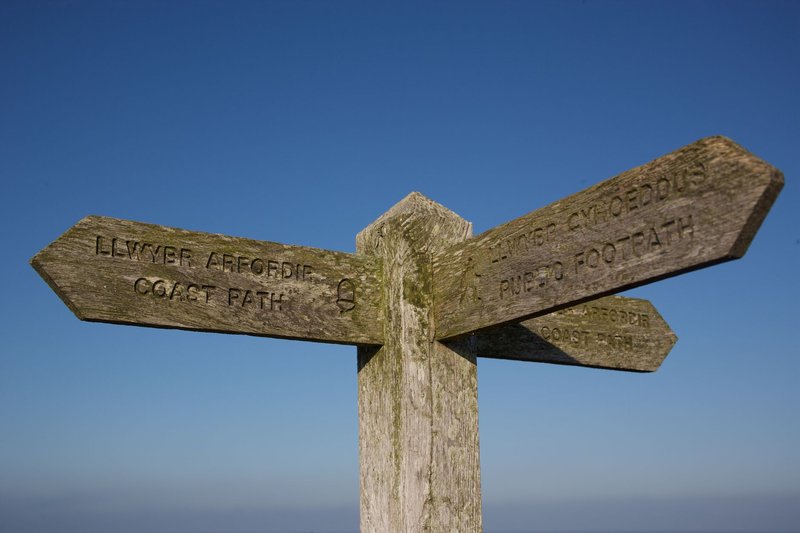
Signs are bilingual. Road signs, train stations and public notices show both languages, and in Wales the Welsh usually appears first or on top. That’s why a town might appear as Abertawe on the sign and Swansea on your map. Both are correct.
A few phrases go a long way. Locals appreciate the effort, even if you mispronounce everything:
- Bore da: good morning
- Prynhawn da: good afternoon
- Diolch: thank you
- Croeso: welcome
- Iechyd da: cheers
- Os gwelwch yn dda: please
Pronunciation is more regular than it looks. The double L (ll) is a breathy sound made by putting your tongue on the roof of your mouth and blowing around it, and w is often a vowel, as in cwm (pronounced “koom”). Learn those two rules and most place names stop being intimidating.
The practical answer is that English will get you through any trip, while Welsh will change how people receive you in the north and west. For anyone researching which languages are spoken in Wales, the full picture is two official languages, one clear regional divide, and a growing mix of newer community languages on top.