
Learn Portuguese, not Kimbundu. Portuguese is Angola’s official language and the one you’ll use with taxi drivers, hotel staff, police and market sellers. English works in Luanda’s international hotels, at oil-industry restaurants and with a few young professionals. Step outside that bubble and you’ll need a few dozen Portuguese phrases.
The good news: you don’t need fluency. Twenty well-chosen phrases, said with a smile, will cover most of a trip.
Contents
- Which language do you actually need?
- How Angolan Portuguese differs from Portugal’s
- Greetings and basic courtesy
- Taxis, candongueiros and directions
- Restaurants and markets
- Money and bargaining in kwanza
- Health and emergencies
- A few Kimbundu courtesies
- Safety and photography etiquette
- Cheat sheet: the 20 phrases to memorize
Which language do you actually need?
Portuguese is the official language and the common tongue between Angolans who grew up speaking different Bantu languages at home. The CIA World Factbook lists Portuguese alongside national languages such as Umbundu, Kimbundu and Kikongo, and the country has dozens of regional languages in total. In Luanda, most people speak Portuguese daily. In the central highlands you’ll hear Umbundu on the street, in Luanda and its hinterland Kimbundu, and in the north Kikongo, but Portuguese still gets you understood.
How Angolan Portuguese differs from Portugal’s
If you’ve studied European Portuguese or watched Brazilian TV, you’ll adjust quickly. Angolan Portuguese sounds closer to Brazilian in its open vowels, and it’s slower and clearer than the fast, swallowed-vowel speech of Lisbon. Locals will understand either accent.
Two habits matter more than accent:
- Use formal address with strangers and elders. Say o senhor (to a man) and a senhora (to a woman) instead of tu. Using tu with an older official or a police officer comes across as rude.
- Greet before you ask. Walking up and opening with “Where is the bank?” skips a step. Say bom dia first, every time.
You’ll also pick up local words quickly. A miúdo is a kid, a kota is an older respected person, and bué means “very” or “a lot”, the same intensifier you’ll hear all over Luanda.
Greetings and basic courtesy
Handshakes are standard on meeting, often followed by a question about how you and your family are doing. Take a moment to answer before moving on. Rushing straight to business reads as cold.
| English | Portuguese | Say it like | When to use it |
|---|---|---|---|
| Good morning | Bom dia | bohm DEE-ah | Until about noon |
| Good afternoon | Boa tarde | BOH-ah TAR-deh | Noon until dusk |
| Good evening / night | Boa noite | BOH-ah NOY-teh | After dark, and for goodbye at night |
| Hello (informal) | Olá | oh-LAH | Shops, young people |
| How are you? | Como está? | KOH-moo esh-TAH | Polite default |
| I’m fine, thanks | Estou bem, obrigado / obrigada | esh-TOH beng, oh-bree-GAH-doo / -dah | Men say obrigado, women say obrigada |
| Please | Por favor | poor fah-VOHR | Everywhere |
| Excuse me / sorry | Desculpe | desh-KOOL-peh | Getting attention or apologizing |
| Yes / No | Sim / Não | seeng / nowng | Nasal endings, don’t pronounce the final n hard |
| Goodbye | Adeus / Até logo | ah-DEH-oosh / ah-TEH LOH-goo | Adeus is final, até logo means “see you later” |
Taxis, candongueiros and directions
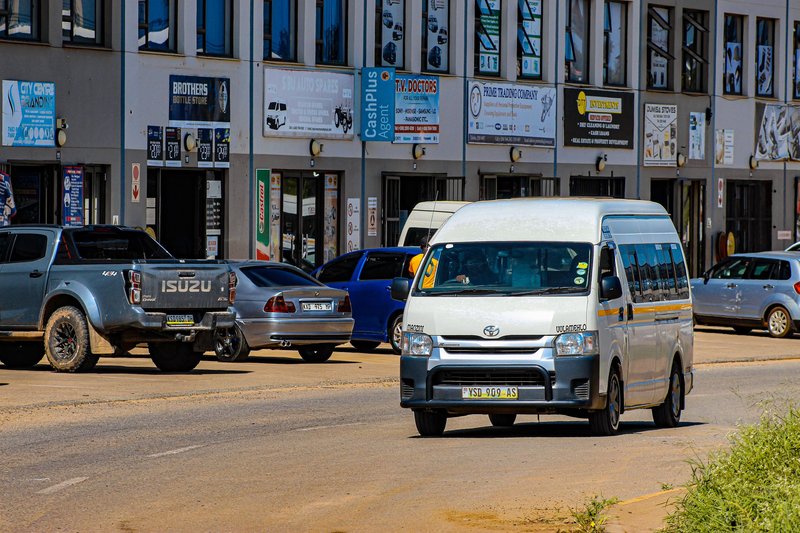
Luanda’s cheapest transport is the candongueiro, a blue-and-white minibus that runs set routes with a conductor hanging out the door shouting destinations. Taxis are separate: private cars you negotiate with directly. Agree the price before you get in, always.
| English | Portuguese | Say it like | Note |
|---|---|---|---|
| Where is…? | Onde fica…? | ONG-deh FEE-kah | Add the place name |
| I want to go to… | Quero ir para… | KEH-roo eer PAH-rah | To a driver |
| How much to…? | Quanto custa até…? | KWAN-too KOOSH-tah ah-TEH | Ask before getting in |
| Too expensive | Está muito caro | esh-TAH MWEE-too KAH-roo | Opening move for negotiation |
| Stop here, please | Pare aqui, por favor | PAH-reh ah-KEE | Taxi or candongueiro |
| Left / right / straight | Esquerda / direita / em frente | esh-KEHR-dah / dee-RAY-tah / eng FREN-teh | Directions |
| Airport | Aeroporto | ah-eh-roh-POR-too | Luanda’s main one is Quatro de Fevereiro |
If the driver quotes a number, counter with Está muito caro and name a lower figure. It’s a normal part of the exchange, not an insult.
Restaurants and markets
Menus at tourist-oriented places in Luanda are in Portuguese, sometimes with English. Local dishes you’ll want to recognize include muamba de galinha (chicken stew with palm oil), calulu (fish or meat stewed with vegetables) and funge (a cassava or maize porridge that accompanies nearly everything).
| English | Portuguese | Say it like |
|---|---|---|
| A table for two, please | Uma mesa para duas pessoas, por favor | OO-mah MEH-zah PAH-rah DOO-ahsh peh-SOH-ahsh |
| The menu, please | A ementa, por favor | ah eh-MEN-tah |
| What do you recommend? | O que recomenda? | oo keh heh-koh-MEN-dah |
| Without meat / fish | Sem carne / sem peixe | seng KAR-neh / seng PAY-sheh |
| Water, please | Água, por favor | AH-gwah |
| The bill, please | A conta, por favor | ah KOHN-tah |
| It was delicious | Estava delicioso | esh-TAH-vah deh-lee-see-OH-zoo |
Market sellers call out prices fast. Say Pode repetir? (poh-deh heh-peh-TEER, “Can you repeat?”) and Mais devagar, por favor (“Slower, please”) without embarrassment. They’d rather repeat it than lose the sale.
Money and bargaining in kwanza
Angola’s currency is the kwanza (AOA). Prices are often quoted in plain numbers without the currency name, so learn your numbers first.
| Number | Portuguese | Say it like |
|---|---|---|
| 1 | um | oong |
| 2 | dois | doysh |
| 3 | três | tresh |
| 4 | quatro | KWAH-troo |
| 5 | cinco | SEEN-koo |
| 10 | dez | desh |
| 20 | vinte | VEEN-teh |
| 100 | cem | seng |
| 1,000 | mil | meel |
Useful money phrases:
- Quanto custa? (KWAN-too KOOSH-tah): How much is it?
- Aceita cartão? (ah-SAY-tah kar-TOWNG): Do you take cards? Outside upscale hotels and big supermarkets, assume the answer is no and carry cash.
- Tem troco? (teng TROH-koo): Do you have change? Useful with a large note at a small stall.
- Pode fazer um desconto? (POH-deh fah-ZEHR oong desh-KOHN-too): Can you give a discount?
- Fica por… (FEE-kah poor): “I’ll take it for…” followed by your offer.
Health and emergencies
Memorize these before you need them. The UK government’s travel advice for Angola covers health risks, including malaria and the need to check yellow fever requirements, so read it before you go.
| English | Portuguese | Say it like |
|---|---|---|
| Help! | Socorro! | soh-KOH-hoo |
| I need a doctor | Preciso de um médico | preh-SEE-zoo deh oong MEH-dee-koo |
| Call the police | Chame a polícia | SHAH-meh ah poh-LEE-see-ah |
| Call an ambulance | Chame uma ambulância | SHAH-meh OO-mah am-boo-LAN-see-ah |
| Where is the hospital? | Onde fica o hospital? | ONG-deh FEE-kah oo osh-pee-TAL |
| I’m allergic to… | Sou alérgico / alérgica a… | soh ah-LEHR-zhee-koo / -kah ah |
| I’m lost | Estou perdido / perdida | esh-TOH pehr-DEE-doo / -dah |
| I don’t understand | Não entendo | nowng en-TEN-doo |
| Do you speak English? | Fala inglês? | FAH-lah eeng-GLESH |
At a police checkpoint, stay calm and polite. Greet the officer, address them as senhor or senhora, and have your passport copy ready. If you don’t understand a question, say Não entendo and hand over documents rather than arguing.
A few Kimbundu courtesies
Kimbundu is spoken around Luanda and in the northwest. Locals won’t expect you to use it, which is exactly why a single word lands well.
- Mbote (mm-BOH-teh): Hello. Works as a greeting to anyone who speaks Kimbundu.
- Ngasakidila (ngah-sah-kee-DEE-lah): Thank you.
Say them with confidence, then switch back to Portuguese. Two words is a gesture, not a conversation, and it’s enough.
Safety and photography etiquette
Ask permission before photographing people, and always before photographing government buildings, police, soldiers, airports and ports. The sentence you need is Posso tirar uma foto? (POH-soo tee-RAHR OO-mah FOH-too, “May I take a photo?”). A refusal is common; accept it with Tudo bem (“It’s fine”).
Keep your phone and camera out of sight in crowded areas of Luanda, and check the UK government’s travel advice for current safety guidance before booking.
Cheat sheet: the 20 phrases to memorize
- Bom dia / Boa tarde / Boa noite: Good morning / afternoon / evening
- Olá: Hello
- Por favor: Please
- Obrigado (m) / Obrigada (f): Thank you
- Desculpe: Excuse me / sorry
- Sim / Não: Yes / No
- Não entendo: I don’t understand
- Fala inglês?: Do you speak English?
- Mais devagar, por favor: Slower, please
- Onde fica…?: Where is…?
- Quanto custa?: How much is it?
- Está muito caro: It’s too expensive
- Pare aqui, por favor: Stop here, please
- A conta, por favor: The bill, please
- Água, por favor: Water, please
- Aceita cartão?: Do you take cards?
- Socorro!: Help!
- Preciso de um médico: I need a doctor
- Chame a polícia: Call the police
- Posso tirar uma foto?: May I take a photo?
Screenshot the list or copy it into your phone’s notes. Mobile data can be slow and patchy, so keep it offline. Start every interaction with a greeting, use senhor and senhora, and you’ll find that most people meet your effort halfway.