
TLDR
- Singapore has four official languages: English, Mandarin Chinese, Malay and Tamil.
- Malay is the national language, but English is the working language of government, business and schools.
- English is the language most often spoken at home (48.3% of residents in the 2020 census), ahead of Mandarin (29.9%).
- Visitors can get by in English everywhere. Locals mix in Singlish, Mandarin, Hokkien, Malay and Tamil depending on who they’re talking to.
Table of Contents
- Languages Spoken in Singapore by the Numbers
- English
- Mandarin
- Malay
- Tamil
- Singlish
- Chinese Dialects and the Speak Mandarin Campaign
- Smaller Languages: Kristang and Singapore Sign Language
- How the Mother Tongue Policy Shapes Everything
- Which Language Do You Need in Singapore?
- FAQ
Languages Spoken in Singapore by the Numbers
The Constitution of Singapore names four official languages: English, Malay, Mandarin and Tamil. Malay holds a separate title as the national language, which is why the national anthem, Majulah Singapura, is sung in Malay and military drill commands are given in it. In daily life, English runs the place.
The 2020 Census of Population from the Singapore Department of Statistics asked residents aged five and over which language they use most often at home:
| Language most spoken at home | Share of residents (2020) |
|---|---|
| English | 48.3% |
| Mandarin | 29.9% |
| Malay | 9.2% |
| Other Chinese varieties (dialects) | 8.7% |
| Tamil | 2.5% |
| Other languages | 1.4% |
Two things stand out. First, this is the language at home, not the languages a person can speak. Most Singaporeans handle at least two. Second, the direction of travel is clear. In the 2010 census English was at 32.3% and Mandarin at 35.6%. Within a decade English passed Mandarin as the main home language, and the dialects kept shrinking.
Other sources quote English at “about 70%”. That figure usually mixes in people who speak English as a second language, so check what a number actually measures before repeating it.
English
English is the common language between Singapore’s Chinese, Malay and Indian communities, and it’s the language of law, government, finance and nearly every classroom. Signs, forms, contracts, bus stops and MRT announcements default to English. If you ask a stranger for directions in English, you’ll get an answer.
The English you hear is not one thing. Standard Singapore English follows British spelling and sits close to what you’d hear in a news broadcast. Colloquial Singapore English, better known as Singlish, is what people speak with friends, family and hawker stall owners. Most Singaporeans switch between the two without thinking, depending on who is in front of them.
Useful to know: you’ll see British spellings (colour, centre) and hear a clipped, quick rhythm that can throw off visitors for the first day or two. Ask someone to repeat themselves and they will, without offense.
Mandarin
Mandarin is the most widely spoken of the Chinese languages here and the official language for the Chinese community, which makes up roughly three quarters of residents. It’s the language of Chinese-language newspapers, TV dramas, and many family dinners. Singapore uses simplified characters and the pinyin romanisation system.
Where you’ll meet it as a visitor: some MRT announcements, Chinatown signage, Chinese-language media, and any conversation between older Chinese Singaporeans and shopkeepers. Younger Singaporeans often speak English at home but study Mandarin at school as their Mother Tongue.
A few phrases that will land well:
- Nǐ hǎo (nee how): hello
- Xièxie (shyeh-shyeh): thank you
- Duōshǎo qián? (dwoh-show chyen): how much?
Malay
Malay is spoken at home by about 9% of residents, mainly in the Malay community, the country’s largest minority. Beyond the anthem and the drill commands, it appears in place names across the island: Bukit Timah, Tanjong Pagar, Kampong Glam, and Singapura itself, the Sanskrit-derived name meaning “lion city.”
You’ll also hear Malay loanwords in everyday English, especially around food. Makan means eat. Tapau means takeaway. Kopi is coffee.
- Terima kasih (teh-ree-ma kah-see): thank you
- Selamat pagi (seh-lah-mat pah-gee): good morning
- Berapa? (beh-rah-pah): how much?
Singapore Malay is close to the Malay spoken in Malaysia and Indonesia, so you can use it across the region with some adjustment.
Tamil
Tamil is the only official language of South Asian origin, and it’s spoken at home by around 2.5% of residents. The Indian community in Singapore is diverse, with Malayalam, Punjabi, Hindi, Bengali and Telugu speakers too, but Tamil is the one with official status because Tamil speakers were the largest group of early Indian settlers.
Look for Tamil script on government notices and in Little India, where shop signs often use it alongside English. Tamil-language TV and radio are broadcast daily.
- Vanakkam (vuh-nuh-kum): hello
- Nandri (nun-dree): thank you
Singlish
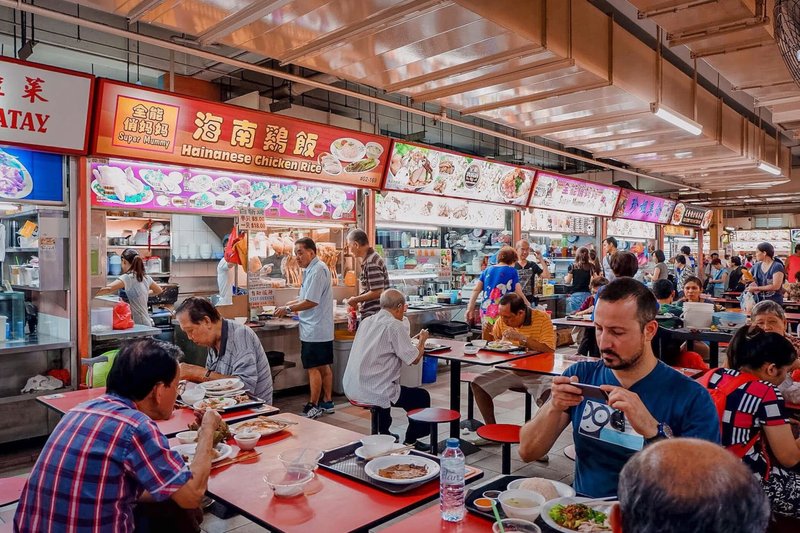
Singlish is an English-based creole with vocabulary and grammar borrowed from Hokkien, Malay, Cantonese, Tamil and Mandarin. It isn’t a mistake or “broken English”. It has rules, and it carries real information in very few words.
Some examples:
- “Can.” Yes, that works. “Can or not?” gets the answer “Can” or “Cannot.”
- “Lah” adds emphasis or softens a statement. “Don’t worry lah.”
- “Makan” (Malay) to eat. “Go makan?” means “Want to grab food?”
- “Chope” to reserve a seat by leaving a packet of tissues on it. At a busy hawker centre at lunch, it works.
- “Shiok” very satisfying, usually about food.
- “Kiasu” (Hokkien) the fear of losing out, the reason people queue for new bubble tea shops.
- “Alamak” an exclamation of dismay, from Malay.
- “Sian” bored or fed up, from Hokkien.
The government has pushed back on Singlish through the Speak Good English Movement, launched in 2000, arguing that it hurts international communication. Most Singaporeans take a practical view: Standard English at work and with visitors, Singlish with friends. As a visitor, you don’t need to use it. Understanding the odd “lah” is enough.
Chinese Dialects and the Speak Mandarin Campaign
Before the 1980s, most Chinese Singaporeans spoke a southern Chinese variety at home, not Mandarin. The main ones were Hokkien, Teochew, Cantonese, Hakka and Hainanese. Each came with a different wave of migrants from southern China, and many people could not understand each other across groups.
The government launched the Speak Mandarin Campaign in 1979 to give the Chinese community one common Chinese language that also connected to China’s growing economy. It worked. Dialects were pulled out of schools and mass media, and families switched. Today those varieties together account for 8.7% of residents’ main home language, mostly among older speakers.
Their influence outlived the decline. Singlish words such as kiasu, sian and buay (not) come from Hokkien, and the dishes you’ll order at a hawker centre, like char kway teow or bak kut teh, carry Hokkien and Teochew names. Older vendors and taxi drivers may still speak Hokkien or Cantonese with each other.
Smaller Languages: Kristang and Singapore Sign Language
Two smaller languages are worth knowing about:
- Kristang is a Portuguese-based creole that came from Malacca’s Portuguese-Eurasian community. Only a small number of people still speak it in Singapore, but community groups run classes to keep it alive.
- Singapore Sign Language is used by the deaf community. It developed from Shanghainese sign language and was later influenced by American Sign Language. Shows and public events increasingly include interpreters.
You’ll also find small communities speaking Javanese, Bugis, Sinhalese, Japanese, Korean, Thai, Tagalog and others, linked to long-standing ethnic groups and the large foreign-born workforce.
How the Mother Tongue Policy Shapes Everything
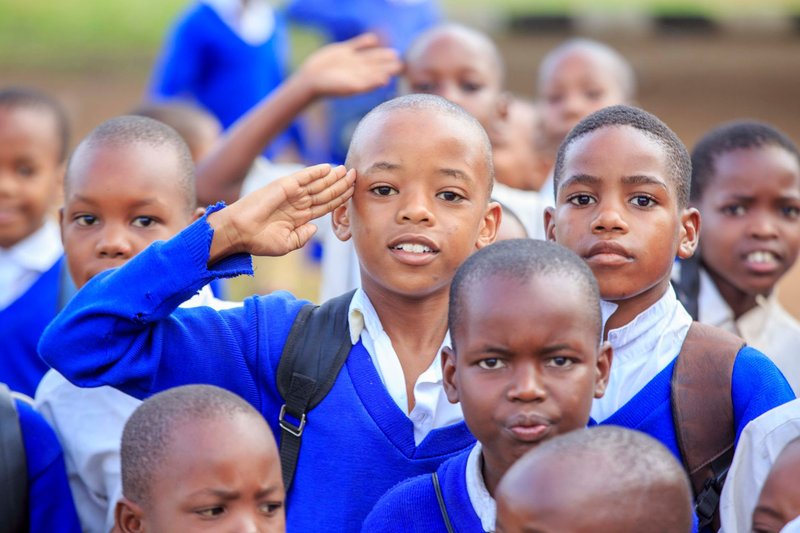
Competitors tend to skip the reason this mix exists. Singapore runs a bilingual education policy: every student learns English as the main language of instruction, plus a second language called the Mother Tongue. Under Ministry of Education rules, that’s Chinese (Mandarin), Malay or Tamil, with options for other Indian languages such as Hindi, Bengali and Punjabi.
The policy has three effects you can see on the street:
- Nearly every Singaporean who went through the school system reads and writes English.
- Most Chinese, Malay and Indian Singaporeans can speak with older relatives in a second language, at least a bit.
- The Mother Tongue often fades after school if it isn’t used at home. That’s why Mandarin has strong “school” fluency but shorter reach at home among young people, and why English keeps growing as a home language.
Which Language Do You Need in Singapore?
As a visitor: English. Hotels, airports, taxis, shops, hawker centres and attractions all work in English. A quick “thank you” in Mandarin, Malay or Tamil is a nice touch and gets a smile, but nobody expects it.
At a hawker centre: English with a few shortcuts. Say the dish and the number you want. “Chicken rice, two” is a complete order. If a stall owner speaks only Mandarin or a dialect, point at the picture.
In a taxi or ride-hail: English works. Drivers mix in Mandarin and Hokkien with each other, not with passengers.
As an expat or student: English runs workplaces and universities. Learning basic Mandarin helps if you work with Chinese-run family businesses or in China-facing roles, and Singlish phrases help you fit in.
For long-term residents: If you have kids in local schools, they’ll study a Mother Tongue and you’ll want to be able to follow the homework.
FAQ
What is the main language of Singapore? English is the main working language and the language most often spoken at home. Malay is the national language, and there are four official languages in total.
Do people speak English in Singapore? Yes. English is used in schools, government, courts and business, and nearly all residents can use it. Visitors rarely run into a language barrier.
Is Singlish a real language? Linguists classify it as a creole or contact variety of English with its own vocabulary and grammar. It isn’t official, and the government encourages Standard English in formal settings.
What Chinese dialects are spoken in Singapore? Hokkien, Teochew, Cantonese, Hakka and Hainanese. They’ve declined since the 1979 Speak Mandarin Campaign and are spoken mostly by older residents.
Is Malay the official language of Singapore? It’s one of four official languages and the national language. It’s used in the anthem, military commands and many place names, but it isn’t the main language of government.
What language do Singaporeans speak at home? According to the 2020 census, English (48.3%), Mandarin (29.9%), Malay (9.2%), other Chinese varieties (8.7%) and Tamil (2.5%).

