No named, permanent lakes in Afghanistan meet the strict criteria for this list.
The list is empty because the criteria require clearly defined, permanent, natural lakes wholly inside Afghanistan with reliable modern data (name, province, coordinates, stable area). Afghanistan is mostly dry and mountainous. Many water bodies are small, seasonal, saline, or part of cross‑border wetlands. That makes it hard to produce a clean, verifiable list that fits those exact rules.
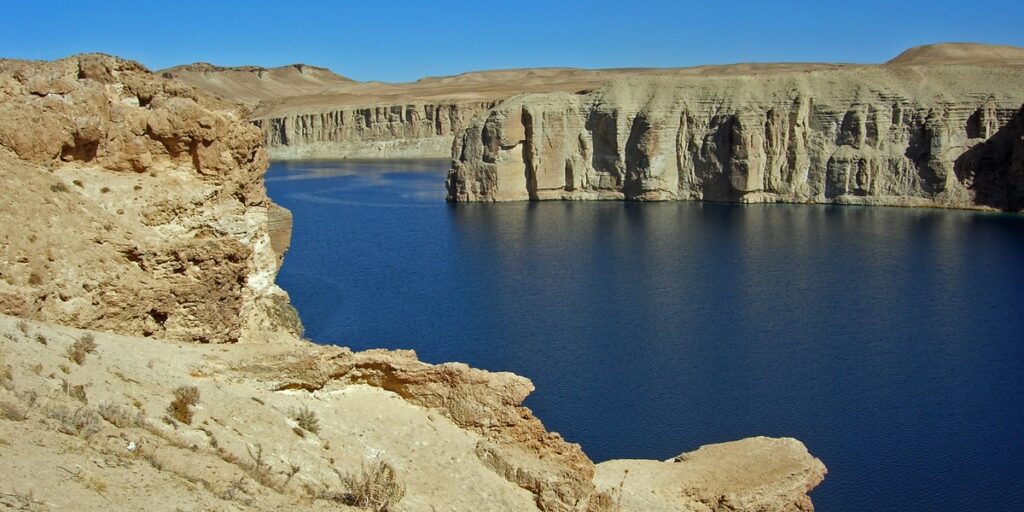
Afghanistan has important water features, but they often fall into nearby categories instead of “permanent lakes.” Expect high‑altitude tarns and karst pools (for example, the Band‑e Amir lakes in Bamyan), seasonal wetlands and marshes in the Sistan Basin (the Hamun/Hamoun system shared with Iran), and man‑made reservoirs from dams (Kajaki, Naghlu, Surobi, Qargha). Decades of conflict, changing damming and irrigation, and climate variability also change size and presence from year to year.
See these close alternatives instead: Band‑e Amir national park (series of blue highland lakes), the Hamun seasonal wetlands, major reservoirs (Kajaki, Naghlu, Surobi, Qargha), small glacial tarns in the Hindu Kush, and salt playas in the Sistan Basin. Explore those categories with satellite maps, UN and academic reports, and on‑the‑ground sources to get usable, verifiable lake and water‑body information.