Karachi is the richest city in Pakistan, and it isn’t close. It produces roughly a fifth of the country’s GDP, houses the stock exchange and the central bank, and runs the ports that most of Pakistan’s trade passes through. Lahore sits second, and after that the list gets more interesting: a textile city, two export towns in the Punjab heartland, a farm-and-fertilizer hub, and a capital that is wealthy per person but small in total output.
This ranking of the richest cities in Pakistan uses economic output as the yardstick, then explains what drives each city’s money and where the picture gets muddy.
TLDR
- Richest city by GDP: Karachi, at about 22.5% of national output.
- Runner-up: Lahore, roughly half of Karachi’s size but the clear number two.
- Most expensive city: Islamabad, even though it ranks eighth on GDP.
- Biggest surprises: Sialkot, a mid-sized city, makes the top five on exports alone, and Quetta sits low despite Balochistan’s mineral wealth.
- Caveat: Pakistan doesn’t publish official city-level GDP, so every city figure below is an estimate.
Table of Contents
- The Ranking at a Glance
- How We Defined “Richest”
- The 10 Richest Cities in Pakistan, Ranked
- Why Islamabad Ranks Low but Costs the Most
- Wealthiest Neighborhoods
- FAQ
The Ranking at a Glance
| Rank | City | Province | Est. share of national GDP | Main economic engine |
|---|---|---|---|---|
| 1 | Karachi | Sindh | About 22.5% | Ports, finance, manufacturing |
| 2 | Lahore | Punjab | Roughly 12% | Services, retail, IT, real estate |
| 3 | Faisalabad | Punjab | Roughly 5% | Textiles |
| 4 | Gujranwala | Punjab | Roughly 3-4% | Ceramics, appliances, metalwork |
| 5 | Sialkot | Punjab | Roughly 3% | Sports goods, surgical tools, leather |
| 6 | Multan | Punjab | Roughly 2-3% | Cotton, mangoes, fertilizer |
| 7 | Peshawar | Khyber Pakhtunkhwa | Roughly 2-3% | Cross-border trade, marble, services |
| 8 | Islamabad | Capital Territory | Roughly 2% | Government, diplomacy, services |
| 9 | Quetta | Balochistan | Roughly 1-2% | Fruit, coal, mining services |
| 10 | Rawalpindi | Punjab | Roughly 1-2% | Military economy, wholesale trade |
Treat the percentages as orders of magnitude, not audited numbers. Karachi’s share is the best documented; the lower rows are estimates built from provincial output and local industry data.
How We Defined “Richest”
“Rich” means three different things in Pakistan, and most rankings online blur them together.
- GDP: the total value a city’s economy produces. This is the measure used here.
- Per-capita income: how much each resident earns on average. Islamabad wins this one.
- Cost of living and property prices: how expensive it is to live there. Islamabad and parts of Karachi and Lahore lead.
A city can be huge but poor per head, or small and expensive. Ranking by GDP rewards size and industrial depth, which is why a city of 20 million sits above a capital of about 1 million.
On sources: the Pakistan Bureau of Statistics publishes national accounts and the 2023 census, and the World Bank tracks the national economy. Neither publishes a clean city-by-city GDP series. Punjab produces a little over half of national output and Sindh roughly a quarter to a third, so city estimates are derived from those provincial totals and the weight of each city’s industries. That is why the ranks below Lahore carry real uncertainty.
The 10 Richest Cities in Pakistan, Ranked
1. Karachi
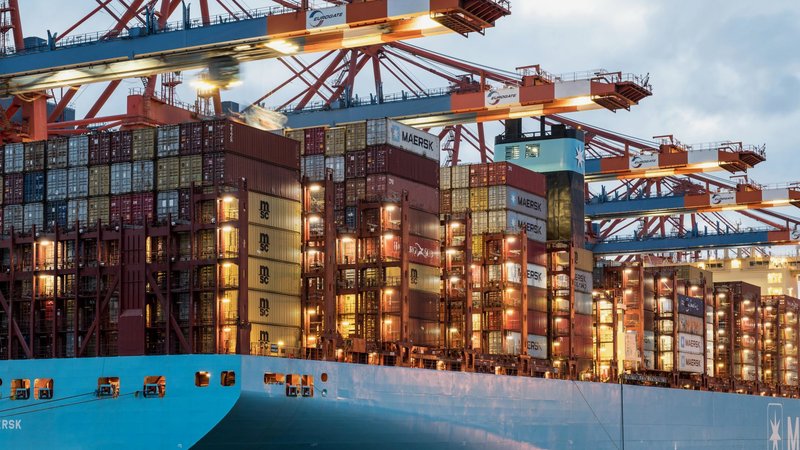
Est. GDP share: about 22.5% | Province: Sindh
Karachi is the economic engine of the country by a wide margin. Its port complex, Karachi Port and Port Qasim, handles the bulk of Pakistan’s seaborne trade, so imports of fuel, machinery and raw materials and exports of textiles and rice all pass through it. The Pakistan Stock Exchange trades here, and the State Bank of Pakistan is headquartered here along with most major commercial banks and multinationals.
The city’s tax weight is the clearest sign of its size. By commonly cited estimates, Karachi generates around half of federal tax collection, far above its share of the population.
Manufacturing fills in the rest: the SITE, Korangi and Port Qasim industrial zones produce textiles, steel, chemicals, pharmaceuticals and processed food. The weak spots are well known, namely water shortages, power cuts, and traffic, but they haven’t dented the city’s rank.
2. Lahore
Est. GDP share: roughly 12% | Province: Punjab
Lahore is the capital of Pakistan’s most productive province and its second-largest city, with about 13 million people. Its economy leans toward services, retail, education, media, and a growing IT sector, rather than ports and heavy industry.
Real estate is a major wealth channel here. Housing societies such as DHA and Bahria Town have turned farmland on the edge of the city into some of the most valuable property in the country. Lahore also benefits from its position in Punjab’s agricultural and manufacturing belt, with food processing, garments and engineering firms feeding off the surrounding region.
On the Karachi vs Lahore economy question, the gap is about two to one in Karachi’s favor. Lahore wins on services, tourism and consumer spending. Karachi wins on trade, finance and heavy industry.
3. Faisalabad
Est. GDP share: roughly 5% | Province: Punjab
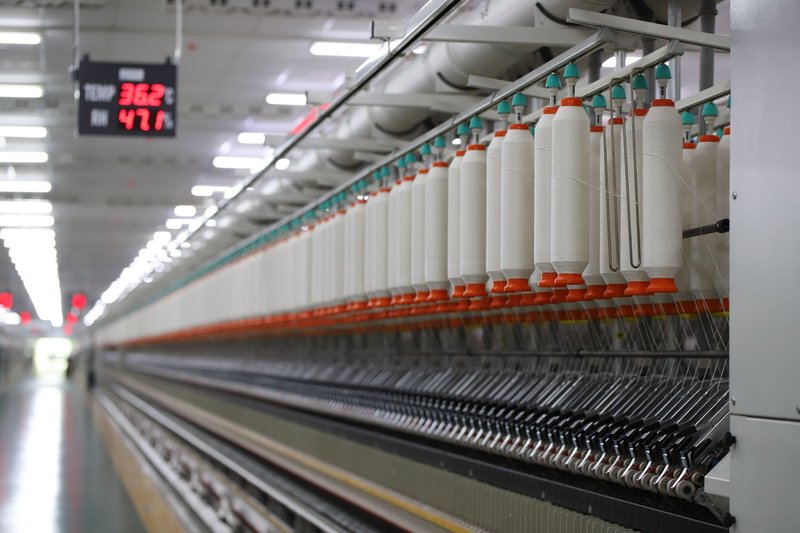
Faisalabad is called the Manchester of Pakistan, and the nickname is earned. Textiles are the country’s largest export category, accounting for more than half of export earnings in most years, and Faisalabad is where a large share of that cloth is spun, woven, dyed and stitched.
The city’s strength is concentration. Spinning mills, weaving sheds, processing units and garment factories sit in one cluster, fed by cotton from the surrounding Punjab farmland. The Allama Iqbal Industrial City on the city’s edge is a newer, planned zone that has drawn export-oriented manufacturers.
The downside of a one-industry economy is exposure. When cotton prices spike or energy costs jump, Faisalabad feels it faster than a diversified city would.
4. Gujranwala
Est. GDP share: roughly 3-4% | Province: Punjab
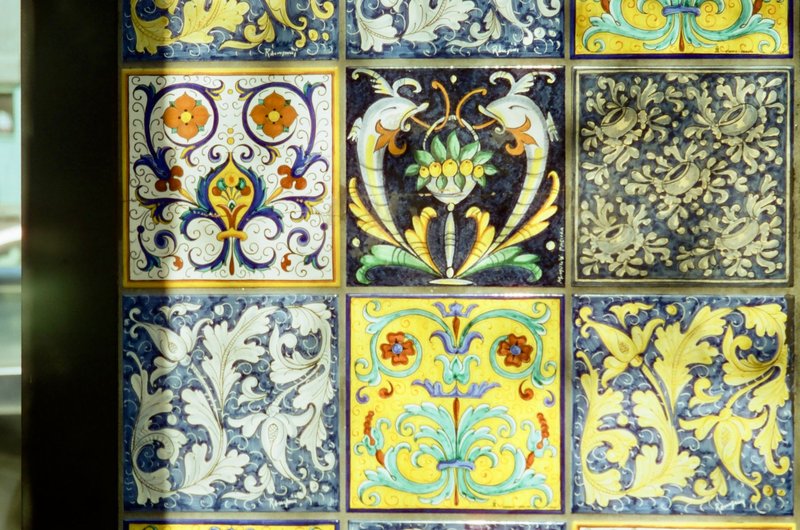
Gujranwala is a manufacturing town that most outsiders have never heard of. It makes ceramics and sanitary ware, ceiling fans, electric motors, home appliances, steel utensils and processed food, and it has a large poultry and dairy sector.
It anchors the Gujrat-Gujranwala-Sialkot industrial belt, one of the densest clusters of small and mid-sized manufacturers in South Asia. Many of the firms are family-owned workshops that supply both the domestic market and export buyers. The city is also known for its food, and its reputation as a wrestlers’ town is a cultural footnote more than an economic one.
5. Sialkot

Est. GDP share: roughly 3% | Province: Punjab
Sialkot punches far above its weight. It is a small city by Pakistani standards, yet it is one of the country’s top exporters, built on sports goods, surgical instruments, leather goods and martial-arts and sportswear gear.
Hand-stitched footballs are the signature product. Sialkot manufacturers have supplied match balls for recent World Cups, and the city’s workshops handle a large share of the world’s stitched footballs. Surgical and dental instruments, made by small forges and finishing shops, go to hospitals across Europe and North America.
The business community here built its own infrastructure rather than wait for the state. Sialkot International Airport was the first privately funded airport in Pakistan, opened to move cargo and executives without routing through Lahore.
6. Multan
Est. GDP share: roughly 2-3% | Province: Punjab
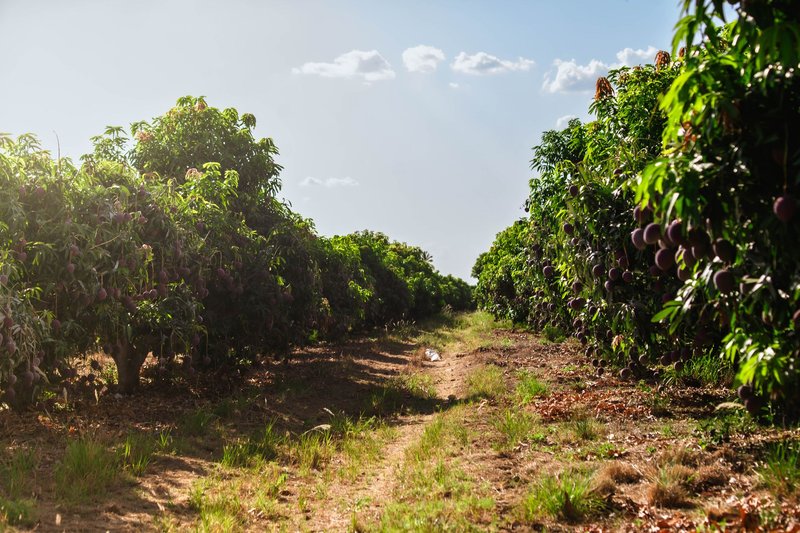
Multan is the main economic center of southern Punjab. Its wealth comes from agriculture and the industries attached to it: cotton ginning and spinning, flour milling, fertilizer production, and one of the country’s most important mango belts. Pakistan ranks among the world’s leading mango producers, and Multan’s orchards are a big reason why.
The city has gained from the motorway links that tie it to Lahore and, under CPEC-era road projects, to Sukkur and the south. Better roads cut the cost of moving fruit, cotton and fertilizer to market. Multan remains less industrialized than the northern Punjab cities, which keeps it in sixth place.
7. Peshawar
Est. GDP share: roughly 2-3% | Province: Khyber Pakhtunkhwa
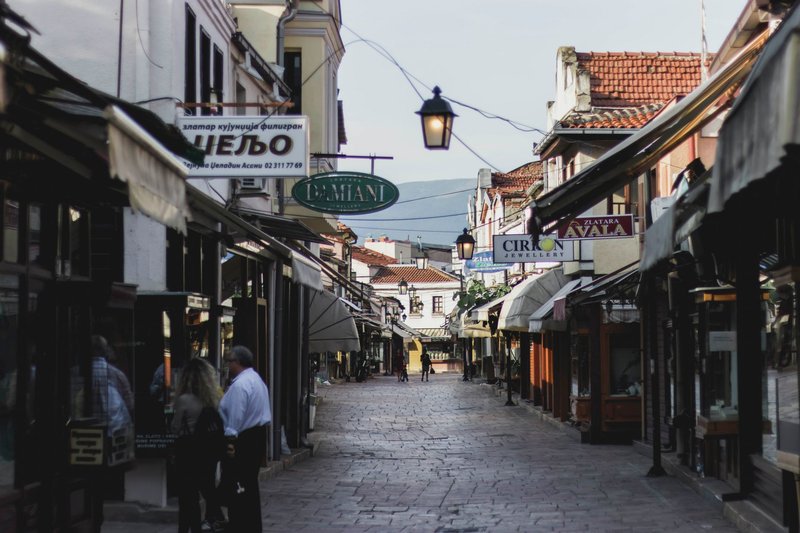
Peshawar sits at the foot of the Khyber Pass, and trade with Afghanistan and Central Asia is the core of its economy. Transit goods, used cars, electronics, and consumer items move through its markets, and informal trade makes its real economy larger than the official numbers show.
Peshawar also has marble and stone processing, tobacco, and small manufacturing in the Hayatabad industrial estate. As the provincial capital, it hosts government offices, universities and hospitals that draw patients and students from across Khyber Pakhtunkhwa. Border closures and security problems regularly interrupt this trade, which is the main reason Peshawar doesn’t rank higher.
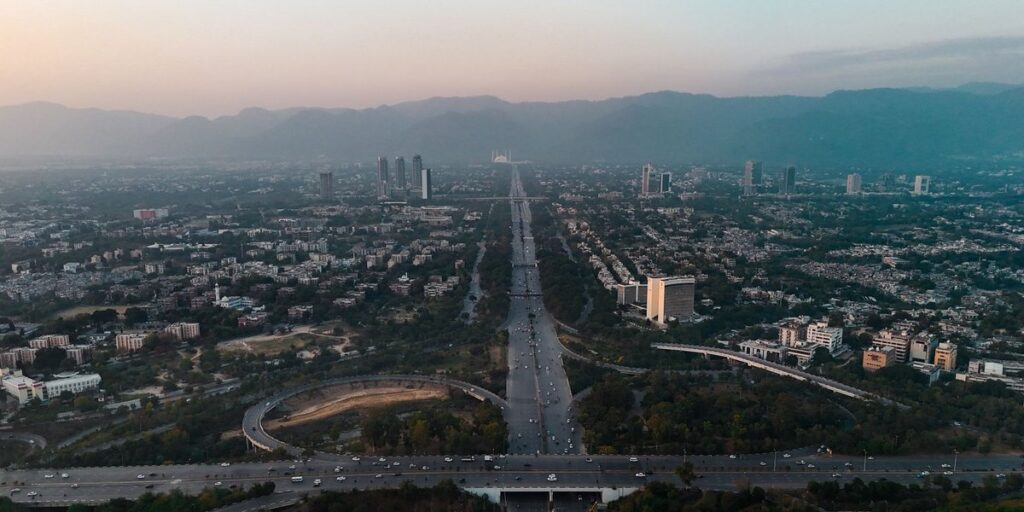
8. Islamabad
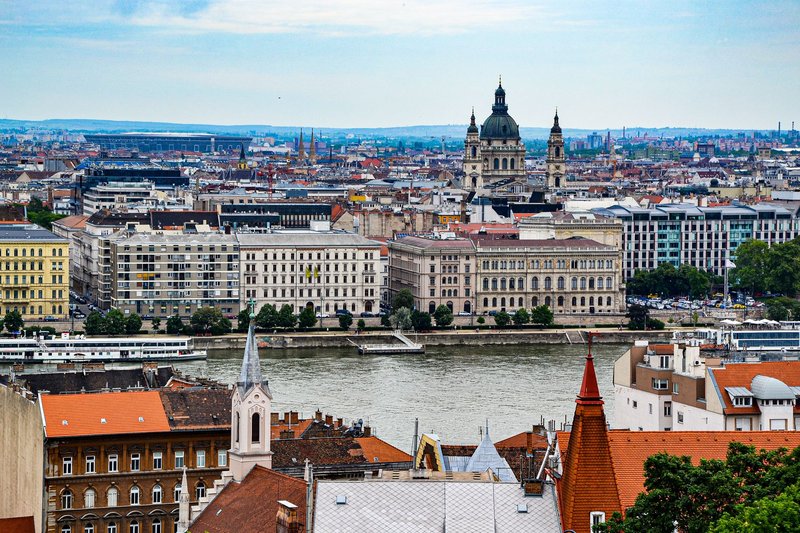
Est. GDP share: roughly 2% | Province: Islamabad Capital Territory
Islamabad was built as a capital in the 1960s, and its economy still runs on government, embassies, international organizations, banks, telecom firms and a growing technology sector. There is almost no heavy industry.
The city’s population is small, so its total output is modest. Its per-capita income is the highest in the country, though, and property prices, rents and restaurant bills match. That gap is explained in the next section.
9. Quetta
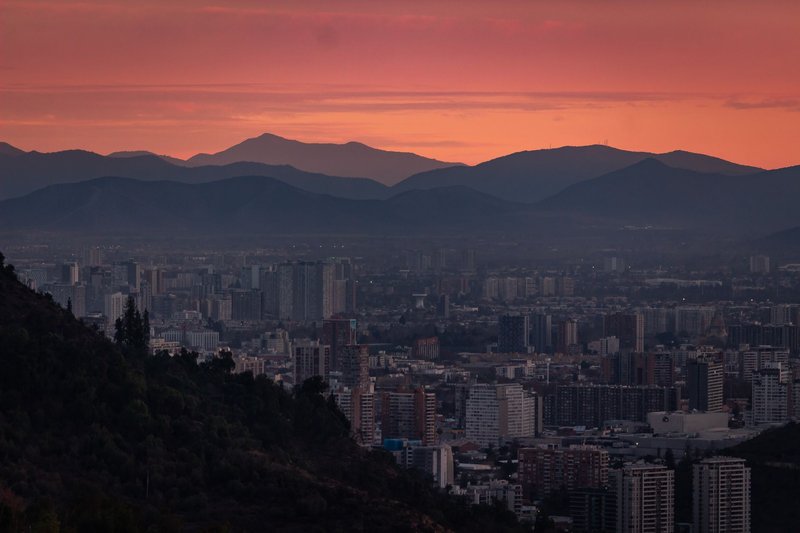
Est. GDP share: roughly 1-2% | Province: Balochistan
Balochistan covers nearly half of Pakistan’s land area but produces a small slice of its GDP, and Quetta reflects that. The city is a trading and service center for a thinly populated province, with an economy built around fruit (apples, grapes, pomegranates), coal, and the logistics of moving goods to Iran and Afghanistan.
The province’s real wealth lies in the ground. Gas fields at Sui and the Reko Diq copper and gold project in Chagai district are among Pakistan’s biggest resource assets, but the money from them is not concentrated in Quetta itself. Security concerns and thin infrastructure keep investment low.
10. Rawalpindi
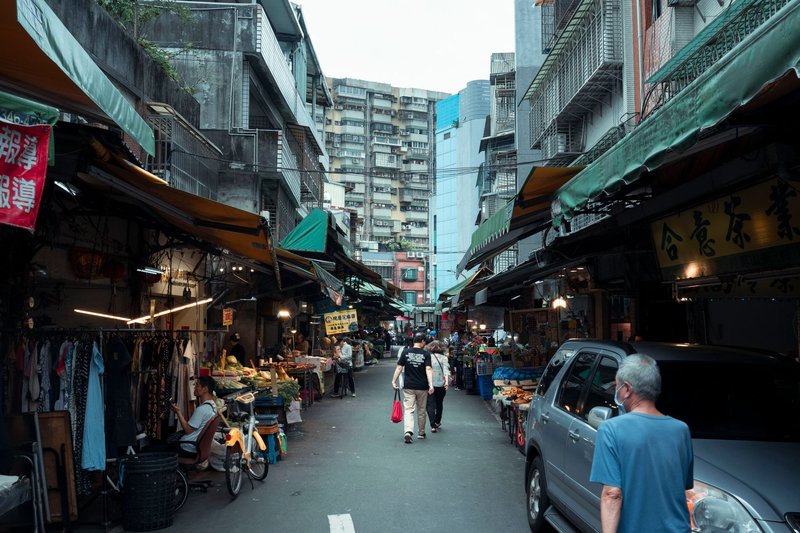
Est. GDP share: roughly 1-2% | Province: Punjab
Rawalpindi is Islamabad’s twin city and the home of the army’s General Headquarters. Its economy blends the military economy, wholesale trade in markets such as Raja Bazaar and Saddar, and the commuter spillover from Islamabad. Many people who work in the capital live and spend in Rawalpindi because it costs less.
Its GDP is understated by statistics that group some activity with the capital, and the line between the two cities is blurry in practice. Taken together as a metropolitan area, the twin cities would climb the list.
Why Islamabad Ranks Low but Costs the Most
Islamabad is the most expensive city in Pakistan, yet it is eighth on GDP. Both facts hold.
GDP counts total production. Islamabad has about a tenth of Karachi’s people and no port, no mills, and no large factories. Its output is small.
Cost of living tracks something else: how much money the local population has to spend, and how scarce housing is. The capital is full of civil servants, diplomats, executives and professionals with steady incomes. Land is limited by the master plan, zoning is strict, and the best sectors (F-6, F-7, E-7) are fully built out. Demand outruns supply, so rents and prices climb.
That is why a ranking by GDP and a ranking by price level produce different lists. The first measures how much a city produces. The second measures how much it costs to live where the money lands.
Wealthiest Neighborhoods
City-level wealth is concentrated in a few districts.
- Karachi: Defence Housing Authority (DHA) and Clifton are the prestige addresses, with Bath Island and Zamzama known for high-end retail.
- Lahore: Gulberg, Model Town and DHA hold the city’s most valuable property.
- Islamabad: Sectors F-6, F-7 and E-7, plus the farmhouse belt along the Margalla foothills.
Prices in these areas are driven as much by remittances and property investment as by local salaries, which is part of why housing costs in Pakistan’s big cities have outpaced income growth.
FAQ
What is the richest city in Pakistan?
Karachi. It generates about 22.5% of national GDP, hosts the stock exchange and the State Bank of Pakistan, and operates the country’s main seaports.
What is the second richest city in Pakistan?
Lahore, with roughly half of Karachi’s economic output. It leads in services, retail and real estate.
Which is the most expensive city in Pakistan?
Islamabad. High incomes among government staff and professionals, tight land supply and strict zoning push rents and property prices above every other city, despite its small GDP.
Is Karachi or Lahore wealthier?
Karachi, by about two to one on GDP. Lahore has a stronger services and consumer economy, while Karachi dominates trade, finance and industry.
Why isn’t Islamabad in the top five?
It has a small population and little industry. Its wealth shows up in per-capita income and property prices, not in total output.
How reliable are city GDP figures for Pakistan?
Not very. Official statistics are published for the country and its provinces, not for individual cities. City figures, including the ones here, are estimates based on provincial data and industry weight. The IMF and the World Bank publish national numbers that help check the totals but don’t break them down by city.
Which Pakistani city has the highest per-capita income?
Islamabad, by a clear margin, followed by the larger cities of Punjab and Sindh.