You don’t need fluency to get through Italy. You need about fifty phrases, the right greeting at the right moment, and the nerve to say them out loud. Italians reward the attempt. A “buongiorno” when you walk into a bakery changes how the next two minutes go.
This list of useful phrases for tourists in Italy is organized by what’s happening on your trip, not by grammar. Each phrase has the Italian, a rough English pronunciation (capitals mark the stressed syllable), and a note on when it earns its place. Everything is written to be read on a phone at a table.
Table of Contents
- The First Ten Useful Phrases for Tourists in Italy
- Pronunciation Traps That Trip Up Beginners
- Lei or Tu? Choosing Formal or Informal
- Arriving: Greetings, Hotels and Small Talk
- Restaurants and Cafés
- Reading the Menu
- Getting Around: Directions, Trains and Taxis
- Shopping and Paying
- Sightseeing and Numbers
- When You Don’t Understand: Polite Escape Hatches
- Trouble: Emergencies, Pickpockets and Scams
- Regional Differences
- Pocket Cheat Sheet
The First Ten Useful Phrases for Tourists in Italy
If you learn nothing else, learn these. They cover most of the interactions you’ll have in a day.
| Italian | Pronunciation | Meaning |
|---|---|---|
| Buongiorno | bwon-JOR-no | Good morning / good day |
| Buonasera | bwoh-na-SEH-ra | Good evening |
| Per favore | pehr fa-VOH-reh | Please |
| Grazie | GRAT-see-eh | Thank you |
| Prego | PREH-go | You’re welcome / go ahead / here you are |
| Scusi | SKOO-zee | Excuse me / sorry (formal) |
| Mi dispiace | mee dee-SPYAH-cheh | I’m sorry |
| Parla inglese? | PAR-la een-GLEH-zeh | Do you speak English? |
| Non capisco | nohn ka-PEES-ko | I don’t understand |
| Arrivederci | ar-ree-veh-DEHR-chee | Goodbye |
“Prego” does a lot of work. It answers “grazie,” it’s what a shopkeeper says when handing you change, and it’s what someone says when waving you through a door. Learn to hear it as “go ahead” and you’ll stop freezing when someone says it to you.
Pronunciation Traps That Trip Up Beginners
Italian is spelled almost exactly as it sounds, which is the good news. A handful of rules cover most of the mistakes.
Double consonants are held longer. The doubled letter is a real pause, not decoration. “Caro” (KAH-ro) means dear or expensive. “Carro” (KAR-ro) means cart. “Sera” is evening, “serra” is a greenhouse. Say “grazie mille” and “pizza” with a slight hold on the double letters and you’ll sound noticeably more natural.
“Ch” and “gh” are hard. Chi is “kee” and che is “keh,” like “key” and “keb” without the b. Spaghetti is spa-GET-tee, not spa-JET-tee. The “h” exists to keep the sound hard.
“Ci” and “ce” are soft. Ciao is “chow,” cena (dinner) is CHEH-na, arrivederci ends in “chee.” The same rule applies to “g”: gelato is jeh-LAH-to, gelateria is jeh-la-teh-REE-a.
Other combinations to know:
- gn sounds like “ny” in “canyon”: lasagna is la-ZAHN-ya.
- gli sounds like “lli” in “million”: famiglia is fa-MEE-lya.
- sc before i or e is “sh”: pesce (fish) is PEH-sheh. Before a, o, u it’s “sk”: scusi is SKOO-zee.
- z is usually “ts” or “dz”: grazie has a “ts,” zero has a “dz.”
- r is tapped or lightly rolled. A decent attempt is enough.
Stress usually falls on the second-to-last syllable. When the last syllable is stressed, Italian writes an accent: caffè, città, università. Every vowel is pronounced, so Roma is two clean syllables with an open “o,” not “ROH-muh.”
Lei or Tu? Choosing Formal or Informal
Italian has two ways to say “you.” Tu is informal. Lei is formal, and it takes the third-person verb form. With strangers, use Lei. That means waiters, hotel clerks, shopkeepers, ticket sellers, police, and anyone clearly older than you.
| Situation | Formal (Lei) | Informal (tu) |
|---|---|---|
| Excuse me | Scusi | Scusa |
| How are you? | Come sta? | Come stai? |
| Can you help me? | Può aiutarmi? | Puoi aiutarmi? |
| Do you speak English? | Parla inglese? | Parli inglese? |
If a young barista or hostel worker says “tu” to you, they’re inviting the casual register. Follow their lead. If you’re unsure, stay formal. Nobody has ever been offended by too much politeness in Italy, and the reverse isn’t always true. Salve, which sits between “buongiorno” and “ciao,” works as a neutral hello to anyone, any time of day.
Arriving: Greetings, Hotels and Small Talk
Italian greetings follow the clock. Buongiorno is used through the morning and into early afternoon. Buonasera takes over after lunch or when the light starts to turn, which is somewhere between 2 p.m. and 5 p.m. depending on the region and who you ask. Buonanotte is for saying goodnight, not for hello.
Ciao is informal, for friends and people your age. It comes from the Venetian s-ciào vostro, meaning roughly “I’m your servant,” which tells you something about why it isn’t meant for a stranger behind a counter.
The most useful habit in this whole article is cultural: greet when you enter a shop, café or small office, and say goodbye when you leave. Walking into a bakery and silently pointing at a pastry reads as rude. A quick “buongiorno” going in and “grazie, arrivederci” or “buona giornata” going out fixes it.
| Italian | Pronunciation | When to use it |
|---|---|---|
| Buongiorno / Buonasera | bwon-JOR-no / bwoh-na-SEH-ra | Entering any shop, café, or hotel lobby |
| Buona giornata | BWOH-na jor-NAH-ta | Leaving: “have a good day” |
| Buona serata | BWOH-na seh-RAH-ta | Leaving in the evening |
| Piacere | pya-CHEH-reh | Meeting someone: “nice to meet you” |
| Come sta? | KOH-meh STAH | “How are you?” (formal) |
| Bene, grazie, e Lei? | BEH-neh, GRAT-see-eh, eh LEH-ee | “Fine, thanks, and you?” |
| Permesso | pehr-MEHS-so | Squeezing past someone, or entering a home |
| Buon viaggio | bwon VYAHD-jo | “Safe travels” |
At the hotel:
| Italian | Pronunciation | Meaning |
|---|---|---|
| Ho una prenotazione a nome di… | oh OO-na preh-no-tat-SYOH-neh a NOH-meh dee | I have a reservation under the name of… |
| Ha una camera libera? | ah OO-na KAH-meh-ra LEE-beh-ra | Do you have a room available? |
| A che ora è la colazione? | a keh OH-ra eh la ko-lat-SYOH-neh | What time is breakfast? |
| Qual è la password del Wi-Fi? | kwal EH la PAS-werd del WEE-fee | What’s the Wi-Fi password? |
| Posso lasciare le valigie qui? | POHS-so la-SHAH-reh leh va-LEE-jeh kwee | Can I leave my bags here? |
Restaurants and Cafés
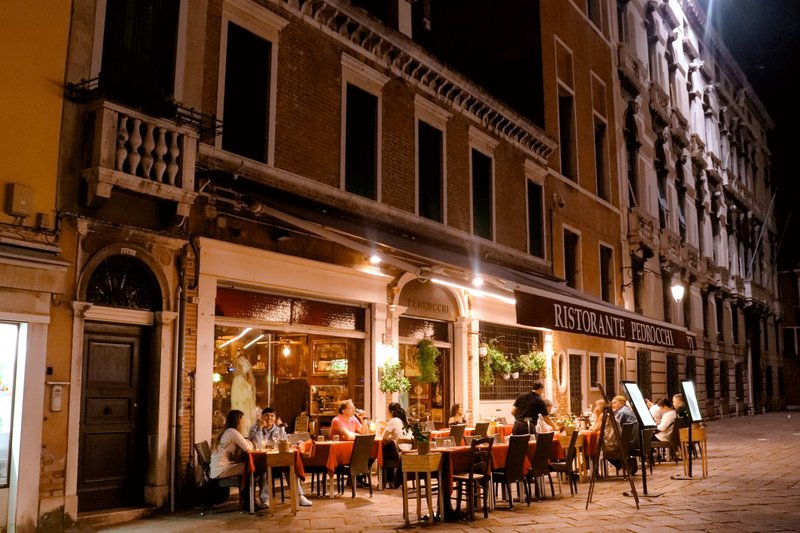
This is where phrases pay off most, because it’s where you’ll spend the most time. A few cultural facts first.
The café bar works differently from a sit-down café. Standing at the counter (al banco) is cheaper than sitting at a table. In many busy bars you pay first at the register (la cassa), take the receipt (lo scontrino) to the counter, and say what you want. Sitting down usually adds a table charge.
Cappuccino is a morning drink. Ordering one after a big lunch will get a raised eyebrow from some baristas, though nobody will refuse you. If you say un caffè, you get an espresso. For a milky coffee later in the day, try un caffè macchiato.
The coperto is a cover charge. It appears on most restaurant bills as a per-person line, usually a euro or two, sometimes more in tourist areas. It covers the bread and the table. It isn’t a scam and it isn’t a tip. Tipping is not expected the way it is in the US, though rounding up or leaving a few euros for good service is appreciated.
| Italian | Pronunciation | When to use it |
|---|---|---|
| Un tavolo per due, per favore | oon TAH-vo-lo pehr DOO-eh | Asking for a table for two |
| Avete un tavolo libero? | a-VEH-teh oon TAH-vo-lo LEE-beh-ro | Walking in without a booking |
| Siamo in quattro | SYAH-mo een KWAT-tro | “There are four of us” |
| Il menù, per favore | eel meh-NOO | Asking for the menu |
| Cosa mi consiglia? | KOH-za mee kon-SEE-lya | “What do you recommend?” |
| Vorrei… | vor-RAY | “I would like…” (polite, safe default) |
| Prendo… | PREN-do | “I’ll have…” |
| Per me… | pehr MEH | “For me…” (when ordering in a group) |
| Acqua naturale / frizzante | AHK-kwa na-too-RAH-leh / free-DZAN-teh | Still / sparkling water |
| Il vino della casa | eel VEE-no DEL-la KAH-za | The house wine, which is usually good and cheap |
| Un altro, per favore | oon AL-tro | “Another one, please” |
| Sono vegetariano / vegetariana | SOH-no veh-jeh-ta-RYAH-no / -na | I’m vegetarian (male / female) |
| Sono allergico / allergica a… | SOH-no al-LEHR-jee-ko / -ka a | I’m allergic to… |
| Senza glutine | SEN-tsa GLOO-tee-neh | Gluten-free |
| Buon appetito | bwon ap-peh-TEE-to | Said before eating. Say it back. |
| Era delizioso | EH-ra deh-lee-TSYOH-zo | “It was delicious” |
| Il conto, per favore | eel KON-to | Asking for the bill |
| È incluso il servizio? | eh een-KLOO-zo eel sehr-VEE-tsyo | Is service included? |
| Posso pagare con la carta? | POHS-so pa-GAH-reh kon la KAR-ta | Can I pay by card? |
Italians don’t bring the bill unprompted. Lingering over a table is normal, and a waiter who drops the check early would be hurrying you. You have to ask.
What the waiter will actually say back:
| Italian | Meaning |
|---|---|
| Siete in quanti? | How many are you? |
| Ha prenotato? | Do you have a reservation? |
| Cosa le porto? / Da bere? | What can I bring you? / Anything to drink? |
| Frizzante o naturale? | Sparkling or still? |
| Vuole altro? / Qualcos’altro? | Would you like anything else? |
| Un attimo, arrivo | One moment, I’m coming |
| Contanti o carta? | Cash or card? |
Reading the Menu
A traditional Italian menu is built in courses, and knowing the order helps you avoid ordering three pastas.
- Antipasto: starter, often cured meats, cheese, or fried things.
- Primo: first course, usually pasta, risotto, or soup.
- Secondo: main course, meat or fish. It typically comes without sides.
- Contorno: side dish, ordered separately: vegetables, potatoes, salad.
- Dolce: dessert.
- Piatto del giorno: dish of the day.
You are not required to order every course. A primo and a contorno, or an antipasto and a secondo, is a normal meal. Just ordering a primo is also fine in most places.
A few other words show up constantly: fatto in casa (homemade), surgelato (frozen, which some menus flag honestly), alla griglia (grilled), al forno (baked), crudo (raw or cured), cotto (cooked), fritto (fried). Prices marked etto or hg mean per 100 grams, a trap with fresh fish where the final bill can surprise you. If the fish is priced by weight, ask: Quanto viene? (how much will it come to?).
Getting Around: Directions, Trains and Taxis
| Italian | Pronunciation | Meaning |
|---|---|---|
| Dov’è…? | doh-VEH | Where is…? |
| Dov’è il bagno? | doh-VEH eel BAH-nyo | Where’s the bathroom? |
| Dov’è la stazione? | doh-VEH la sta-TSYOH-neh | Where’s the station? |
| Dov’è la fermata dell’autobus? | doh-VEH la fehr-MAH-ta del-LOW-toh-boos | Where’s the bus stop? |
| A destra / a sinistra | a DEH-stra / a see-NEE-stra | Right / left |
| Sempre dritto | SEM-preh DREET-to | Straight ahead |
| Vicino / lontano | vee-CHEE-no / lon-TAH-no | Near / far |
| Mi sono perso / persa | mee SOH-no PEHR-so / -sa | I’m lost (male / female) |
| Può indicarmi sulla mappa? | pwoh een-dee-KAR-mee SOOL-la MAP-pa | Can you show me on the map? |
If the answer comes back as a stream of Italian, listen for the landmarks, the left/right, and the numbers. “Prenda la prima a destra” means take the first right. “Poi sempre dritto per cento metri” means then straight for a hundred meters.
Tickets and trains:
| Italian | Pronunciation | Meaning |
|---|---|---|
| Un biglietto per Firenze, per favore | oon beel-YET-to pehr fee-REN-tseh | A ticket to Florence, please |
| Solo andata | SOH-lo an-DAH-ta | One-way |
| Andata e ritorno | an-DAH-ta eh ree-TOR-no | Round trip |
| A che ora parte il treno per Roma? | a keh OH-ra PAR-teh eel TREH-no pehr ROH-ma | What time does the train to Rome leave? |
| Da quale binario? | da KWAH-leh bee-NAH-ryo | From which platform? |
| Dove devo convalidare il biglietto? | DOH-veh DEH-vo kon-va-lee-DAH-reh eel beel-YET-to | Where do I validate my ticket? |
| Il treno è in ritardo | eel TREH-no eh een ree-TAR-do | The train is late |
| C’è uno sciopero | cheh OO-no SHOH-peh-ro | There’s a strike |
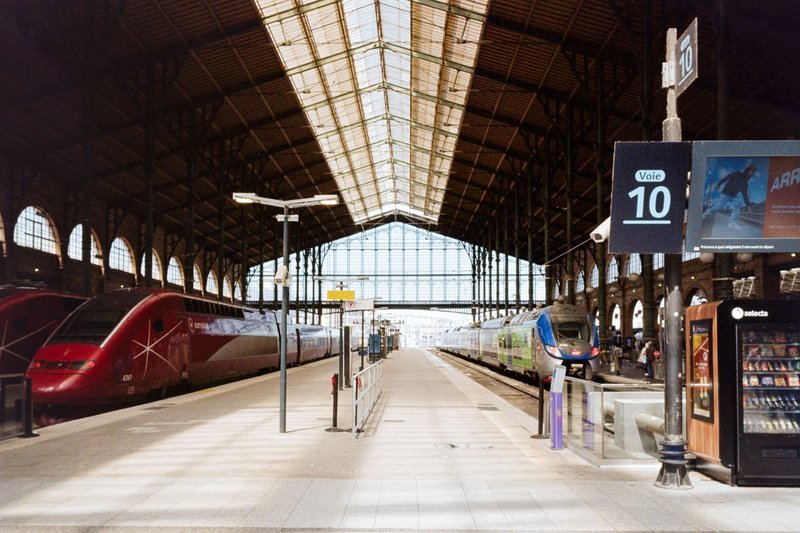
Validate regional train tickets. Paper tickets for regional trains (regionali) are often open-dated, which means they aren’t valid until you stamp them in one of the small machines on the platform (convalidare or timbrare). An unstamped ticket can mean a fine if a conductor checks. Tickets for high-speed trains with an assigned seat don’t need stamping, and neither do e-tickets that carry a date and time. If you’re unsure, ask: Devo convalidare? (do I need to validate?). Strikes (scioperi) are common enough that checking your train on the day is sensible.
Taxis and buses:
| Italian | Pronunciation | Meaning |
|---|---|---|
| Può chiamare un taxi? | pwoh kya-MAH-reh oon TAK-see | Can you call a taxi? |
| All’aeroporto, per favore | al-la-eh-ro-POR-to | To the airport, please |
| Quanto costa fino a…? | KWAN-to KOH-sta FEE-no a | How much to…? |
| Si ferma a…? | see FEHR-ma a | Does this stop at…? |
| Mi può avvisare quando arriviamo? | mee pwoh av-vee-ZAH-reh KWAN-do ar-ree-VYAH-mo | Can you tell me when we arrive? |
| Fermi qui, per favore | FEHR-mee kwee | Stop here, please |
Shopping and Paying
| Italian | Pronunciation | Meaning |
|---|---|---|
| Quanto costa? | KWAN-to KOH-sta | How much is it? |
| Sto solo guardando, grazie | stoh SOH-lo gwar-DAN-do | I’m just looking, thanks |
| Posso provarlo? | POHS-so pro-VAR-lo | Can I try it on? |
| Avete una taglia più grande / piccola? | a-VEH-teh OO-na TAL-ya pyoo GRAN-deh / PEEK-ko-la | Do you have a bigger / smaller size? |
| Lo prendo | lo PREN-do | I’ll take it |
| Posso avere lo scontrino? | POHS-so a-VEH-reh lo skon-TREE-no | Can I have the receipt? |
| C’è uno sconto? | cheh OO-no SKON-to | Is there a discount? |
| Saldi | SAL-dee | Sales (seasonal, mainly winter and summer) |
Haggling is not part of normal retail in Italy. A flea market (mercatino) is the exception, and even there, a small nudge, “Mi fa un prezzo migliore?” (can you give me a better price?), is the extent of it.
Opening hours catch visitors out. Many shops, particularly outside the big cities and in the south, close for a long midday break, roughly 1 p.m. to 4 p.m. Signs reading chiuso (closed), aperto (open), chiuso per ferie (closed for holidays) and orario continuato (open through the day without a break) are worth recognizing. In August, plenty of small family businesses simply shut for weeks.
Sightseeing and Numbers
| Italian | Pronunciation | Meaning |
|---|---|---|
| Due biglietti, per favore | DOO-eh beel-YET-tee | Two tickets, please |
| C’è una visita guidata in inglese? | cheh OO-na VEE-zee-ta gwee-DAH-ta een een-GLEH-zeh | Is there a guided tour in English? |
| Posso fare foto? | POHS-so FAH-reh FOH-to | Can I take photos? |
| Può farmi una foto, per favore? | pwoh FAR-mee OO-na FOH-to | Could you take my photo, please? |
| A che ora chiude? | a keh OH-ra KYOO-deh | What time does it close? |
Numbers get used constantly for prices, platforms and times.
| 1 | 2 | 3 | 4 | 5 |
|---|---|---|---|---|
| uno (OO-no) | due (DOO-eh) | tre (treh) | quattro (KWAT-tro) | cinque (CHEEN-kweh) |
| 6 | 7 | 8 | 9 | 10 |
|---|---|---|---|---|
| sei (say) | sette (SET-teh) | otto (OT-to) | nove (NOH-veh) | dieci (DYEH-chee) |
Beyond ten: venti (20), cinquanta (50), cento (100). Note that sixteen is sedici, not “seidici,” even though six is sei. The teens run on their own rules: undici, dodici, tredici, quattordici, quindici, sedici.
To ask the time, say Che ore sono? (keh OH-reh SOH-no). Train departures are given on the 24-hour clock, so “diciotto e trenta” is 18:30.
When You Don’t Understand: Polite Escape Hatches
Italians talk fast, and shopkeepers will answer a slow “buongiorno” with a paragraph. These phrases let you stay in the conversation without bluffing.
| Italian | Pronunciation | Meaning |
|---|---|---|
| Non parlo italiano | nohn PAR-lo ee-ta-LYAH-no | I don’t speak Italian |
| Parlo solo un po’ d’italiano | PAR-lo SOH-lo oon poh dee-ta-LYAH-no | I only speak a little Italian |
| Non ho capito | noh oh ka-PEE-to | I didn’t understand |
| Può ripetere, per favore? | pwoh ree-PEH-teh-reh | Can you repeat that, please? |
| Più lentamente, per favore | pyoo len-ta-MEN-teh | More slowly, please |
| Come si dice…? | KOH-meh see DEE-cheh | How do you say…? |
| Che cosa significa? | keh KOH-za seen-YEE-fee-ka | What does this mean? |
| Può scriverlo? | pwoh SKREE-vehr-lo | Can you write it down? |
| Parla inglese? | PAR-la een-GLEH-zeh | Do you speak English? |
Open with the Italian, then ask the English question. “Buongiorno, parla inglese?” gets a warmer answer than a flat “Do you speak English?” Writing a number or an address down avoids most misunderstandings about money and directions.
Trouble: Emergencies, Pickpockets and Scams
Learn these before you need them. Saying them out loud once at home makes them easier to find under stress.
| Italian | Pronunciation | Meaning |
|---|---|---|
| Aiuto! | ah-YOO-to | Help! |
| Chiami un’ambulanza! | KYAH-mee oon-am-boo-LAN-tsa | Call an ambulance! |
| Chiami la polizia! | KYAH-mee la po-lee-TSEE-a | Call the police! |
| Ho bisogno di un medico | oh bee-ZOH-nyo dee oon MEH-dee-ko | I need a doctor |
| Dov’è l’ospedale / la farmacia? | doh-VEH los-peh-DAH-leh / la far-ma-CHEE-a | Where’s the hospital / pharmacy? |
| Mi hanno rubato il portafoglio | mee AN-no roo-BAH-to eel por-ta-FOL-yo | My wallet’s been stolen |
| Ho perso il passaporto | oh PEHR-so eel pas-sa-POR-to | I’ve lost my passport |
| Mi sento male | mee SEN-to MAH-leh | I feel sick |
Italy’s emergency number is 112, the same single number used across the EU. Operators can route you to the police, ambulance or fire service. The older numbers still work too: 113 for the state police, 118 for ambulances, and 115 for the fire brigade.
Pickpockets are the most common problem in busy tourist areas: crowded buses, metro cars, station platforms, and queues outside major sights. The U.S. State Department’s Italy advisory points to petty theft as the main risk for visitors. The sign you’ll see in stations and on public transport is Attenzione ai borseggiatori: beware of pickpockets.
Scams at major sites tend to follow a pattern: someone ties a “friendship bracelet” to your wrist and then demands payment, someone presses a flower or sprig of rosemary into your hand, or someone pushes a clipboard petition in your face while a partner checks your pockets. A flat refusal works, ideally without stopping.
| Italian | Pronunciation | When to use it |
|---|---|---|
| No, grazie | noh GRAT-see-eh | Polite, firm default |
| Non mi interessa | nohn mee in-teh-RES-sa | “I’m not interested” |
| Basta! | BAH-sta | “Enough!” |
| Mi lasci in pace | mee LA-shee een PAH-cheh | “Leave me alone” (formal, firm) |
Keep walking. You don’t owe anyone a conversation.
Regional Differences
Standard Italian is understood everywhere, and it’s what you’ll hear on trains, at hotel desks and in the news. Beyond that, the country has strong regional flavors.
- Dialects. Neapolitan, Sicilian, Venetian and others differ enough from standard Italian that locals chatting among themselves may sound like another language. Most people switch to standard Italian when speaking to a visitor.
- South Tyrol (Alto Adige). In towns like Bolzano and Bressanone, many people speak German as a first language, and menus and signs are often bilingual. “Guten Tag” is not out of place.
- Greetings. In the south, salve and a slightly warmer, slower pace of conversation are common. In Milan and the north, interactions tend to be quicker and more efficient. Neither is rude, just a different tempo.
- Pronunciation. Tuscans famously soften the hard “c” into an “h” sound in casual speech (“la hasa” for la casa). You’ll hear it in Florence. Don’t copy it.
Pocket Cheat Sheet
Screenshot this section and keep it on your phone’s home screen.
| Need | Say |
|---|---|
| Greet | Buongiorno / Buonasera |
| Please / Thanks | Per favore / Grazie |
| Excuse me | Scusi |
| I don’t understand | Non capisco |
| English? | Parla inglese? |
| I’d like… | Vorrei… |
| The bill | Il conto, per favore |
| How much? | Quanto costa? |
| Where is…? | Dov’è…? |
| Bathroom | Il bagno |
| Help | Aiuto! |
| Emergency number | 112 |
Italy is forgiving to people who try. Get the greetings right, hold the double consonants, ask for the bill when you’re ready, and stamp your regional train ticket. That handful of habits, backed by the useful phrases for tourists in Italy above, covers most of what a trip will throw at you. Buon viaggio.