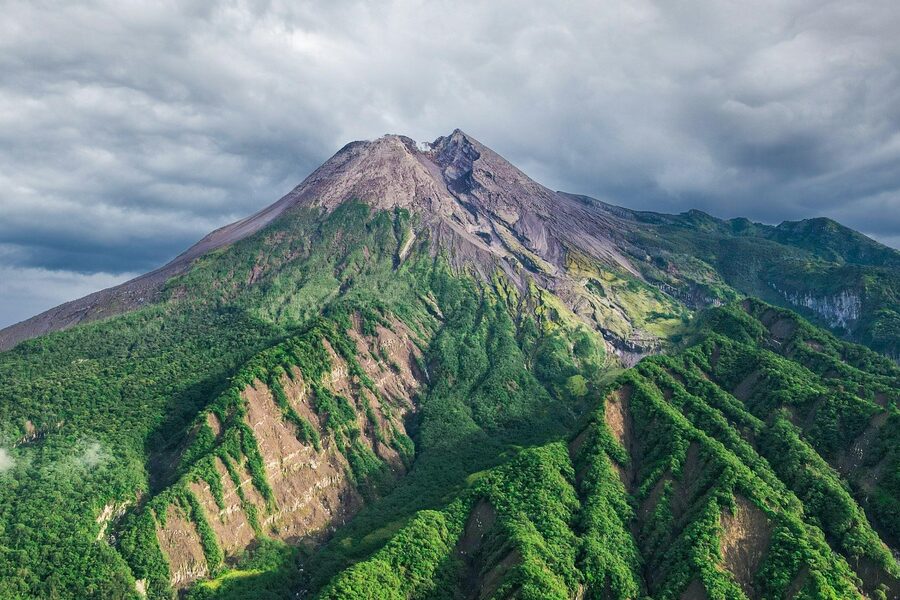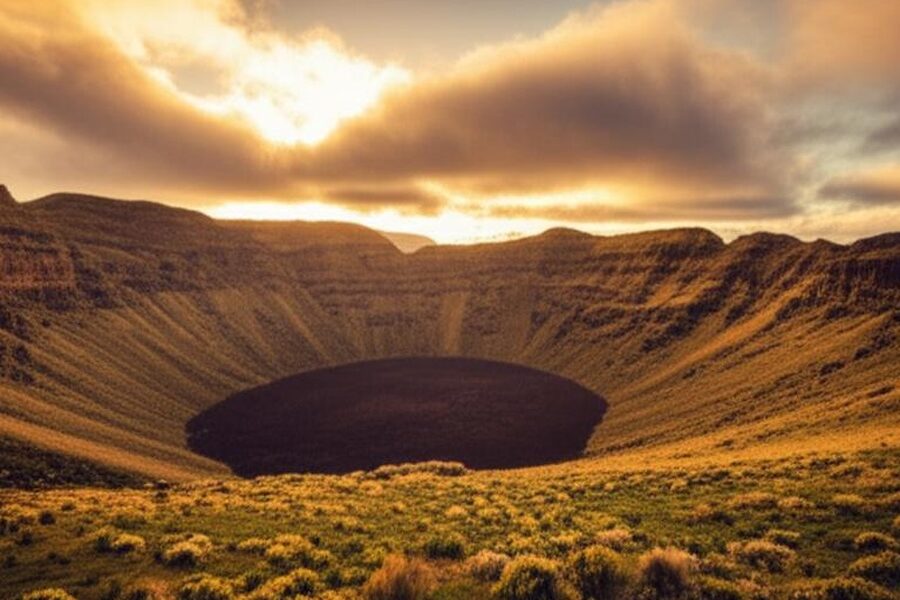
East Africa’s rifted terrain and lakes are framed by volcanic peaks that shape local weather, biodiversity and settlement patterns. From remote lava fields to accessible highland cones, volcanoes are woven into the landscape and daily life across several countries.
There are 17 Active volcanoes in East Africa, ranging from Ardoukoba to Suswa. For each entry I list Country, Coordinates (lat, lon), Last eruption (year) — details you’ll find below.
How recent is the eruption information in this list?
The “Last eruption (year)” column shows the most commonly reported date for each volcano, but eruption reports are updated over time; check national observatories or databases (for example, Smithsonian GVP and local geological services) for the latest activity before relying on the data.
Can visitors safely explore any of these volcanoes?
Access and risk vary widely: some peaks have established trails and guided visits, while others are remote or show ongoing activity. Before planning a trip, confirm current alerts, local access rules and hire experienced guides when needed.
Active Volcanoes in East Africa
| Name | Country | Coordinates (lat, lon) | Last eruption (year) |
|---|---|---|---|
| Erta Ale | Ethiopia | 13.60,40.67 | 2017 |
| Nabro | Eritrea | 13.38,41.70 | 2011 |
| Dabbahu | Ethiopia | 11.63,40.38 | 2005 |
| Ardoukoba | Djibouti | 11.59,42.33 | 1978 |
| Ol Doinyo Lengai | Tanzania | -2.88,35.88 | 2017 |
| Nyiragongo | DRC | -1.52,29.25 | 2021 |
| Nyamuragira | DRC | -1.40,29.20 | 2011 |
| Mount Longonot | Kenya | -0.92,36.37 | 1863 |
| Menengai | Kenya | 0.17,36.03 | Holocene |
| Eburru | Kenya | 0.14,36.30 | Holocene |
| Suswa | Kenya | -1.02,36.25 | Holocene |
| Mount Meru | Tanzania | -3.16,36.75 | 1910 |
| Rungwe | Tanzania | -8.87,33.22 | Holocene |
| Bisoke | Rwanda/DRC | -1.48,29.35 | Holocene |
| Karisimbi | Rwanda/DRC | -1.46,29.21 | Holocene |
| Muhabura | Rwanda/Uganda | -1.37,29.73 | Holocene |
| Sabyinyo | Rwanda/Uganda/DRC | -1.32,29.60 | Holocene |
Images and Descriptions
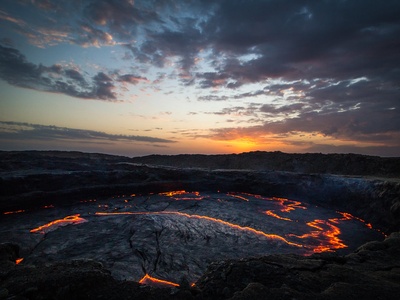
Erta Ale
Famous basaltic shield in Afar with a persistent lava lake; known for dramatic fissure eruptions and gas hazards. Remote area requires guides; active monitoring is limited but visits are popular for experienced travelers and scientists.
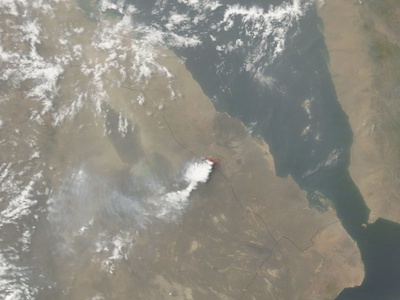
Nabro
Stratovolcano in the Eritrean-Ethiopian Rift that produced a major 2011 eruption with ash plumes and lava flows. Significant for aviation hazards and air quality impacts; access is restricted and researchers closely study its explosive behavior.
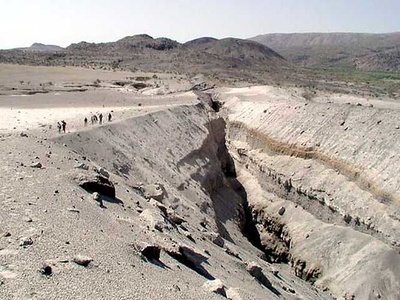
Dabbahu
Also called the Dabbahu-Manda Hararo segment, this Afar volcano produced a 2005 fissure eruption and rifting event. Notable for rapid crustal deformation, lava flows, and ongoing geothermal activity; scientific access is common during field studies.
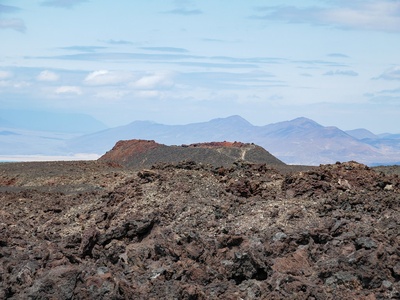
Ardoukoba
Fissure eruption in the Asal–Ghoubbet rift that produced large lava flows in 1978. The site is geologically young and accessible from Djibouti; hazards include recent lava, gas emissions, and unstable rift terrain for visitors.
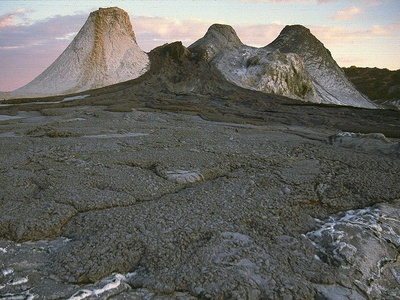
Ol Doinyo Lengai
Unique natrocarbonatite volcano in northern Tanzania, famous for low‑temperature, reactive lava. Eruptions are spectacular but relatively small; climbing is possible with guides though ash, lava bombs, and sudden activity pose risks.
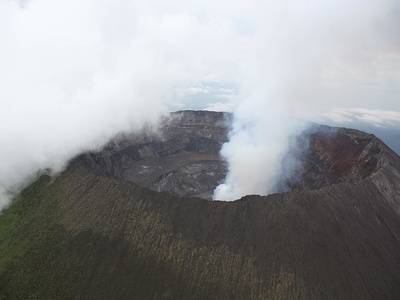
Nyiragongo
One of the world’s most active and dangerous volcanoes with an often‑present lava lake; 2021 eruption produced fast lava flows that threatened nearby cities. Extremely hazardous—close monitoring and evacuation planning are essential.

Nyamuragira
Very active shield volcano in the Virunga chain, frequent flank eruptions produce vast basaltic lava flows and regional SO2 emissions. Major hazard to air travel and local settlements; regularly monitored by observatories and researchers.
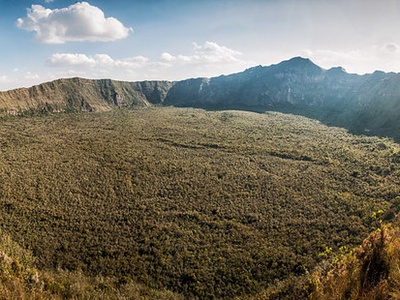
Mount Longonot
Prominent stratovolcanic cone east of Lake Naivasha with a large, scenic crater. Last historically active in the 19th century; popular hiking destination but visitors should respect erosion, unstable slopes, and occasional fumarolic activity.
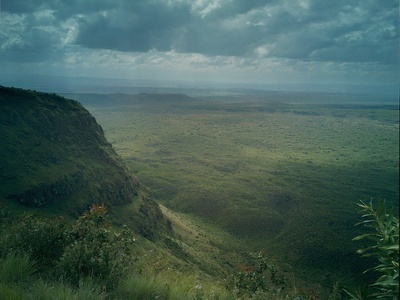
Menengai
Large trachytic caldera near Nakuru with evidence of Holocene eruptions and geothermal activity. The caldera offers hiking and panoramic views; scientists monitor geothermal manifestations and young volcanic deposits around the rim.
Eburru
Cluster of small cones and craters north of Lake Naivasha with fumaroles and recent Holocene lava flows. Geothermal exploration and hiking occur here; hazards include steam explosions, gas emissions, and unstable ground.
Suswa
Large shield volcano with summit caldera and extensive flank faults; evidence of Holocene activity and geothermal potential. Remote trails lead to collapsed pits; caution advised for steam vents, loose rock, and limited infrastructure.
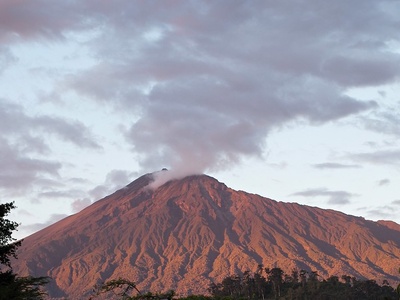
Mount Meru
Stratovolcano just west of Kilimanjaro; last small eruptions reported around the early 20th century. Popular trekking mountain with diverse ecosystems; volcanic hazards are low for visitors but monitoring continues for seismic and fumarolic signs.
Rungwe
Volcanic massif in southwest Tanzania with young lava flows and geothermal activity; part of the Rungwe volcanic province. Noted for hot springs, fumaroles and steep terrain—visited by hikers and studied for regional hazards and geothermal energy.
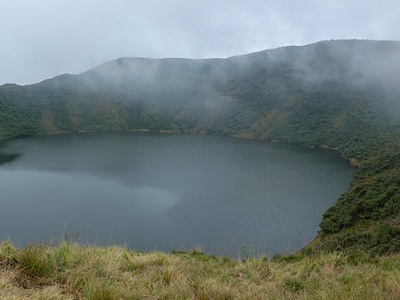
Bisoke
A Virunga stratovolcano with a scenic summit crater lake and Holocene eruptions. Popular with trekkers in Volcanoes National Park; hazards include gas emissions, unstable slopes, and potential ash or lava during renewed activity.
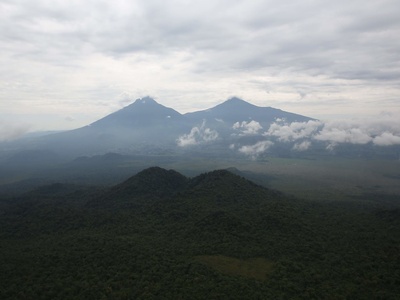
Karisimbi
Highest Virunga peak with evidence of Holocene volcanic activity; glaciated in the past and now a major trekking objective. Visitors should be aware of steep terrain and the volcano’s potential for future eruptive activity.
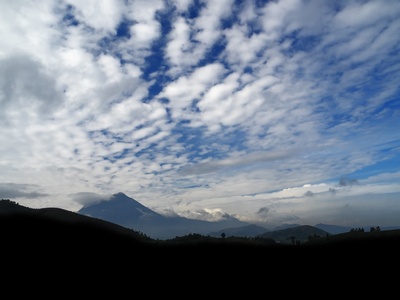
Muhabura
Broader cone in the Virunga chain with Holocene lava flows; known locally as “the Guide’s Mountain.” Popular cross‑border hikes; volcanic hazards are low but include rockfall, fumaroles, and limited emergency services.
Sabyinyo
Ancient, rugged Virunga volcano with multiple summits and Holocene activity evidence. Scenic but remote; visitors need experienced guides. Hazards include steep cliffs, thermal areas, and possible renewed eruptive activity.