Laos sits at the heart of mainland Southeast Asia, a country of river valleys, rugged highlands and a rich mix of ethnic communities. That geography and diversity shape a complex linguistic landscape where local languages are tied closely to region, culture and daily life.
There are 23 Languages Spoken in Laos, ranging from Akha to Yao (Iu Mien). Each entry below is organized with Family,Speakers (est.),Status so you can quickly see linguistic affiliation, rough population estimates and how actively each language is used — you’ll find these details below.
Which language is most widely spoken in Laos?
The Lao language (Lao Loum) is the national language and the most widely used for government, education and media; many people also speak regional varieties and bilingualism is common, especially in towns where trade and education bring groups together.
Are any of these languages at risk of disappearing?
Yes — several minority languages have small speaker populations and face pressure from migration, schooling in Lao and younger generations shifting to dominant languages; check the Status and Speakers (est.) columns below to see which ones are classified as vulnerable or endangered.
Languages Spoken in Laos
| Language | Family | Speakers (est.) | Status |
|---|---|---|---|
| Lao | Tai-Kadai | 3,500,000 | Official |
| Khmu | Austroasiatic | 600,000 | Minority |
| Hmong | Hmong-Mien | 350,000 | Minority |
| Bru | Austroasiatic | 300,000 | Minority |
| Katu | Austroasiatic | 220,000 | Minority |
| Ta-Oi | Austroasiatic | 160,000 | Minority |
| Phuthai | Tai-Kadai | 120,000 | Regional |
| Tai Lue | Tai-Kadai | 80,000 | Minority |
| Tai Dam | Tai-Kadai | 60,000 | Minority |
| Phuan | Tai-Kadai | 50,000 | Minority |
| Yao (Iu Mien) | Hmong-Mien | 70,000 | Minority |
| Laven (Jru’) | Austroasiatic | 35,000 | Minority |
| Lamet | Austroasiatic | 25,000 | Endangered |
| Akha | Sino-Tibetan | 40,000 | Minority |
| Lahu | Sino-Tibetan | 12,000 | Minority |
| Vietnamese | Austroasiatic | 100,000 | Minority |
| Mandarin | Sino-Tibetan | 80,000 | Immigrant |
| French | Indo-European | 60,000 | Immigrant |
| English | Indo-European | 300,000 | Widespread second language |
| Kuy | Austroasiatic | 30,000 | Minority |
| Nyo | Tai-Kadai | 40,000 | Minority |
| Alak | Austroasiatic | 15,000 | Minority |
| Brao | Austroasiatic | 20,000 | Minority |
Images and Descriptions

Lao
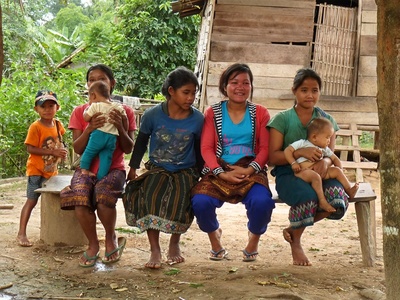
Lao is the national language and mother tongue of lowland Lao, spoken across Vientiane,Vientiane Province,Luang Prabang,Savannakhet and central-southern plains. It’s used in government, media and schooling and is mutually intelligible with Thai.
Khmu
Khmu is the largest highland minority language, spoken by Khmu communities across Oudomxay,Luang Prabang,Bokeo and northern provinces. It’s part of the Khmuic branch, widely used locally but facing pressure from Lao in lowland contact zones.

Hmong
Hmong (White and Green Hmong varieties) is spoken mainly in Xieng Khouang,Luang Prabang,Phongsaly and northern highlands. Strong community networks keep the language vibrant in villages, though younger generations often learn Lao in school.
Bru
Bru (Bruu) is spoken by communities in Savannakhet,Salavan and neighboring central-southern provinces. A Mon-Khmer language with several dialects, Bru is important in local trade and cultural life but has variable vitality across districts.
Katu
Katu and related Katuic languages are found in Sekong,Salavan and Savannakhet provinces in southern Laos. They have active oral traditions and distinct cultural practices; some varieties are better documented than others.
Ta-Oi
Ta-Oi (Taoi) is spoken by groups in Salavan,Sekong and Attapeu in southern and southeastern Laos. It’s a Katuic language cluster with diverse dialects, often used in village life and local ceremonies.
Phuthai
Phuthai is a Tai language spoken in Savannakhet,Nakhon Phanom border areas and northeastern provinces. Phuthai communities preserve folk music and ritual speech, maintaining a distinct identity while commonly speaking Lao as well.
Tai Lue
Tai Lue speakers live in Oudomxay,Luang Namtha and northern provinces. The language uses traditional scripts in cultural contexts, and communities maintain unique weaving and religious traditions alongside bilingualism in Lao.
Tai Dam
Tai Dam (Black Tai) communities are concentrated in Bokeo,Oudomxay and northern areas. Their language has distinctive tone and vocabulary; cultural autonomy is strong though many speakers also use Lao or Thai for commerce.
Phuan
Phuan is spoken by Phuan communities in Xiangkhouang,Udon Thani border zones and parts of central Laos. It shares features with Lao but retains unique phonology, folk songs and traditional dress among villagers.
Yao (Iu Mien)
Yao (Iu Mien) speakers are found in Phongsaly,Luang Prabang and northern provinces. The community maintains ritual songs, Chinese-influenced scripts historically; many are bilingual in Lao and maintain cross-border ties.
Laven (Jru’)
Laven (Jru’) is spoken in Champasak,Sekong and Salavan in southern Laos. As part of the West Bahnaric branch, it supports local oral literature and community practices, though younger speakers increasingly use Lao.
Lamet
Lamet is a small Mon-Khmer language in Oudomxay and Luang Namtha. Rural villages maintain traditional livelihoods, but Lamet faces decline as children shift toward Lao for education, opportunity and media exposure.
Akha
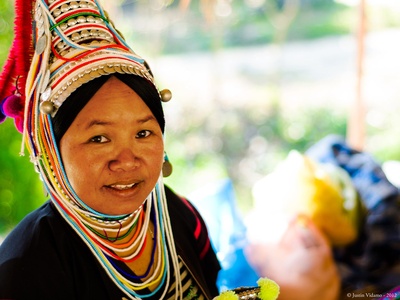
Akha communities live in Phongsaly,Luang Namtha and northern highlands. Known for ornate traditional dress and hill farming, Akha speak a Loloish language with strong oral culture and cross-border connections.
Lahu
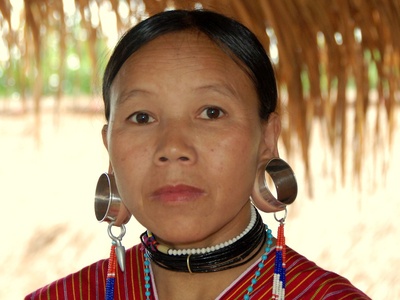
Lahu speakers are present in northern Laos around Phongsaly and Oudomxay. The language is part of the Loloish branch and remains in village use, though small community sizes make it vulnerable.
Vietnamese
Vietnamese is spoken by urban Vietnamese communities in Vientiane and border towns. Used in business and family life, it reflects historical migration and cross-border commerce with Vietnam and maintains media and schooling ties.
Mandarin
Mandarin Chinese is used by ethnic Chinese communities, traders and growing business links in Vientiane,Luang Prabang and border cities. Increasing economic ties to China boost Mandarin learning among younger entrepreneurs.

French
French remains present among older officials, academics and in legal/educational history in Vientiane and provincial centers. Its role has declined since independence but it still appears in administration, higher education and cultural circles.

English
English is widely taught in schools and used in tourism, higher education and international business, especially in Vientiane,Luang Prabang and border towns. Younger generations increasingly use English for opportunity and study abroad programs.
Kuy
Kuy (Kuay) speakers live in Oudomxay,Luang Prabang and western provinces. As Austroasiatic language speakers, they practice swidden farming and preserve traditional crafts, while many younger Kuy also speak Lao.
Nyo
Nyo (Nyaw) communities appear in southern provinces like Champasak and across the border areas; the language is closely related to Lao and Thai but retains local vocabulary and village traditions.
Alak
Alak is spoken in southern Bolikhamxay and Champasak highlands, part of the Pearic/Bahnaric groups. It remains in daily use in several upland villages but has limited documentation and faces pressure from Lao language shift.
Brao
Brao is spoken in Attapeu and nearby border areas with Cambodia. A Bahnaric language, Brao communities maintain traditional rituals and kinship systems, though some dialects are small and vulnerable today.