TLDR
- Turkey has roughly 20 living indigenous or long-established minority languages besides Turkish, according to Ethnologue‘s country count, spread across five language families.
- The biggest by far are Kurmanji Kurdish and Zazaki. The smallest, like Hértevin and Romeyka, may have a few hundred to a few thousand speakers.
- Turkish is the only official language, and the constitution bars teaching any other language as a mother tongue in schools. Some limited allowances for private courses, broadcasting and elective classes exist.
- There has been no official census of mother tongue since 1965, so every speaker figure below is an estimate.
Contents
- How many indigenous languages are there in Turkey?
- The languages at a glance
- Kurdish and Zazaki
- Laz and the Kartvelian languages
- Circassian and other Caucasian languages
- Neo-Aramaic, Armenian and Greek
- What the law says
- Which languages are gone, and which are close
- FAQ
How many indigenous languages are there in Turkey?
Ethnologue counts around 19 living indigenous languages in Turkey, on top of Turkish itself and languages brought by recent migration. That number depends on where you draw the lines. Linguists argue over whether Kurmanji and Zazaki are separate languages (they are not mutually intelligible, so most say yes), and whether Adyghe and Kabardian count as one language or two.
“Indigenous” is also slippery here. Kurdish, Zazaki, Armenian, Greek, Laz and the Aramaic dialects have been spoken in Anatolia for centuries or millennia. Circassian and Abkhaz speakers arrived mostly after the Russian conquest of the Caucasus in the 1860s, which makes them long-established minorities rather than strictly native ones. Most lists of indigenous languages in Turkey include them anyway, and so does this one.
The picture is shaped by the 20th century. The 1923 population exchange between Greece and Turkey removed most Greek speakers. The Armenian population was devastated in 1915 and after. And the early republic pushed Turkish as the single language of public life. What survives is a patchwork, concentrated in the southeast, the Black Sea coast and a few pockets of Istanbul.
The languages at a glance
Speaker numbers are rough estimates drawn from linguistic surveys and community counts. Vitality labels follow the scale used in the UNESCO Atlas of the World’s Languages in Danger, and ratings differ between editions and sources, so check the Atlas for the current entry on any specific language.
| Language | Family | Main region | Est. speakers in Turkey | Vitality |
|---|---|---|---|---|
| Kurmanji (Northern Kurdish) | Indo-European (Iranian) | Southeast, east, large cities | Several million (often cited 8-15 million) | Vulnerable |
| Zazaki | Indo-European (Iranian) | Tunceli, Bingöl, Diyarbakır, Elazığ | 1-2 million (higher by some counts) | Vulnerable |
| Arabic (local dialects) | Semitic | Hatay, Mardin, Şanlıurfa, Siirt | Around 1 million or more | Not endangered |
| Laz | Kartvelian | Rize, Artvin, Sakarya | Tens of thousands | Definitely endangered |
| Circassian (Adyghe, Kabardian) | Northwest Caucasian | Central Anatolia, Marmara, Black Sea | Hundreds of thousands of heritage speakers, fewer fluent | Vulnerable to definitely endangered |
| Turoyo (Neo-Aramaic) | Semitic | Tur Abdin, Istanbul | A few thousand | Definitely to severely endangered |
| Hértevin (Neo-Aramaic) | Semitic | Siirt province | Very few, possibly extinct | Critically endangered |
| Homshetsma (Hemshin Armenian) | Indo-European (Armenian) | Hopa, Artvin | A few thousand | Definitely endangered |
| Western Armenian | Indo-European (Armenian) | Istanbul | Tens of thousands | Definitely endangered |
| Romeyka (Pontic Greek) | Indo-European (Hellenic) | Trabzon, Of valley | Around 5,000 | Severely endangered |
| Ladino (Judeo-Spanish) | Indo-European (Romance) | Istanbul, İzmir | A few thousand, mostly older | Severely endangered |
Kurdish and Zazaki
Kurdish is the second most spoken language in Turkey by a wide margin. Most speakers use Kurmanji, with a smaller Sorani-speaking community near the Iraqi border. Nobody has a trustworthy headcount. Turkish censuses stopped asking about mother tongue after 1965, and political sensitivities around Kurdish identity make survey estimates range widely. Estimates that the Kurdish population is somewhere between 15 and 20 percent of Turkey’s population are common, but they are contested and speaker numbers sit below them, since many ethnic Kurds in big cities now speak Turkish first.
Zazaki is a different language, not a Kurdish dialect, though some Zaza speakers identify as Kurds and others do not. It belongs to the Iranian branch alongside Kurdish, but the two are not mutually intelligible. It is spoken in a rough arc across Tunceli (Dersim), Bingöl, Diyarbakır and Elazığ, split into northern, central and southern varieties. Speakers call it Kırmancki, Dimli or Zazaki depending on the valley. Almost all Zazaki speakers live in Turkey, which matters: if the language fades here, there is no large neighboring country holding the reserve.
Both languages face the same problem. They are widely spoken at home by older people, but children grow up in Turkish-language schools, Turkish-language media and a Turkish-speaking job market. Intergenerational transmission is falling, which is why UNESCO treats both as vulnerable despite their large speaker numbers.
Laz and the Kartvelian languages
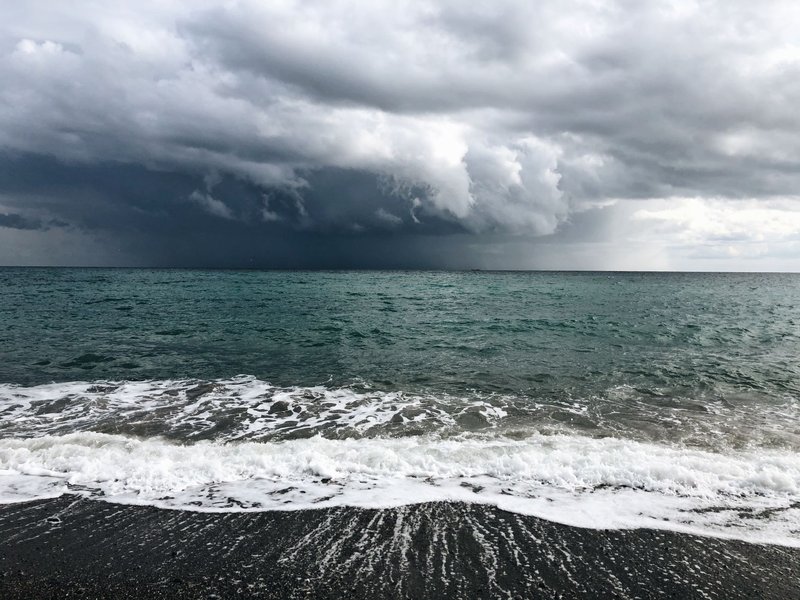
Laz is the Black Sea coast’s own language. Along the eastern coast near Rize, Artvin and into Georgia, speakers use a language related to Georgian, Mingrelian and Svan, the Kartvelian family that has no demonstrated link to any other language group on earth. It is a language of tea hills and steep valleys, and few outsiders know it exists. Most travelers to Rize hear Turkish and assume that is the whole story.
Laz is spoken in Turkey by tens of thousands of people, depending on whether you count fluent speakers or people who identify as Laz. Younger Laz mostly speak Turkish, and the Laz language is passed on at home less and less. Activists have produced dictionaries, a standardized Latin-script alphabet and music, and the state has allowed Laz as an elective course in some schools. It remains a language that most speakers use only with grandparents.
Georgian is also spoken in Turkey, mainly by communities in Artvin province, including Macahel, near the Georgian border. Those speakers are descendants of people who stayed in the region after the Ottoman-Russian wars.
Circassian and other Caucasian languages
Turkey has the largest Circassian community outside the Caucasus, the result of mass expulsions from the northwestern Caucasus in the 1860s. The two main languages are Adyghe (West Circassian) and Kabardian (East Circassian), both of the Northwest Caucasian family. Their grammar is famous among linguists for large consonant inventories and tiny vowel systems.
Estimates of how many people in Turkey have Circassian ancestry run from several hundred thousand to over a million. The number who speak the language fluently is much smaller. Village life, which once kept Circassian alive, collapsed as people moved to cities for work, and language shift followed. Circassian cultural associations run weekend classes, and Adyghe and Kabardian have been offered as elective courses in public schools since 2012.
The saddest Caucasian story is Ubykh. This language had one of the most complex consonant systems ever documented, with about 80 consonants and only two vowels. Its last known speaker, Tevfik Esenç, died in Turkey in 1992. Abkhaz and Chechen survive in Turkey in small communities.
Neo-Aramaic, Armenian and Greek
These are the languages of Turkey’s historic Christian communities, and the ones hit hardest by the events of the last century.
Turoyo is a Neo-Aramaic language, a descendant of the language Jesus is thought to have spoken. Its home is the Tur Abdin plateau near Mardin and Midyat, where Syriac Orthodox Christians have lived for nearly two millennia. Waves of emigration since the 1960s moved most speakers to Germany, Sweden and the Netherlands. Only a few thousand remain in Turkey, and the diaspora now holds the larger share of the language.
Hértevin is a related Neo-Aramaic language once spoken around the village of Hértevin in Siirt province. Its speakers left or shifted to Kurdish and Turkish in the 20th century. It appears in surveys as critically endangered, and some researchers consider it effectively gone.
Homshetsma is the Armenian dialect of the Hemshin people in the northeastern Black Sea region near Hopa. It is separate from the Turkic-influenced dialect of the Hemshin who converted to Islam. The Armenian-speaking community is small and has had little institutional support.
Western Armenian survives mostly in Istanbul, where the Armenian community of tens of thousands runs its own schools and newspapers, notably the daily Agos, and holds its own against Turkish pressure better than most minority languages here. UNESCO still classes Western Armenian as endangered globally.
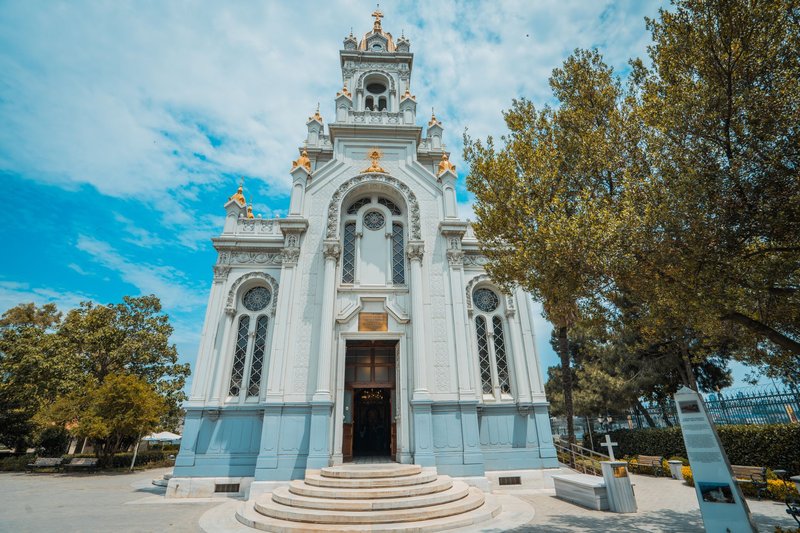
Romeyka is the most remarkable of the lot. Spoken in the valleys around Trabzon, especially the Of district, it is a Greek variety that linguists such as Ioanna Sitaridou of Cambridge have argued descends from Hellenistic Greek without passing through the Byzantine standard. That claim is debated, but the language is real and spoken by roughly 5,000 people, many of them Muslims who were not part of the 1923 exchange. It is one of the most distinctive and least known endangered languages in Europe’s neighborhood.
What the law says
Turkish is the only official language. Article 3 of the constitution states that the state’s language is Turkish, and Article 42 says that no language other than Turkish may be taught as a mother tongue to Turkish citizens at any educational institution.
The Treaty of Lausanne in 1923 is the other key text. Its minority provisions, Articles 37 to 45, protect “non-Muslim minorities” and allow them to use their own languages in private life, in religion and before courts. Turkey has applied these protections only to Armenians, Greeks and Jews. Kurds, Laz, Circassians, Zaza and Arabs are not covered, and neither are Syriacs, who many scholars and Syriac organizations argue should be.
The state has been harsher and softer at different times:
- 1983 to 1991: Law 2932 banned the use of languages other than Turkish as mother tongues. It was repealed in 1991.
- 2002 to 2004: EU accession reforms allowed private courses and limited broadcasts in Kurdish and other languages. Several of the first private courses closed within a few years.
- 2009: The state broadcaster TRT launched a Kurdish-language channel, and Mardin Artuklu University opened an Institute of Living Languages.
- 2012: Public schools were allowed to offer elective “living languages and dialects” courses, including Kurdish, Zazaki, Adyghe, Kabardian, Abkhaz and Laz, from fifth grade.
- 2013: A reform package permitted private schools to teach in mother tongues and removed restrictions on the letters q, w and x, used in Kurdish.
- After 2016: Under state-of-emergency decrees, many Kurdish-language media outlets, cultural institutions and some language programs were closed. Critics say these closures reversed earlier gains. The government describes them as security measures.
Turkey has not signed the European Charter for Regional or Minority Languages. Rights groups like Minority Rights Group keep documenting gaps between the legal changes on paper and what is available in practice, especially for public-school instruction.
One more piece of language policy is easy to miss: place names. Thousands of Kurdish, Armenian, Laz and Greek village and mountain names were replaced with Turkish ones during the 20th century, so the map itself is a record of language loss.
Which languages are gone, and which are close
Gone: Ubykh (1992), and Cappadocian Greek in all practical terms after 1923. Several other languages disappeared in the early 20th century with little documentation.
Closest to going: Hértevin, and Romeyka and Ladino in their Turkish form. They share a profile of aging speakers, almost no young learners and few places to use the language in public.
Large but declining: Kurmanji, Zazaki and Circassian. Their problem is not too few speakers today. It is that children are not learning them at home at the rate older generations did.
Holding steadier: Arabic in the Hatay and Mardin regions, supported by cross-border contact and, since 2011, millions of Syrian refugees, and Western Armenian in Istanbul, which has schools, a press and a church.
FAQ
How many indigenous languages are in Turkey?
Ethnologue counts about 19 living indigenous languages. The exact total changes depending on whether related varieties like Adyghe and Kabardian, or Kurmanji and Zazaki, are counted separately.
What is the most spoken minority language in Turkey?
Kurdish, mostly Kurmanji. Estimates run from several million to well over 10 million speakers, but there is no recent official data.
Is Kurdish allowed in Turkey?
Yes, in private life, in private courses, in some broadcasting and as an elective course in public schools. It is not allowed as a language of instruction in public schools or, in general, in official proceedings.
Is Zazaki a dialect of Kurdish?
Linguistically, no. It is a separate Iranian language closely related to Kurdish but not mutually intelligible with it. Some Zaza speakers still consider themselves Kurds, a point where identity and linguistics do not line up.
Which languages in Turkey are extinct?
Ubykh is the clearest case, with its last speaker dying in 1992. Cappadocian Greek was effectively lost after the 1923 population exchange. Hértevin may be close to extinct.
Are any of these languages taught at university?
Yes. Kurdish and other living-language programs have been offered at universities such as Mardin Artuklu, and Zazaki and Kurdish are studied in departments in the east. The availability of these programs has shifted with political conditions.
Is Turkey the only home of any of these languages?
Several have most or all of their speakers in Turkey, including Zazaki, Laz (apart from a Georgian portion), Romeyka and Hértevin. That makes local policy decisive for their survival.