Most lists of ruins in Japan are castle photo dumps with no train times. This one sorts ten sites by what they are, what’s physically left, and how much effort it takes to reach them, so you can pick by the kind of day you want.
Japan’s wooden buildings burn, rot and get rebuilt, so the ruins that last tend to be stone walls, earthen mounds, concrete and foundations. That shapes what you’ll see: less “crumbling temple,” more “grass-covered ramparts with a view.”
Table of Contents
- TLDR: The Five Picks
- Castle Ruins in Japan
- Ancient Ruins in Japan: Jomon, Yayoi and Early Capitals
- Abandoned Modern Ruins: Gunkanjima
- Quick-Pick Table
- Planning Notes
- FAQ
TLDR: The Five Picks
- Best overall: Takeda Castle (Hyogo). Stone walls on a 353 m ridge, and in autumn a sea of fog beneath them.
- Most atmospheric: Nakagusuku Castle (Okinawa). Curved limestone walls and a UNESCO listing.
- Best for history nerds: Ichijodani (Fukui). An entire samurai town, burned in 1573, partly rebuilt on its original footprint.
- Easiest: Heijo Palace (Nara). Free, flat, and ten minutes by train from Nara Station.
- Most dramatic: Gunkanjima (Nagasaki). A concrete island city abandoned in 1974, reachable only by boat tour, weather permitting.
Castle Ruins in Japan
Castles are what most people mean by ruins in Japan. Many were dismantled in the 1870s, after the Meiji government abolished the feudal domains, or destroyed in war. What survives is the stonework, which was the part built to last. For a wider sweep of sites than these ten, Historical Places in Japan lists 104 across prefectures and eras.
1. Takeda Castle, Hyogo
Prefecture: Hyogo (Asago) | Best for: photography, hiking | Best season: September to November
Built in the 1430s on a ridge above the town of Takeda, the castle was abandoned in 1600 after its last lord was ordered to commit seppuku following the Battle of Sekigahara. Nobody lived here after that, which is why the stone walls are so intact.
What you see today is a long, interlocking set of granite walls following the ridge line, with no buildings at all. Walk the top and you can trace where the main keep, the secondary enclosures and the gates sat.
The famous part is the fog. On cold, clear, windless autumn mornings, mist fills the valley and the ruins appear to float, which gave the castle its “Castle in the Sky” nickname. The best view of this is from the Ritsuunkyo viewpoint on the opposite mountain, reached by car or taxi before dawn. From the castle itself you get the fog below you.
Getting there: JR Takeda Station is a hilly walk of roughly 40 minutes from the ruins. From the parking lot below the site it’s about 15 minutes up. Admission is about ¥500, and the site closes in winter, so check dates if you’re going outside spring to November.
2. Ichijodani Asakura Family Ruins, Fukui
Prefecture: Fukui | Best for: history, easy walking | Best season: spring and autumn
The Asakura clan ruled this narrow valley for five generations in the 1400s and 1500s and built a city that rivaled Kyoto in its cultural pull. In 1573 Oda Nobunaga’s army destroyed it and the burning reportedly lasted days.
Archaeologists dug it out of the ground, and the result is unusual: stone foundations, a restored samurai residence gate, and a reconstructed street of merchant and craft houses. It’s designated a Special Historic Site and a Special Place of Scenic Beauty. The scale is the point. You can follow a road that was a real main street, between the stone footings of houses.
Getting there: a local train from Fukui Station to Ichijodani Station, then a walk of 10 to 20 minutes depending on where you start. The ruins themselves are open ground you can wander freely; the museum and reconstructed street charge a few hundred yen. Count on two to three hours.
3. Nakagusuku Castle, Okinawa
Prefecture: Okinawa | Best for: photography, easy access | Best season: November to March
Okinawa’s castles, called gusuku, belong to a different tradition from mainland Japan. They were built by the Ryukyu Kingdom, and Nakagusuku is among the best preserved. UNESCO lists Nakagusuku as part of the Gusuku Sites and Related Properties of the Kingdom of Ryukyu.
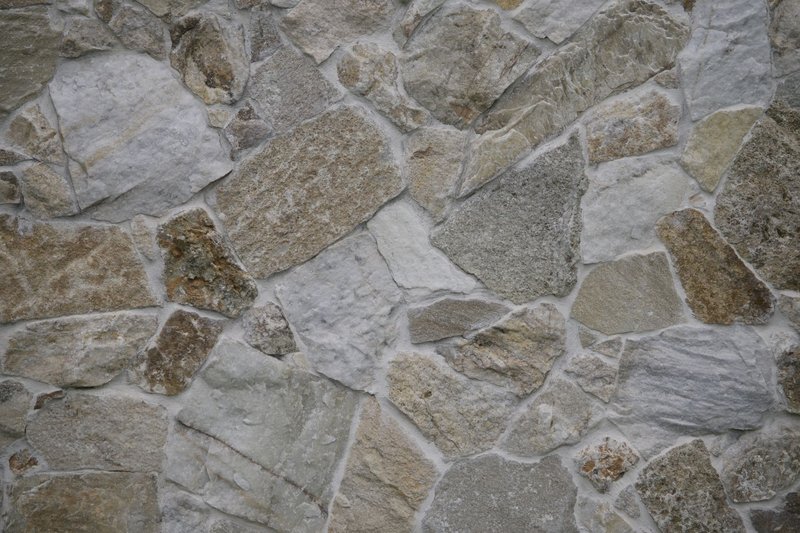
The walls are the draw. Limestone blocks are fitted in curving lines, with arched gateways that survived centuries of typhoons. The 15th-century lord Gosamaru, who held the castle, is remembered locally as a fine strategist and loyal retainer who was later destroyed by a rival. His story is on the signs.
Climb to the upper enclosure for a view of the Pacific on one side and the East China Sea on the other. If you have time, Katsuren Castle and Zakimi Castle are close by and show two different wall styles.
Getting there: about 40 minutes by car from Naha, or around an hour by bus. Entry is roughly ¥400. Avoid midday in summer; the walls hold heat and there’s almost no shade.
4. Hara Castle, Nagasaki
Prefecture: Nagasaki (Minamishimabara) | Best for: history, quiet | Best season: spring and autumn
This is the least photogenic site on the list and the most affecting. In 1637 to 1638, tens of thousands of rebels, most of them Christian peasants and their families, held the abandoned Hara Castle against the shogunate’s army during the Shimabara Rebellion. The siege ended with nearly everyone inside killed.
There’s little left to see: earthworks, stone wall fragments, a memorial cross and an open view over the sea toward Amakusa. You come here for the setting and the story. It’s part of the UNESCO-listed Hidden Christian Sites in the Nagasaki and Amakusa Region.
Getting there: a car is the practical choice. By train, take the Shimabara Railway to the end of the line and continue by bus or taxi. Allow an hour on site.
5. Oka Castle, Oita
Prefecture: Oita (Taketa) | Best for: hiking, solitude | Best season: autumn
Oka Castle sits on a steep ridge above the town of Taketa, and the walls climb the hillside in tiers. It was dismantled in the 1870s, and what remains is a skeleton of huge, sharply angled stones that make the climb feel like entering a fortress. The composer Rentaro Taki is said to have written his song “Kojo no Tsuki” (The Moon over the Ruined Castle) after visiting here as a boy.
Getting there: about 20 minutes on foot from Bungo-Taketa Station to the entrance, then a steady uphill walk. Entry costs a few hundred yen. Allow 90 minutes. It’s a good choice if Takeda is crowded or closed.
Ancient Ruins in Japan: Jomon, Yayoi and Early Capitals
The ancient sites are where competitors usually get vague. These ones cover roughly 5,000 years of history, and each one leaves something to look at.
6. Sannai Maruyama, Aomori
Prefecture: Aomori | Best for: history, families | Best season: June to October
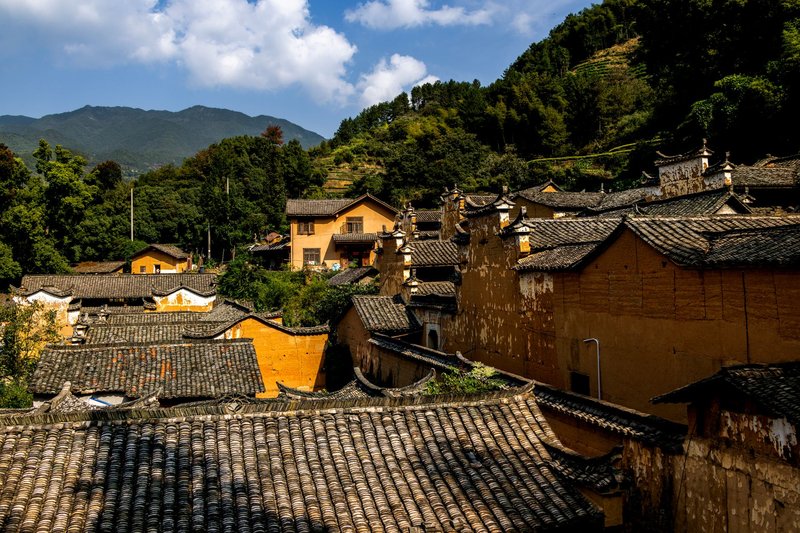
Sannai Maruyama is a Jomon settlement that was occupied for well over a thousand years, from about 3900 BCE. It’s the site that changed how Japanese archaeologists think about hunter-gatherers: residents here cultivated chestnut trees and traded as far as Hokkaido and Niigata. It’s one of the Jomon Prehistoric Sites in Northern Japan inscribed by UNESCO.
You’ll see reconstructed pit dwellings, a long house and a six-pillar tower that is the site’s symbol. They’re reconstructions, but they’re built over the actual post holes, and the on-site museum shows the pottery and clay figurines that came out of the ground.
Getting there: a bus from Aomori or Shin-Aomori Station takes about 15 to 20 minutes. Admission to the grounds is free. Plan on one to two hours. Aomori winters are snowy, so summer and early autumn are better.
7. Yoshinogari, Saga
Prefecture: Saga | Best for: history, families | Best season: spring and autumn
Yoshinogari is a large Yayoi-period settlement surrounded by a moat, with watchtowers, storehouses and a burial mound complex. It dates from roughly the 3rd century BCE to the 3rd century CE. Its size and defences fuel the long-running debate over whether this was part of the kingdom described in Chinese chronicles as Yamatai, ruled by the queen Himiko. Nobody has settled it.
The park is a rebuilt village, set on the real site. It’s also very large; allow two to three hours and wear shoes you can walk in. Entry is under ¥500.
Getting there: Yoshinogari-koen Station on the JR Nagasaki Line is about 40 minutes from Hakata (Fukuoka) by local train, then a short walk.
8. Heijo Palace, Nara
Prefecture: Nara | Best for: easy access, history | Best season: spring and autumn
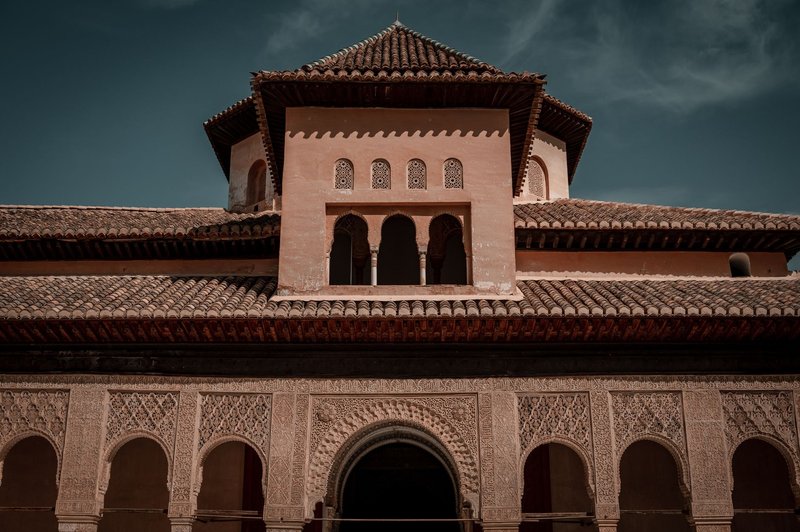
Heijo-kyo was Japan’s capital from 710 to 784, a grid city modeled on Tang China’s Chang’an. The palace compound was left as farmland for centuries, which preserved the foundations. It’s included in UNESCO’s Historic Monuments of Ancient Nara.
Today you walk across a very large grassy plain that was once the center of the state, marked by foundation stones and a few rebuilt structures. The reconstructed Daigokuden (the main audience hall) went up in 2010 and the Suzaku Gate in 1998. The scale of the open ground is the experience: the gate at one end, the hall at the other, and nothing in between but grass.
Getting there: Kintetsu Yamato-Saidaiji or Nishinokyo Station, about ten minutes by train from Nara Station, then a walk. The grounds are free. It’s a half-day add-on to Nara’s temples.
9. Ishibutai Kofun, Asuka, Nara
Prefecture: Nara (Asuka) | Best for: cycling, quirky history | Best season: spring and autumn
Not everything in Japan’s ruins has a roof missing. Ishibutai is a 7th-century tomb whose burial chamber was exposed when the earth mound over it eroded away. What remains is a collection of giant granite blocks stacked into a stone room you can walk inside. It’s often linked with the powerful statesman Soga no Umako, though the identification isn’t certain.
Asuka is best done by bicycle. The village is a scattering of ancient sites among rice fields, and rental bikes are available near Asuka and Kashiharajingu-mae stations. Entry to Ishibutai is a few hundred yen.
Abandoned Modern Ruins: Gunkanjima
Haikyo, the Japanese term for abandoned modern places, is a genre of its own. A list of 15 ghost towns in Asia covers abandoned settlements in Japan, China, India and Kazakhstan. Most haikyo are on private land and not open to visitors. Gunkanjima is the exception.
10. Gunkanjima (Hashima), Nagasaki
Prefecture: Nagasaki | Best for: photography, industrial history | Best season: spring and autumn, when seas are calmer
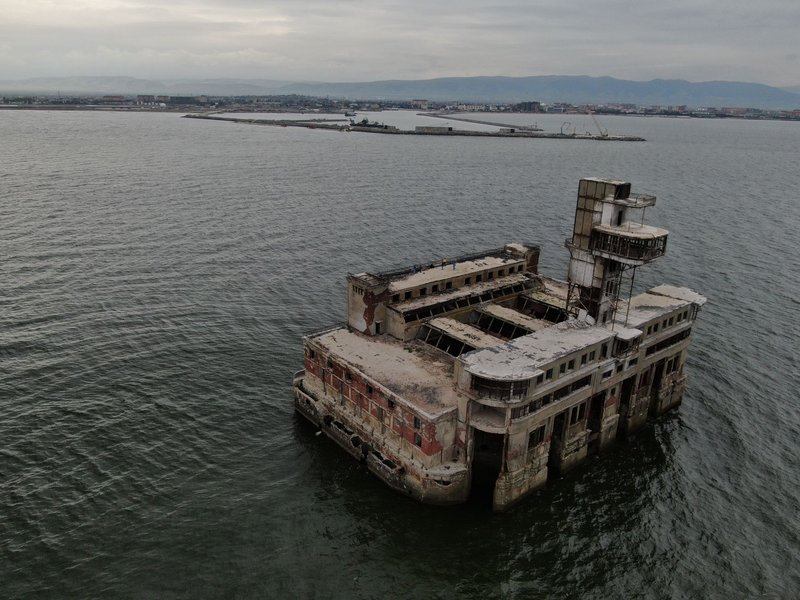
Gunkanjima, “Battleship Island,” is a tiny island about 15 km off Nagasaki, roughly 480 m long. Mitsubishi mined undersea coal here from the 1890s, and by 1959 more than 5,000 people were packed onto it, among the densest populations ever recorded anywhere. The mine closed in January 1974 and the island emptied within months.
What you see is a silhouette of crumbling concrete apartment blocks, including Japan’s first large reinforced-concrete residential building, built in 1916. Landings have been allowed since 2009, and you walk a limited route along the edge. You can’t go inside the buildings.
It’s part of Japan’s Meiji Industrial Revolution sites, a UNESCO listing that remains contested because Korean and Chinese laborers were forced to work in the mines during the war. The tour is worth taking seriously for that history, not just the view.
Getting there: boat tours leave from Nagasaki Port and run about three hours, with roughly 40 to 50 minutes ashore. Expect to pay ¥4,000 to ¥5,000. Landing depends on sea conditions, and cancellations are common, so book early in your Nagasaki stay and keep a spare day. Typhoon season (August to October) is the riskiest.
Quick-Pick Table
| Site | Region | Type | Effort | Best for |
|---|---|---|---|---|
| Takeda Castle | Kansai (Hyogo) | Castle | Moderate hike | Photography, fog |
| Ichijodani | Hokuriku (Fukui) | Castle town | Easy | History |
| Nakagusuku | Okinawa | Gusuku | Easy | Walls, views |
| Hara Castle | Kyushu (Nagasaki) | Castle | Easy, car needed | Story, quiet |
| Oka Castle | Kyushu (Oita) | Castle | Steep walk | Hiking, solitude |
| Sannai Maruyama | Tohoku (Aomori) | Jomon village | Easy | Families |
| Yoshinogari | Kyushu (Saga) | Yayoi village | Easy, large | Families, history |
| Heijo Palace | Kansai (Nara) | Palace | Very easy | First-timers |
| Ishibutai | Kansai (Nara) | Tomb | Easy, bike | Cycling |
| Gunkanjima | Kyushu (Nagasaki) | Industrial island | Boat tour | Photography |
Planning Notes
Kyushu loop: Nagasaki, Hara Castle and Yoshinogari fit into a tight three-day trip, with Oka Castle as an add-on if you have a car.
Kansai loop: Heijo Palace, Asuka and Takeda Castle can be done from a base in Nara or Osaka, though Takeda needs an early start.
Fog hunters: stay in Takeda town rather than doing a day trip. Fog appears at dawn and is gone by mid-morning.
Rule of thumb: if the site is UNESCO-listed, expect clear signage, paid entry and decent English. If it isn’t, expect a free walk, fewer people and a bus that runs a few times a day.
FAQ
How much do ruins in Japan cost to visit? Most cost between free and about ¥500. Sannai Maruyama and Heijo Palace are free to enter. Takeda, Nakagusuku and Yoshinogari charge small fees. Gunkanjima is the outlier because the boat tour is ¥4,000 to ¥5,000.
Which ruins are UNESCO World Heritage sites? Nakagusuku, Hara Castle, Sannai Maruyama, Heijo Palace and Gunkanjima are all part of UNESCO listings. Takeda, Ichijodani, Oka, Yoshinogari and Ishibutai are not inscribed.
Can I visit in winter? Most can be visited, with exceptions. Takeda Castle closes in winter and Oka Castle can be icy. Aomori and Fukui get heavy snow, which limits walking at Sannai Maruyama and Ichijodani. Nakagusuku in Okinawa is at its best in winter, and Heijo Palace is fine year round.
When can I see the fog at Takeda Castle? The “sea of clouds” appears most often from September to November, early in the morning after a cold, clear night with little wind. It is not guaranteed on any given day, so plan two mornings if you can.
Can I go inside Gunkanjima’s buildings? No. Visitors follow marked routes along the island’s edge and view the buildings from outside, for safety reasons.
What if I’m interested in haikyo? Most abandoned buildings in Japan are on private property, unsafe, or both, and entering them can be illegal. Gunkanjima is the legal, organized option.