
TLDR
Paris, Marseille, Lyon, Toulouse and Nice are the five largest cities in France by municipal population. The top ten, using INSEE’s 2022 figures (published in 2025), are Paris, Marseille, Lyon, Toulouse, Nice, Nantes, Montpellier, Strasbourg, Bordeaux and Lille. Count the whole metropolitan area instead of the city limits and Lyon keeps second place, while Lille and Bordeaux climb because they sprawl far beyond their official borders.
Table of Contents
- The top 10 at a glance
- Why city and metro rankings disagree
- The 10 largest cities in France, one by one
- The next 10 largest French cities
- Which cities are growing and which are shrinking
- FAQ
The top 10 at a glance

Municipal figures below are rounded from INSEE’s 2022 legal populations. Metro figures are approximate populations of each city’s INSEE “aire d’attraction” (functional urban area, 2020 definition), rounded to the nearest 100,000. Treat the metro column as a guide, not a census count, because the boundaries are redrawn periodically.
| Rank | City | Municipal population (2022) | Metro area (approx.) |
|---|---|---|---|
| 1 | Paris | 2.11 million | 13.0 million |
| 2 | Marseille | 873,000 | 1.9 million (with Aix-en-Provence) |
| 3 | Lyon | 521,000 | 2.3 million |
| 4 | Toulouse | 504,000 | 1.5 million |
| 5 | Nice | 348,000 | 1.0 million |
| 6 | Nantes | 321,000 | 1.0 million |
| 7 | Montpellier | 303,000 | 0.8 million |
| 8 | Strasbourg | 292,000 | 0.9 million |
| 9 | Bordeaux | 262,000 | 1.4 million |
| 10 | Lille | 237,000 | 1.5 million |
Sources: INSEE legal populations; metro figures rounded from INSEE functional-area data.
Why city and metro rankings disagree
A French commune is a legal boundary, and those boundaries were mostly drawn centuries ago. Paris is the extreme case: the city proper covers about 105 square kilometers, roughly the size of a large airport complex, and the suburbs that spill past the périphérique are separate communes with their own mayors.
That’s why the two lists look so different. Lyon has about 521,000 residents inside its limits, but its metro area is around 2.3 million, which puts it well ahead of Marseille in practical terms. Lille is the starkest jump: it ranks tenth as a city and roughly fourth or fifth as a metro area, because the dense ring of Roubaix, Tourcoing and Villeneuve-d’Ascq is a different commune on paper but the same urban fabric on the ground.
Pick the measure that matches your question. Moving somewhere and asking “how big does it feel?” calls for metro figures. Settling a quiz answer or a school assignment calls for the municipal ranking, which is what INSEE and most official lists use. The UN’s World Urbanization Prospects uses a third approach, built-up urban agglomerations, so its numbers will differ from both.
The 10 largest cities in France, one by one
1. Paris
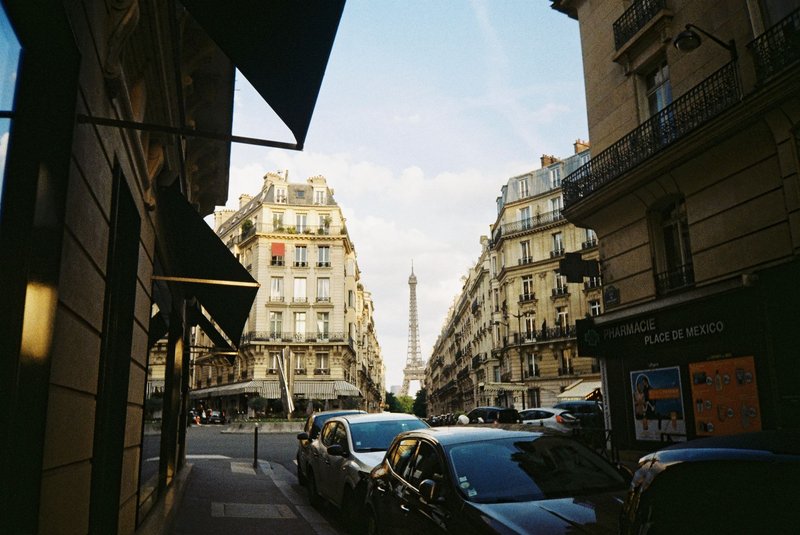
Paris has about 2.11 million residents, down from a 1921 peak near 2.9 million. The city has been slowly losing people for decades as housing costs push families toward the suburbs, even as the wider Île-de-France region keeps growing. At roughly 20,000 people per square kilometer, it’s still one of the densest major cities in Europe.
The economy is a mix of finance, luxury goods, tourism and the headquarters of most of France’s large companies, which is part of why Paris ranks among Europe’s richest cities. If you’re comparing it to anything else on this list, the metro gap is the story: the greater Paris area is about five times the size of the next one, Lyon.
2. Marseille
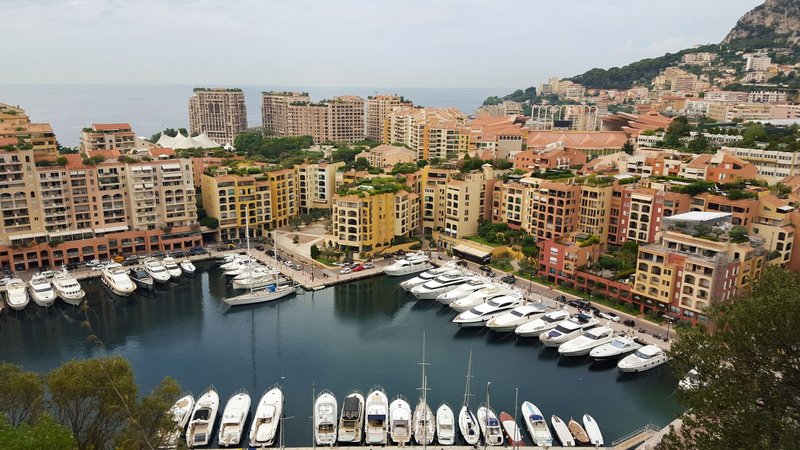
Marseille, with about 873,000 people, is France’s second city by municipal count and one of the oldest cities in Europe. Greek sailors from Phocaea founded it around 600 BC. Its port is the largest in France and a major Mediterranean cargo hub, which explains the city’s working-class, multicultural character, with large communities from North Africa, Comoros and Armenia.
Population growth is modest but steady. The city proper is unusually large in area, which is why it looks so much bigger than Lyon on the municipal list and much closer on the metro one.
3. Lyon
Lyon sits where the Rhône meets the Saône and has a little over 520,000 residents. It crossed the 500,000 mark in the 2010s and has kept growing. Silk built the city’s wealth in the 19th century, the Lumière brothers shot the first films here, and today the economy leans on pharmaceuticals, biotech, software and logistics.
Lyon is also France’s food capital by reputation, with the traditional bouchon restaurants as proof. Its metro area is the second largest in the country by a wide margin.
4. Toulouse
Toulouse passed 500,000 residents in recent years, helped by Airbus, which assembles its aircraft here, along with a large aerospace and space-industry cluster. The city’s brick buildings earned it the nickname “la ville rose.” About 100,000 students keep the average age low.
Among the largest French cities, Toulouse is one of the fastest growing in absolute numbers, and it’s the one most likely to challenge Lyon for third place in the coming decades if the pace holds.
5. Nice
Nice has about 348,000 residents, which makes it the largest city on the French Riviera. Tourism dominates the economy, and the Nice Côte d’Azur airport is the third busiest in France after the two Paris airports. The population skews older than the national average, with many retirees.
The city sits against steep hills right up to the sea, so it can’t expand outward the way Toulouse can. That’s one reason its growth is slower and its metro area (around 1 million) is spread along the coast.
6. Nantes
Nantes, at about 321,000, was once a shipbuilding and port city on the Loire. The shipyards closed in the 1980s, and the city reinvented itself around tech, culture and quality of life. It won the European Green Capital award for 2013, and the giant mechanical elephant at the Machines of the Isle is now one of the best-known sights in western France.
Nantes keeps appearing on “best French city to live in” lists, and its numbers back that up: it has added residents steadily for years.
7. Montpellier
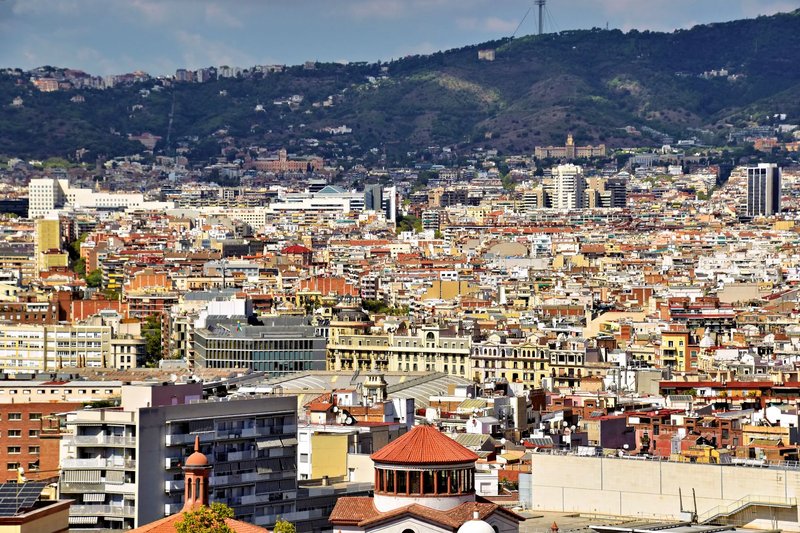
Montpellier has been the quiet climber of the list. At roughly 303,000 residents, it has overtaken Strasbourg in the past few years and sits seventh. It is one of the fastest-growing big cities in France, with a large student population, a medical-school tradition going back to the Middle Ages, and a sunny Mediterranean setting about 10 kilometers from the sea.
Its metro area is smaller than those of the cities directly above it, so Montpellier’s rank by the wider measure is lower. The city proper has packed in more people than the surrounding towns.
8. Strasbourg
Strasbourg has around 292,000 residents and sits directly on the German border, across the Rhine from Kehl. It is the official seat of the European Parliament, one of the three cities in the EU’s institutional system, and its Alsatian half-timbered Grande Île is a UNESCO World Heritage site.
The city’s cross-border character shapes everything from the dialect to the tram line that crosses into Germany. Its metro area, which also draws on German towns across the river, can be counted several different ways.
9. Bordeaux
Bordeaux has about 262,000 residents inside its limits and a much bigger metro area of around 1.4 million. The city rebuilt its waterfront, cleaned its stone facades and, after the high-speed rail line to Paris opened in 2017, put itself two hours from the capital. Property prices rose and so did the population.
Wine is the brand, but the economy also runs on aerospace, defense and a strong services sector. People who move to Bordeaux often end up outside it, which is why the metro figure is so much larger than the city one.
10. Lille
Lille has roughly 237,000 residents and the biggest gap between its municipal and metro rankings of any city in the top ten. The wider metropolitan area has around 1.5 million people on the French side, and it straddles the Belgian border into a cross-border region of more than 2 million.
Location is the pitch. Eurostar reaches London in about 1 hour 20 minutes, Brussels in about 35 minutes, and Paris in an hour. Lille was a textile and coal city, and it’s now a university, retail and logistics center.
The next 10 largest French cities
Below the top ten, the gaps shrink to a few thousand people, so the order can swap between census years. These are rounded INSEE 2022 figures.
| Rank | City | Municipal population (approx.) |
|---|---|---|
| 11 | Rennes | 222,000 |
| 12 | Reims | 181,000 |
| 13 | Toulon | 177,000 |
| 14 | Saint-Étienne | 173,000 |
| 15 | Le Havre | 166,000 |
| 16 | Dijon | 159,000 |
| 17 | Grenoble | 158,000 |
| 18 | Angers | 157,000 |
| 19 | Villeurbanne | 154,000 |
| 20 | Nîmes | 148,000 |
Two notes on this group. Villeurbanne is a suburb of Lyon, and its place here is another example of the commune-boundary quirk covered above. And Saint-Étienne is the rare large French city that has been shrinking for decades, the legacy of the mining and arms industries that once employed much of its workforce.
Which cities are growing and which are shrinking
The pattern across recent census cycles is consistent. The south and west are growing fastest: Toulouse, Montpellier, Nantes, Rennes and Bordeaux all gain residents year after year, driven by jobs, universities and a pull toward warmer weather. Paris and several northern and eastern industrial cities are flat or declining inside their city limits.
That has a practical consequence for the rankings. Montpellier already overtook Strasbourg, and Toulouse is closing the distance on Lyon in raw municipal numbers. The top two (Paris, Marseille) look locked in, but the order from third to tenth is not as settled as older lists make it seem.
FAQ
What is the biggest city in France? Paris, with about 2.11 million residents in the city proper and roughly 13 million in the wider metro area.
What is the second largest city in France? Marseille by municipal population (about 873,000). By metropolitan area, Lyon is second.
How many cities in France have more than 500,000 people? Four: Paris, Marseille, Lyon and Toulouse.
Why do different websites list different populations for the same city? Three reasons: they use different definitions (city limits, urban unit or metro area), different census years, and different rounding. Always check which of the three a source is using before comparing numbers.
Where do these numbers come from? The municipal figures are from INSEE, France’s national statistics institute, and are dated to the 2022 reference year. Metro figures are rounded from INSEE’s functional-area data. For international comparisons of urban agglomerations, the UN publishes separate estimates.
