Table of Contents
- TLDR
- Is there such a thing as a French “city”?
- The 10 smallest communes in France, ranked
- 1. Castelmoron-d’Albret
- 2. Plessix-Balisson
- 3. Vaudherland
- 4. Lannoy
- 5. Saint-Antoine
- 6. Mallièvre
- 7. La Ferrière-sur-Risle
- 8. Sainte-Marie
- 9. Bourg-le-Roi
- 10. Mont-Louis
- Why the numbers don’t match across sources
- FAQ
TLDR
The smallest commune in France by area is Castelmoron-d’Albret, in the Gironde department near Bordeaux. It covers about 3.54 hectares (0.0354 km²) and had 50 residents at the 2023 census. Second is Plessix-Balisson in Brittany at 8 hectares. The only one of the ten that works as a real destination is Mont-Louis in the Pyrenees, 39 hectares of Vauban fortress at 1,600 metres.
Is there such a thing as a French “city”?
Not in law. France has no legal size threshold for a “city” (ville). Every municipality, from Paris down to a hamlet with a mayor and a town hall, is a commune. So when people search for the smallest cities in France, what they get is a ranking of communes, and that’s what this list is.
Area is the measure here, not population. The two don’t track each other. A commune can be tiny and packed, like the one in the Lille suburbs at number four, or tiny and nearly empty. Population figures below are the 2023 legal populations published by INSEE, France’s statistics office. For the same area-based view across the continent, see the smallest cities in Europe by area, which covers 22 places with their land area in km².
The 10 smallest communes in France, ranked
Areas follow the commonly cited ranking on Wikipedia’s list of French communes by surface area, in hectares. One hectare is 0.01 km², roughly one and a half football pitches.
| Rank | Commune | Department | Area (ha) | Area (km²) | Population (2023) |
|---|---|---|---|---|---|
| 1 | Castelmoron-d’Albret | Gironde | 4 | 0.04 | 50 |
| 2 | Plessix-Balisson | Côtes-d’Armor | 8 | 0.08 | 83 |
| 3 | Vaudherland | Val-d’Oise | 10 | 0.10 | 104 |
| 4 | Lannoy | Nord | 16 | 0.16 | 1,812 |
| 5 | Saint-Antoine | Gironde | 20 | 0.20 | 373 |
| 6 | Mallièvre | Vendée | 22 | 0.22 | 251 |
| 7 | La Ferrière-sur-Risle | Eure | 25 | 0.25 | 191 |
| 8 | Sainte-Marie | Hautes-Pyrénées | 25 | 0.25 | 58 |
| 9 | Bourg-le-Roi | Sarthe | 37 | 0.37 | 325 |
| 10 | Mont-Louis | Pyrénées-Orientales | 39 | 0.39 | 153 |
Two caveats before the profiles. The first-place figure is rounded up to 4 hectares in this table; the precise value is 3.54. And two entries, Plessix-Balisson and Saint-Antoine, no longer exist as independent communes, a point we come back to below.
1. Castelmoron-d’Albret
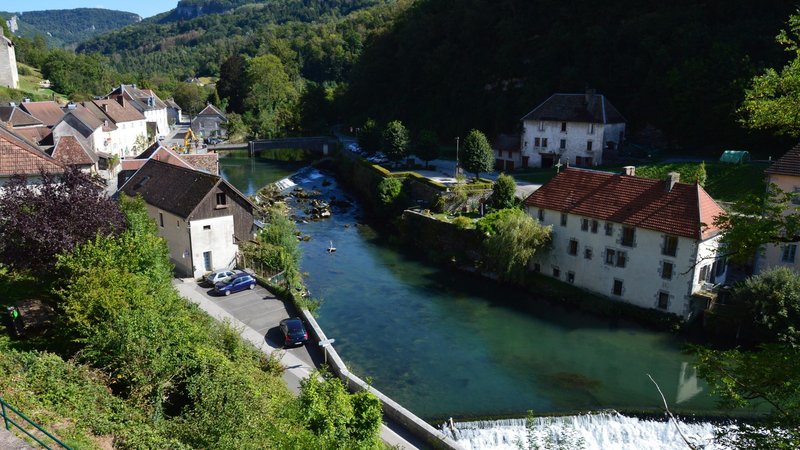
Gironde, 3.54 ha, 50 residents.
Castelmoron-d’Albret is the smallest commune in France, and it isn’t close. At 3.54 hectares it’s about the footprint of the Place Charles de Gaulle, the roundabout around the Arc de Triomphe in Paris, and roughly five football pitches. Monaco, the usual yardstick for tiny states, is about 57 times larger.
It sits in south-western France in the Gironde, in the Langon arrondissement. The village is the whole commune: there’s no surrounding farmland or forest to pad the count. The population has slid from 82 in 1968 to 50 in 2023, with one small uptick in 1990.
Worth a visit? As a detour, yes. As a destination, no. There’s a town hall, a handful of houses and the novelty of walking from one end of a French commune to the other in about a minute. Pair it with a day in the Réolais and the bastide towns around it.
2. Plessix-Balisson
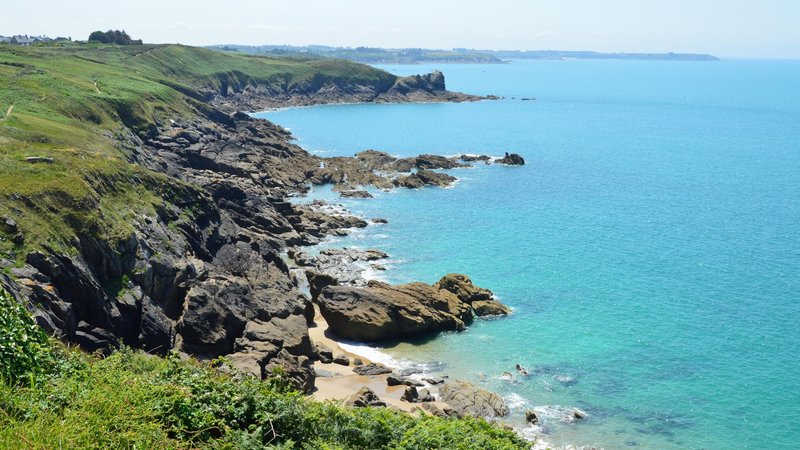
Côtes-d’Armor, 8 ha, 83 residents.
Plessix-Balisson is a Breton enclave on the Emerald Coast, wrapped entirely by its neighbour Ploubalay. It’s the smallest commune in its region and second smallest in France on most lists.
It’s also a technicality. On 1 January 2017 it merged into the new commune of Beaussais-sur-Mer, so it now exists as a former commune. That’s the first sign that small-commune rankings need a date attached. The place itself is a quiet residential patch; the reason to be nearby is the Brittany coast a few kilometres north, not the village.
3. Vaudherland
Val-d’Oise, 10 ha, 104 residents.
Vaudherland is a Val-d’Oise commune in northern Île-de-France, in the Villiers-le-Bel canton. It belongs to the Roissy Pays de France intercommunality, the same cluster of communes around the airport.
With 104 residents on 10 hectares, it’s denser than most French villages, around 1,200 people per km². There’s nothing to see, and that’s the point: this is a commune you’d only pass through on the way to somewhere else.
4. Lannoy
Nord, 16 ha, 1,812 residents.
Lannoy is the outlier of the list. It’s tiny, but it’s not a village: it’s a suburb in the Métropole Européenne de Lille, in the Croix canton, and it holds more than 1,800 people. That works out to about 10,000 per km², the highest density of any commune outside Île-de-France, slightly above Lyon.
It sits on the Roubaix side of the Lille conurbation, so it’s reachable but there’s no reason to go. For a traveller, it’s a data point, not a stop.
5. Saint-Antoine
Gironde, 20 ha, 373 residents.
Saint-Antoine is a rural commune in the Blaye arrondissement of the Gironde. Like Plessix-Balisson, it’s a former commune: on 1 January 2016 it merged into the new commune of Val de Virvée. Its elevation barely varies, from 36 to 47 metres, which tells you how flat the country is.
Many small French places stopped being communes in the 2010s as the state pushed merger incentives. If a ranking still lists a commune that merged, it’s using older boundaries.
6. Mallièvre
Vendée, 22 ha, 251 residents.
Mallièvre sits in the Vendée in western France, in the Mortagne-sur-Sèvre canton, at about 100 metres above sea level. Its postal code is 85590. Per the French Land Register figures it covers 0.20 km², a bit smaller than the table value.
It’s farming country in the south of the Pays de la Loire, and you can cross it without noticing.
7. La Ferrière-sur-Risle
Eure, 25 ha, 191 residents.
La Ferrière-sur-Risle lies on the Risle river in Normandy, in the Conches-en-Ouche canton. It has lost people steadily: 385 residents in 1968, 241 in 1990, 191 today. Part of its territory sits inside the 4,747-hectare Natura 2000 area covering the Risle, Guiel and Charentonne valleys, which it shares with 69 other communes.
That makes it a decent stop for walkers rather than sightseers. The Eure is quiet country, an hour or so west of Paris.
8. Sainte-Marie
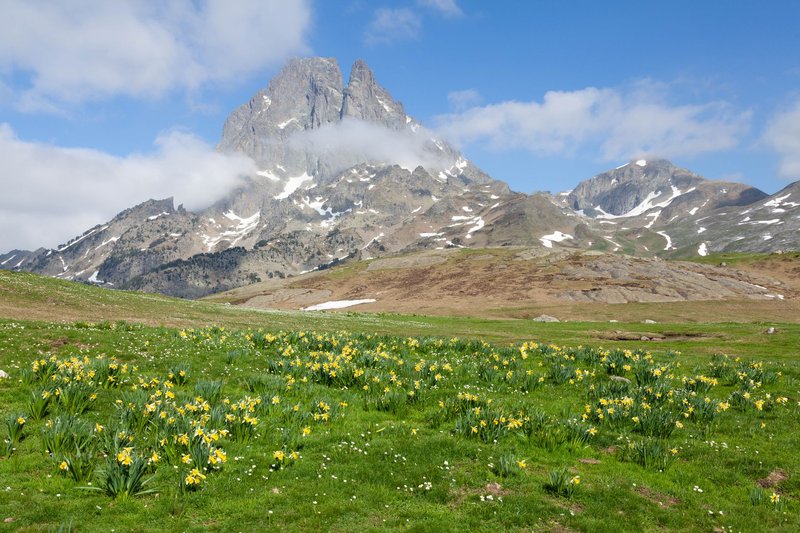
Hautes-Pyrénées, 25 ha, 58 residents.
Sainte-Marie ties La Ferrière-sur-Risle at 25 hectares in this ranking, though the land register puts it slightly larger at 0.28 km². It’s in the Barousse valley, in the Bagnères-de-Bigorre arrondissement, at around 450 metres elevation, with the Pyrenees close by.
With 58 residents, it has the second-smallest population on the list after Castelmoron-d’Albret. Treat it as a place to stop on the way into the valley, not as a reason to come.
9. Bourg-le-Roi
Sarthe, 37 ha, 325 residents.
Bourg-le-Roi is in the Sarthe, in the Pays de la Loire, inside the Normandie-Maine Regional Natural Park. A small river, the Rosay Nord, runs through it, and the neighbours are Ancinnes and Chérisay.
The park is the draw: the commune is a base for walking and cycling in the area rather than a sight in itself.
10. Mont-Louis
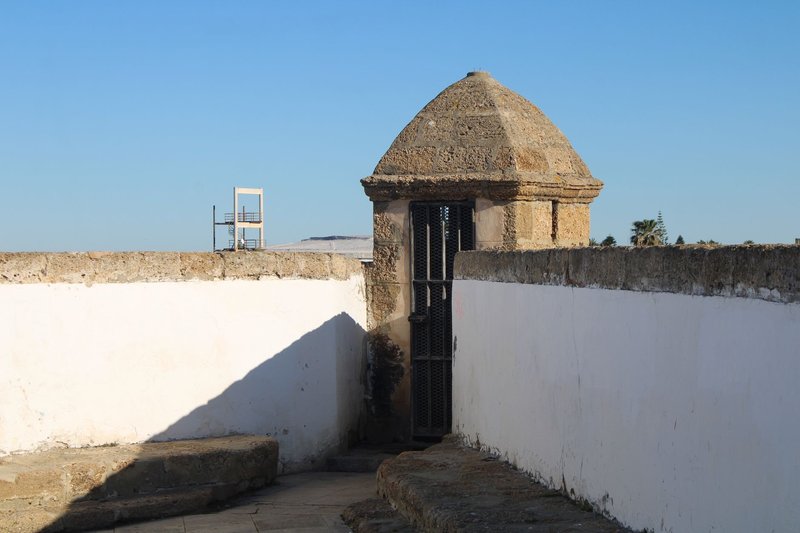
Pyrénées-Orientales, 39 ha, 153 residents.
Mont-Louis is the one that earns a trip. It’s a fortified town built by Vauban, the military engineer of Louis XIV, at about 1,600 metres in the eastern Pyrenees, and it’s among the highest fortified towns in France. In 2008 its citadel and ramparts were added to the UNESCO Fortifications of Vauban World Heritage listing.
It’s also the closest thing on this list to a real town. The population has dropped from 391 in 1968 to 153 in 2023, but the street grid, the walls and the working citadel are intact. The citadel has housed the French Army’s national commando training centre for more than 50 years, so most of it is closed. Some areas, including the Puits des Forçats, can be seen with a local guide.
The other draw is the solar furnace. Engineer Félix Trombe built it in 1949, and it’s described as the first of its kind. It’s open to visitors. You can reach Mont-Louis by the Mont-Louis-La Cabanasse station, which links to Villefranche-de-Conflent and Latour-de-Carol.
Why the numbers don’t match across sources
You’ll find 3.3 ha, 3.54 ha, 4 ha and 0.04 km² all quoted for Castelmoron-d’Albret. They’re the same place. The differences come from three things.
Rounding. Wikipedia’s ranking table uses whole hectares, so 3.54 becomes 4. Lower down, 25 ha for two communes hides a gap: the land register has La Ferrière-sur-Risle at 0.2 km² and Sainte-Marie at 0.28.
Different registers. France’s land register excludes lakes, ponds, large glaciers and river estuaries from commune areas. Another source, such as the national mapping agency IGN, may measure the same boundary differently. For example, the land register gives Lannoy 0.18 km², not the 0.16 in the ranking table.
Mergers. Plessix-Balisson merged in 2017 and Saint-Antoine in 2016. Lists built from older data still include them; lists built from current boundaries don’t. If you need a ranking as of a specific year, check the date of the source.
The table above uses area as listed on Wikipedia and 2023 population. Treat the hectare figures as approximate, especially below rank three.
FAQ
What is the smallest commune in France? Castelmoron-d’Albret in the Gironde, at about 3.54 hectares.
What is the smallest city in France? France doesn’t define “city” by size. Castelmoron-d’Albret is the smallest commune, and Mont-Louis, a fortified town with 153 residents, is the nearest thing to a genuine small town on this list.
What is the smallest village in France by population? That’s a different ranking from area. Among the ten communes above, Castelmoron-d’Albret has the fewest residents at 50. Some larger communes elsewhere in France have fewer people still, because area and population are unrelated.
Can you visit Castelmoron-d’Albret? Yes. It’s a normal village with public roads and a town hall. It’s a short stop rather than a day out.
Why are there so many tiny communes in France? Most trace back to parishes, which became communes in the 1790s. France still has tens of thousands of them, far more than any neighbouring country, though mergers have reduced the number in recent years.