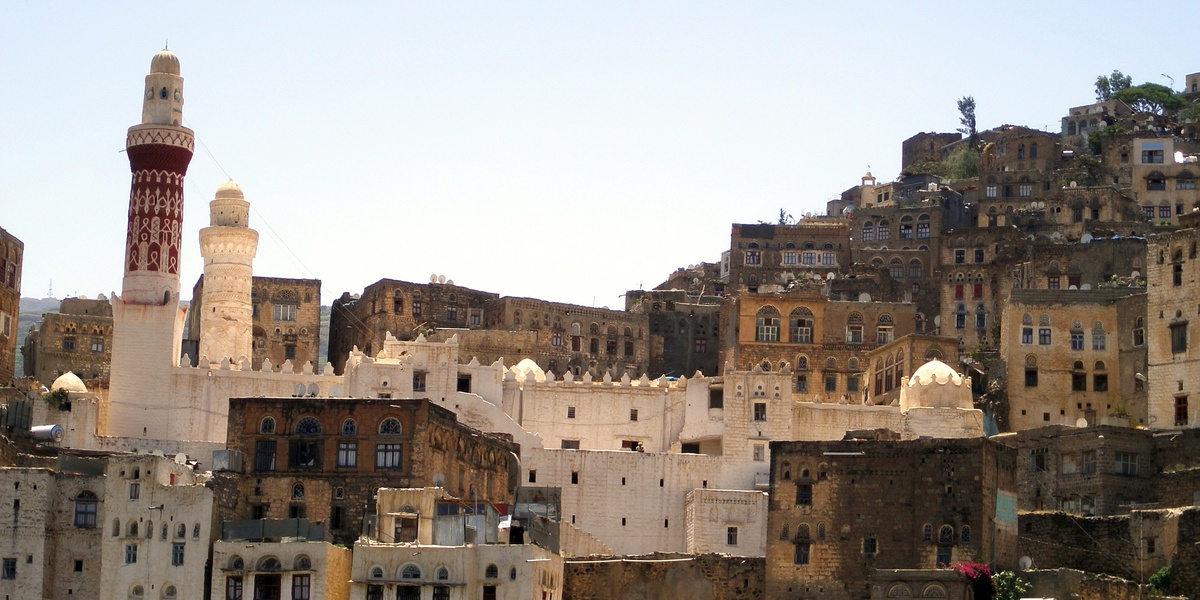
At sunrise the Bab al-Yemen gate glows like honey against the mudbrick towers, and the call to prayer threads through alleys where decorated facades lean over narrow streets. Sana’a’s Old City was inscribed as a UNESCO World Heritage Site in 1986 and has stood as a living city of tower-houses and markets for centuries, a place where daily life unfolds amid architecture few other cities still preserve.
Sana’a blends centuries-old architecture, lively markets, and dramatic mountain scenery—here are seven standout experiences that reveal why the city is one of Yemen’s most memorable destinations. For practical tips and concrete examples, each item below includes numbers, local names, and etiquette notes to help you plan.
Historical and Cultural Highlights
Start here to feel the city’s long history: the UNESCO-listed Old City (1986) sits on a highland plateau at roughly 2,300 m and its multi-story mudbrick houses are still lived in today. Below are three essential Old City experiences that bring Sana’a’s past to life.
1. Explore the Old City — Bab al-Yemen and the tower-houses
Visiting the Old City is a must. The UNESCO listing in 1986 recognizes an urban fabric of narrow lanes and distinctive tower-houses—typically 5–7 stories tall—built from rammed earth and mudbrick with white gypsum trim and painted friezes.
Walk through Bab al-Yemen at sunrise to see families opening courtyards and vendors setting up. These streets reveal traditional building techniques and everyday urban life: rooftop terraces, carved window frames, and storage rooms stacked high.
Practical tip: dress modestly, ask before photographing private interiors, and visit in the cooler morning or late afternoon to avoid the midday crowds.
2. Visit the Great Mosque and traditional madrasas
Religious sites are living centers of community life rather than museum pieces. The Great Mosque of Sana’a dates back to the 7th century (making it over 1,300 years old) and sits near a cluster of courtyard madrasas where students gather for study and prayer.
Observe the rhythm of five daily prayer calls and note how architectural details—carved wooden doors, mihrab tilework, and shaded courtyards—reflect religious art and local craftsmanship.
Visiting etiquette: remove shoes where required, keep shoulders and knees covered, and avoid entering main prayer halls during service unless invited.
3. See traditional wall paintings, gypsum decoration and silverwork
Sana’a’s facades and interiors are famous for carved gypsum frames, painted friezes, and an active silverwork tradition. Many workshops are family-run and have operated for over three generations, passing techniques from parent to child.
You can buy small silver pendants, traditional belt buckles, or commission a decorative gypsum panel from a local craftsman. Learn a few price points before haggling and ask about materials to ensure authenticity.
Practical advice: bargain politely, avoid pressuring artisans, and be aware that some historic plasterwork is fragile—photograph rather than touch delicate surfaces.
Markets, Food, and Everyday Life
The souks and cafés are where you see Sana’a’s daily rhythms: spice piles, a roasting coffee vendor, and social gatherings over qat. Taste and markets reveal more about local life than any guidebook—bring curiosity and cash in small notes.
4. Wander the souks — spices, silver, and coffee
Souks are sensory centers. In lanes near Souk al-Milh you’ll find rows of stalls selling cardamom, fenugreek, dried lime, and whole Yemeni coffee beans, with dozens of small vendors clustered along a single alley.
A coffee vendor might roast a small batch by hand while you watch; tasting freshly roasted beans helps you spot quality. Look for deep, fragrant beans and ask for qishr (a traditional spiced coffee infusion) at nearby cafés.
Bargaining tip: start about 30–40% below the asking price for non-fixed goods, keep exchanges friendly, and inspect silverwork carefully for hallmarks or signs of plating.
Among the cool things to do in Sana’a, getting lost in these markets gives the biggest payoff for time spent.
5. Try traditional Yemeni dishes and coffee culture
Food is both everyday sustenance and cultural insight. Try signature dishes like saltah (a stew with a fenugreek foam) and fahsa (slow-cooked meat) served with freshly baked flatbreads at family-run restaurants.
For coffee, order qishr—a spiced cup made from husks and ginger—at a local coffeehouse. A simple meal in a modest eatery typically ranges from about $2–$8, depending on portions and whether you share plates.
Practical tip: eat with your right hand when sharing communal plates, choose busy stalls for hygiene confidence, and expect main meals around lunch and after sunset in many places.
Outdoor and Scenic Experiences
Sana’a’s highland setting at roughly 2,300 m means cooler evenings and wide views. A few short outings—rooftop sunsets and nearby villages—deliver dramatic panoramas and a glimpse of terraced farming beyond the city walls.
6. Watch the city from a rooftop at sunset
Rooftop terraces are an easy, high-reward stop. Aim to arrive 30–45 minutes before sunset to claim a spot and watch the light soften on gypsum facades and minarets; many rooftop cafés seat around 20–30 guests.
Bring a small zoom or a smartphone; golden-hour light brings out painted friezes and window lattices. Stay respectful of nearby homes—keep voices low and avoid photographing people without permission.
Some guesthouses welcome non-guests for a small refreshment charge, so ask at reception before climbing up.
7. Take a short trip to nearby highland villages
Day trips to surrounding villages reveal terraced farms, different building styles, and local markets. Typical excursions range from about 1–3 hours round-trip depending on how far you go and how many stops you make.
Arrange a shared taxi or hire a local driver for the day; shared rides are economical, while a private driver gives more flexibility. Expect simple amenities in villages—bring water, sun protection, and sturdy shoes.
Check local conditions and travel advisories before leaving the city; road quality and services can vary, so plan extra time and travel with a charged phone.
Summary
- The Old City (UNESCO 1986) showcases multi-story mudbrick tower-houses and living traditions.
- Explore markets and cafés to sample spices, Yemeni coffee (qishr), and artisanal silverwork.
- Catch a rooftop sunset (arrive 30–45 minutes early) for sweeping views of Bab al-Yemen and the minarets.
- Try signature dishes like saltah and fahsa; budget roughly $2–$8 for a local meal in a modest eatery.
- Plan short day trips (1–3 hours round-trip), respect local customs, and confirm transport and safety before you go.