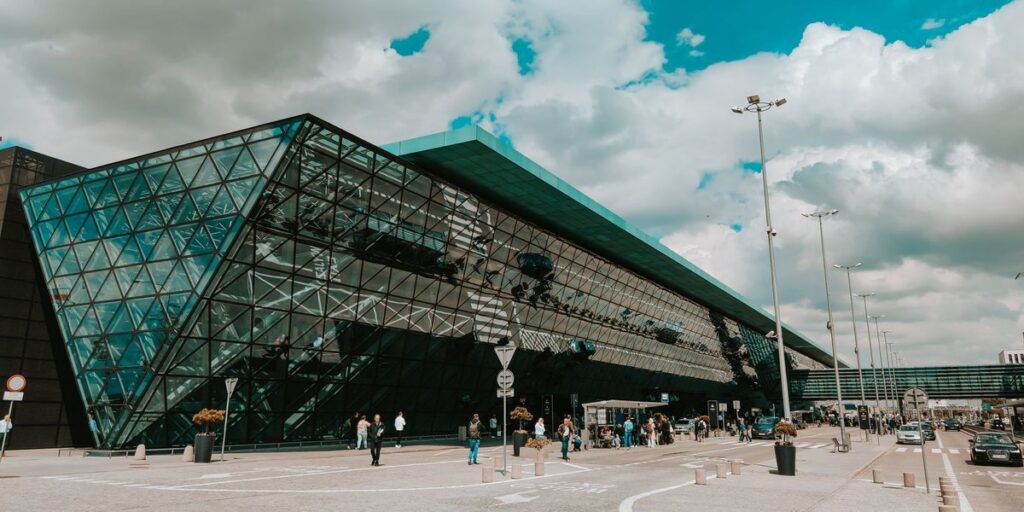
Brazil has nearly 500 public airfields on the books of the national aviation agency, ANAC, but only a few dozen get regular scheduled flights, and a handful handle almost everything an international visitor will touch. This guide covers those airports in Brazil: which ones take long-haul flights, how far each sits from the city it serves, and which one to book for the place you actually want to see.
TLDR
- Most first-time visitors: fly into São Paulo-Guarulhos (GRU) or Rio’s Galeão (GIG). Both have the widest choice of long-haul flights.
- Amazon: Manaus (MAO).
- Northeast beaches: Salvador (SSA), Recife (REC) or Fortaleza (FOR).
- Iguaçu Falls: Foz do Iguaçu (IGU), reached by a domestic connection.
- Fernando de Noronha: a short flight from Recife or Natal, not from the mainland hubs directly.
- Within São Paulo and Rio: the big international airport is not always the right one. Congonhas (CGH) and Santos Dumont (SDU) are domestic-only and much closer to downtown.
Contents
- The quick reference table
- The main airports in Brazil, one by one
- São Paulo and Rio: choosing between airports
- Which airport for which destination
- Airport by region
- Arriving and connecting: practical notes
- Brazil airport codes cheat sheet
The quick reference table
Passenger figures are rounded, based on recent ANAC and operator numbers, and shift year to year. Use them for ranking, not for citation.
| Code | Airport | City | Annual passengers (approx.) | Main airlines |
|---|---|---|---|---|
| GRU | São Paulo-Guarulhos | São Paulo | 40+ million | LATAM, GOL, Azul, most foreign carriers |
| CGH | Congonhas | São Paulo | About 20 million | LATAM, GOL, Azul (domestic only) |
| BSB | Presidente Juscelino Kubitschek | Brasília | 15+ million | LATAM, GOL, Azul |
| GIG | Rio de Janeiro-Galeão | Rio de Janeiro | About 15 million | LATAM, GOL, Azul, TAP, Air France, Delta, American |
| VCP | Viracopos | Campinas | 10 to 12 million | Azul (hub), LATAM, GOL |
| CNF | Confins | Belo Horizonte | 10 to 12 million | Azul (hub), LATAM, GOL |
| SSA | Deputado Luís Eduardo Magalhães | Salvador | About 10 million | LATAM, GOL, Azul |
| REC | Guararapes-Gilberto Freyre | Recife | About 10 million | LATAM, GOL, Azul, TAP |
| FOR | Pinto Martins | Fortaleza | 8 to 9 million | LATAM, GOL, Azul, TAP |
| CWB | Afonso Pena | Curitiba | About 7 million | LATAM, GOL, Azul |
| POA | Salgado Filho | Porto Alegre | 7 to 8 million before the 2024 floods | LATAM, GOL, Azul |
| MAO | Eduardo Gomes | Manaus | 3 to 4 million | LATAM, GOL, Azul |
Three airlines run the domestic network: LATAM Brasil, GOL and Azul. If you land in Brazil, you will almost certainly connect on one of them.
The main airports in Brazil, one by one
São Paulo-Guarulhos (GRU)
Brazil’s busiest airport by a wide margin, and the one most long-haul routes end at. It sits about 25 km northeast of central São Paulo, which means 45 minutes on a good day and well over an hour at rush hour. Three terminals are in use. Terminals 2 and 3 are linked on foot, while Terminal 1 is reached by a free shuttle bus.
Getting into the city: airport buses to Paulista and Tatuapé, the CPTM Line 13-Jade train (it stops at a station near the airport, and a free shuttle covers the last stretch), or a ride-hail car. The train skips the traffic but only works if your hotel is near a rail line.
Rio de Janeiro-Galeão (GIG)
Rio’s international gateway sits on Governador Island, roughly 20 to 30 km from the beach neighborhoods depending on where you’re staying. Express buses run to Zona Sul and downtown, and ride-hail is the default for most arrivals. Traffic on the Linha Vermelha highway decides how long the trip takes, so budget an hour for Copacabana and Ipanema.
Galeão carries direct flights from Europe and North America, but fewer than Guarulhos. It is a better fit if Rio is your whole trip.
Brasília (BSB)
Brasília’s airport is a domestic connecting machine more than a tourist gate. It sits about 12 km from the city’s central axis, and it’s the third-busiest in the country because the capital is a hub for government travel and for connections across the interior. A few international routes exist, mostly within the Americas. Fly in only if Brasília is on your itinerary.
Belo Horizonte-Confins (CNF)
Confins is about 40 km north of Belo Horizonte, far enough that you’ll want an airport bus or a pre-booked car. It’s a gateway to Minas Gerais: Inhotim art park, the colonial towns of Ouro Preto and Tiradentes, and the cheese country of the Serra da Canastra. Azul runs a hub operation here. Pampulha (PLU), the older city airport, handles a smaller set of regional flights.
Viracopos, Campinas (VCP)
Viracopos is about 15 km from Campinas and roughly 95 km from São Paulo, which rules it out as a São Paulo arrival point unless the fare is dramatically lower. It matters because it’s Azul’s biggest hub and a major cargo airport. You may land here on a connecting itinerary without ever planning to.
Salvador (SSA)
Salvador’s airport is about 28 km north of the historic center. The city’s Line 2 metro now reaches the terminal, which is rare among Brazilian airports. Hotels in Pelourinho and Barra are a 40 to 60 minute transfer by car. SSA is the gateway for Bahia: Morro de São Paulo, Itacaré and the Recôncavo, plus onward ferries and short flights.
Recife (REC)
Recife-Guararapes sits about 10 km from the beachfront district of Boa Viagem, one of the shortest airport-to-hotel runs in Brazil. The metro runs from the terminal. REC is also the standard route to Porto de Galinhas (about an hour south by road), Olinda, and flights to Fernando de Noronha. TAP flies here from Lisbon.
Fortaleza (FOR)
Pinto Martins is about 10 km from the city’s seafront. Fortaleza is the entry point for Ceará’s coastline: Jericoacoara is a drive of roughly six hours, and Canoa Quebrada and Cumbuco sit closer. It is Brazil’s nearest major airport to Europe, which is why charter and direct flights from Lisbon cluster here.
Porto Alegre (POA)
Salgado Filho is about 8 km from downtown Porto Alegre. It was closed for roughly five months after the catastrophic floods of May 2024 and reopened in October 2024, so any pre-2024 passenger figure for it is out of date. POA is the base for Gramado and Canela in the Serra Gaúcha, about two hours inland by road.
Curitiba (CWB)
Afonso Pena is in São José dos Pinhais, about 20 km from central Curitiba. It serves the state of Paraná and is the practical gateway to the Paranaguá bay area and the Serra do Mar train line.
Manaus (MAO)
Eduardo Gomes is about 15 km from central Manaus and is the gateway for the Brazilian Amazon. Most river-lodge packages start with a transfer from here to a boat dock on the Rio Negro. The airport’s own scale is modest, but it is the Amazon’s busiest one and the only major hub within reach of the central basin. For the eastern Amazon and Marajó Island, Belém (BEL) is the equivalent.

São Paulo and Rio: choosing between airports
Both cities have two commercial airports, and they split the work in the same way: a large international airport far from downtown, and a small domestic airport right next to it.
São Paulo: GRU, CGH and VCP
| Airport | Distance to center | Flights | Best for |
|---|---|---|---|
| Guarulhos (GRU) | About 25 km | International and domestic | Arriving from abroad, long-haul connections |
| Congonhas (CGH) | About 8 km | Domestic only | Business trips, short hops to Rio and Brasília |
| Viracopos (VCP) | About 95 km | Domestic, some international | Azul connections, cargo |
Congonhas is built into the city grid and its runway is short, which restricts the size of aircraft it can take. It’s convenient if you’re already in Brazil and flying onward, but it can’t handle international arrivals. If you land at GRU and your hotel is in Vila Madalena, you take a car or bus. You don’t pick Congonhas to save the drive.
Rio: GIG and SDU
Santos Dumont sits on the edge of Guanabara Bay, a short ride from downtown. It operates domestic flights only, and its runway is among the shortest of any major Brazilian airport. The classic use is the ponte aérea, the Rio to São Paulo shuttle that runs all day between SDU and CGH. For a day trip between the two cities it beats the highway by a wide margin.
For international arrivals, Galeão is the only option.
Which airport for which destination
This is where most top results stop short, so here is the answer for the places travelers ask about most.
| Destination | Fly into | What happens next |
|---|---|---|
| Iguaçu Falls | Foz do Iguaçu (IGU) | The airport is about 15 km from the falls. Most visitors connect via GRU, GIG or Curitiba. |
| Fernando de Noronha | Recife (REC) or Natal (NAT), then to FEN | A short domestic flight of under two hours. Visitors pay an environmental preservation fee per day on arrival. |
| Lençóis Maranhenses | São Luís (SLZ) | Drive roughly 260 km to Barreirinhas, about four hours. |
| Amazon lodges | Manaus (MAO) | Boat or road transfers to lodges on the Rio Negro and Amazon. |
| Pantanal | Cuiabá (CGB) or Campo Grande (CGR) | Road transfers of several hours to lodges and ranches. |
| Gramado and Canela | Porto Alegre (POA) | About two hours by road. |
| Jericoacoara | Fortaleza (FOR) | Roughly six hours by road, then a 4×4 or buggy over the dunes for the final stretch. |
| Porto de Galinhas | Recife (REC) | About an hour south by road. |
The first two are worth a note. Iguaçu National Park is a UNESCO World Heritage Site, and the Brazilian side has its own airport, but Foz do Iguaçu also sits at the tri-border with Argentina and Paraguay. Flights on the Argentine side land at a different airport entirely, so check which country’s side of the falls you plan to see first. And Fernando de Noronha is part of the Brazilian Atlantic Islands UNESCO listing. It has one small runway, and flights fill up in high season, so book the flight before the inn. The full set of Brazil’s listed sites is in all UNESCO World Heritage Sites in Brazil.

Airport by region
Southeast. São Paulo (GRU, CGH, VCP), Rio (GIG, SDU), Belo Horizonte (CNF, PLU) and Vitória (VIX). This is the region with the most capacity and the most flights from abroad. It’s the logical entry point if your trip is two or more weeks and includes multiple states.
Northeast. Salvador (SSA), Recife (REC), Fortaleza (FOR), Natal (NAT), Maceió (MCZ) and João Pessoa (JPA). This region has the shortest flights from Europe and the Atlantic coast of Africa, and it’s where most beach trips begin. Lisbon to Fortaleza or Recife takes roughly seven to eight hours, compared with about eleven to São Paulo.
Amazon and North. Manaus (MAO) and Belém (BEL). Capacity is smaller, flights are mostly domestic, and schedules thin out outside the main banks. Plan connections with a buffer here.
South. Porto Alegre (POA), Curitiba (CWB) and Florianópolis (FLN). Florianópolis fills with Brazilian and Argentine visitors in the January and February summer season, and fares climb with it.
Center-West. Brasília (BSB), Cuiabá (CGB) and Campo Grande (CGR). Mostly useful as a hub for the capital and as the access points for the Pantanal.
Arriving and connecting: practical notes
Immigration happens at your first Brazilian airport. If you fly Madrid to São Paulo to Salvador, you clear immigration and customs in São Paulo, not Salvador. Whether your bags are checked through depends on your ticket. On a single itinerary the airline can usually tell you. On separate tickets you collect your bags, go through customs, then re-check them.
Check the visa rule before you fly. Brazil reinstated its electronic visa requirement for citizens of the United States, Canada and Australia in 2025, so those travelers need an e-visa before boarding. Rules vary by nationality and change, so verify on the Ministry of Foreign Affairs’ Itamaraty site rather than relying on a blog, including this one.
Give domestic connections room. At Guarulhos, allow at least three hours between an international arrival and a domestic departure on separate tickets, and longer if the second flight leaves from a different terminal. Domestic flights in Brazil are frequently full, delays at the big hubs are common, and a missed connection can mean waiting for the next day’s service on smaller routes.
Pick your arrival airport by the second leg. Landing in São Paulo then flying to Salvador, Recife or Fortaleza is a standard route, but landing in Rio saves a transfer if Rio is your first stop. Flying into Recife or Fortaleza from Europe skips the São Paulo connection entirely.
Expect big airports to be far from the city. Almost every major airport here sits 10 to 40 km out. A ride-hail car is usually the easiest transfer, but it can be pricey at the busiest hubs, so look at the airport bus or train first.
Brazil airport codes cheat sheet
| IATA | City or airport |
|---|---|
| GRU | São Paulo-Guarulhos |
| CGH | São Paulo-Congonhas |
| VCP | Campinas-Viracopos |
| GIG | Rio de Janeiro-Galeão |
| SDU | Rio de Janeiro-Santos Dumont |
| BSB | Brasília |
| CNF | Belo Horizonte-Confins |
| PLU | Belo Horizonte-Pampulha |
| SSA | Salvador |
| REC | Recife |
| FOR | Fortaleza |
| NAT | Natal |
| MCZ | Maceió |
| JPA | João Pessoa |
| BEL | Belém |
| MAO | Manaus |
| SLZ | São Luís |
| POA | Porto Alegre |
| CWB | Curitiba |
| FLN | Florianópolis |
| IGU | Foz do Iguaçu |
| FEN | Fernando de Noronha |
| CGB | Cuiabá |
| CGR | Campo Grande |
| VIX | Vitória |