Liberia’s coastline, river systems and waves of migration have created a mosaic of local speech varieties across the country. In towns and villages alike, dialects carry family histories, trade links and regional identity.
There are 17 Dialects in Liberia, ranging from Bassa to Vai. For each entry you’ll find below Family,Speakers (est.),Regions.
Which dialects are most widely spoken in Liberia?
Kpelle is generally cited as the single largest speech community, with Bassa and Vai also among the more widely spoken varieties; urban areas like Monrovia tend to be highly multilingual, so many people use several local dialects alongside Liberian English.
How reliable are the speaker numbers and how is the list organized?
Speaker estimates are approximations drawn from censuses, surveys and linguistic studies and can vary due to migration, bilingualism and outdated data; the table below groups each dialect by Family,Speakers (est.),Regions so you can quickly see linguistic affiliation, approximate community size and where each dialect is spoken.
Dialects in Liberia
| Name | Family | Speakers (est.) | Regions |
|---|---|---|---|
| Kolokwa (Liberian Kreyol) | English (Creole) | 1,000,000 | Monrovia,Montserrado,Bong |
| Standard Liberian English | English | 200,000 | Monrovia,Montserrado |
| Kpelle | Mande | 450,000 | Bong,Gbarpolu,Lofa |
| Bassa | Kru | 350,000 | Grand Bassa,Bomi,Montserrado |
| Grebo | Kru | 250,000 | Grand Gedeh,River Gee,Sinoe |
| Krahn (Kranh) | Kru | 180,000 | Nimba,Grand Gedeh,Montserrado |
| Vai | Mande | 140,000 | Grand Cape Mount,Bomi,Lofa |
| Loma (Lorma) | Mande | 120,000 | Lofa,Gbarpolu |
| Mano | Mande | 100,000 | Nimba,Lofa |
| Gio (Dan) | Mande | 90,000 | Nimba |
| Gola | Mel | 80,000 | Lofa,Bomi,Gbarpolu |
| Mandingo (Mandinka/Manding) | Mande | 70,000 | Lofa,Nimba,Montserrado |
| Kissi | Mande | 60,000 | Lofa,Gbarpolu |
| Klao (Kru/Krao) | Kru | 50,000 | Grand Cape Mount,Bomi |
| Gbandi | Mande | 45,000 | Lofa,Bong |
| Sapo (Sarpo) | Kru | 40,000 | Sinoe,Grand Kru,Rivercess |
| Fula (Fulfulde) | Atlantic | 20,000 | Lofa,Nimba,Montserrado |
Images and Descriptions

Kolokwa (Liberian Kreyol)
A widely used Liberian English-based creole/colloquial register serving as an urban lingua franca. Features simplified grammar, pidginized vocabulary and strong West African substrate influence; dominant in markets, media, and informal speech across ethnic lines; close to regional Krio/Pidgin varieties.
Standard Liberian English
The formal variety of English used in government, education and media. It aligns closely with international English norms but shows local pronunciation and vocabulary; prestige status, learned in schools and used in official contexts alongside Kolokwa.
Kpelle
Largest indigenous speech community. A Mande language with complex verb morphology and tonal contrasts; used in central Liberia (Bong region). Several local dialects exist; important for regional identity and oral literature, with radio programming in Kpelle.
Bassa
Major Kru language of coastal and central Liberia. Notable for its tonal system and rich oral traditions; Bassa dialects spread across several counties and maintain cultural prominence. Historically influential in politics and trade along the coast.
Grebo
A dialect cluster of southeastern Liberia with multiple mutually intelligible varieties. Grebo shows Kru phonology, tonal patterns and emphatic verb prefixes; strongly associated with regional identity and informal lingua franca functions in the southeast.
Krahn (Kranh)
Kru-language cluster spoken in eastern Liberia. Characterized by tonal contrasts and complex verbal systems; several dialects (Eastern/Western Krahn) exist. Important in local administration and interethnic communication in Nimba region.
Vai
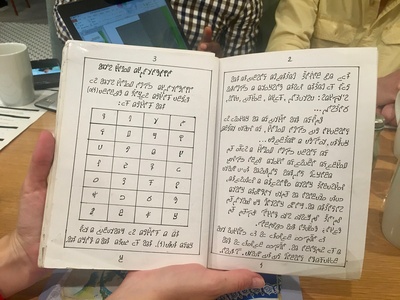
Mande language notable for the indigenous Vai syllabary (one of few native scripts in Africa). Spoken in western Liberia and across the Guinea border; tonal with close ties to the Vai diaspora and literacy traditions.
Loma (Lorma)
Northern Mande language with several dialects spoken in Lofa County. Features include tonal distinctions and agglutinative morphology; used in rural communities with active oral storytelling traditions and local radio presence.
Mano
Mande language of northeastern Liberia and adjacent areas of Guinea. Shares features with other Mande languages (noun class-like markers, tones); important in highland communities and cross-border trade networks.
Gio (Dan)
Gio/Dan is a Mande language spoken in Nimba County and neighboring countries. Known for its rich proverb and oral poetry culture; tonal and morphologically complex, with several regional dialects across the Liberia–Côte d’Ivoire–Guinea borderlands.
Gola
An Atlantic/Mel language of northwestern Liberia with distinct phonology and grammar from nearby Kru and Mande tongues. Gola has several dialects, resilient local use, and is central to clan identity in forested border areas.
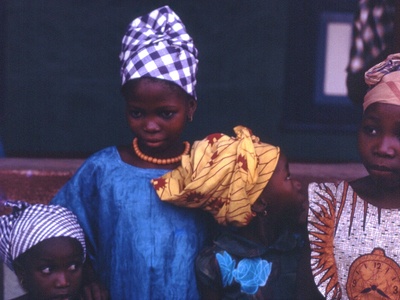
Mandingo (Mandinka/Manding)
Manding language (often called Mandingo) spoken by trading and farming communities. Part of the broader Mande continuum; notable for its role in commerce, Islamization, and interethnic trade routes in northern and central Liberia.
Kissi
Kissi is a Mande language spoken in Liberia’s northern borderlands. It displays tonal contrasts and belongs to a cross-border cluster with Guinea and Sierra Leone. Communities maintain local agricultural and market networks and strong bilingualism.
Klao (Kru/Krao)
Klao (also Krao) is a Kru language of coastal northwest Liberia. Features typical Kru phonology and tonal patterns; important in local fishing and trading communities, with several subdialects reflecting coastal vs inland speech.
Gbandi
A Mande language cluster spoken in north-central Liberia. Gbandi has multiple dialects, tonal grammar, and local literature/folklore. It serves as a regional language in rural areas and appears occasionally on community radio programming.
Sapo (Sarpo)
Kru language of southeastern coastal Liberia with several dialects. Sapo shows Kru phonological features and is tied to local cultural practices and rural livelihoods; usage remains robust in speaker communities despite urban migration.
Fula (Fulfulde)
West African Atlantic language of Fulani communities in northern Liberia. Fulfulde functions as a pastoralist trade language and community marker; speakers are often bilingual, using Fulfulde alongside regional languages and Liberian English.