Jamaica’s speech landscape reflects its layered history: Indigenous Arawakan roots, West African languages brought by enslaved people, and British colonial influence all shaped how people speak across parishes and generations. That variety shows up in music, storytelling and everyday conversation.
There are 8 Dialects in Jamaica, ranging from Jamaican Acrolect (Standard English) to Taíno (Arawakan). The list is organized with Type,Region / speakers,Features / example phrase so you can quickly compare origins, where each is used and a typical expression, and you’ll find it below.
How different are these dialects from standard English?
Differences vary along a continuum: the acrolect aligns closely with Standard English, while basilectal creoles (Jamaican Creole/Patois) have distinct grammar, pronunciation and vocabulary that can make them hard to parse for outsiders. Indigenous varieties like Taíno contribute mainly lexical and cultural remnants rather than full mutual intelligibility.
Where can I hear or study these dialects authentically?
Listen to reggae and dancehall lyrics, oral histories, community radio and field recordings for everyday use; university linguistics departments, local cultural centers and community-led workshops offer structured study. Always approach learning with respect for speakers and cultural context.
Dialects in Jamaica
| Name | Type | Region / speakers | Features / example phrase |
|---|---|---|---|
| Jamaican Creole (Patois) | Creole | Islandwide; urban and rural speakers | English-based creole; stress-timed rhythm; ‘Wah gwaan?’ |
| Jamaican Acrolect (Standard English) | English variety (Acrolect) | Formal contexts; educated speakers nationwide | Standard English grammar;Jamaican accent; ‘How are you?’ |
| Jamaican Mesolect | Register (Mesolect) | Everyday speakers across communities | Blend of creole and Standard English;code-switching; ‘Yuh going?’ |
| Jamaican Basilect (Deep Patois) | Creole register (Basilect) | Rural areas; older and traditional speakers | Deep creole grammar;tense–aspect markers; ‘Mi deh yah’ |
| Kromanti (Kromanti/Coromantee) | Maroon language / ritual language | Maroon towns (Moore Town, Accompong); ceremonial users | Akan-derived ritual lexicon;ceremonial chants |
| Maroon Creole | Creole (Maroon varieties) | Maroon communities: Accompong, Moore Town, Charles Town | Local creole with African retentions; ‘Mi a run’ |
| Jamaican Sign Language (JSL) | Sign language | Nationwide Deaf community; schools and organizations | Unique sign lexicon;distinct grammar; example: ‘I love you’ sign |
| Taíno (Arawakan) | Indigenous language (extinct) | Historically islandwide; pre-Columbian speakers | Arawakan features;loanwords: hammock, canoe |
Images and Descriptions
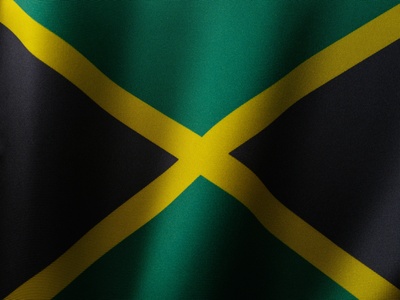
Jamaican Creole (Patois)
The English-based creole spoken across Jamaica, commonly called Patois. It mixes English vocabulary with West African grammar and phonology, used widely in everyday speech, music, and media, with regional variation and a central role in Jamaican identity.

Jamaican Acrolect (Standard English)
The acrolectal variety closest to international Standard English, used in formal education, government, and media. Speakers often code-switch into creole; pronunciation and vocabulary may show Jamaican influence even while following standard grammar.
Jamaican Mesolect
The mesolect is the mid-range of the speech continuum mixing creole features and Standard English. Common in everyday conversation, it shows simplified grammar, selective creole pronouns and tense markers, and fluid code-switching among speakers.
Jamaican Basilect (Deep Patois)
The basilect is the most creole-like end of Jamaican speech, featuring distinctive tense–aspect markers, reduced consonant clusters, and creole pronouns. It appears in rural speech, traditional storytelling, folk songs, and contexts emphasizing strong Jamaican identity.
Kromanti (Kromanti/Coromantee)
A ritual Maroon language with heavy Akan (Ghana) influence, Kromanti survives mainly in ceremonial contexts in Moore Town and Accompong. Not typically used for everyday talk, it preserves African-derived vocabulary, songs, and ancestral invocation formulas.
Maroon Creole
Local creole varieties spoken in Maroon towns. These varieties retain more West African phonology and vocabulary than mainstream Jamaican creole and include ritual registers and unique lexical items tied to Maroon cultural practice.
Jamaican Sign Language (JSL)
The natural sign language used by Jamaica’s Deaf community. JSL has its own grammar and signs distinct from spoken varieties. Used in education, churches and Deaf organizations, it shows contact influence but remains an independent language.
Taíno (Arawakan)
The Arawakan language of Jamaica prior to European contact; now extinct on the island. Taíno survives in place names and loanwords like hammock and canoe, and it informs Jamaica’s precolonial linguistic history.