Kyrgyzstan’s linguistic map follows its mountains and river valleys: local speech shifts noticeably between highland communities, market towns, and border regions. That variation reflects centuries of contact with Uzbek, Russian, and other Turkic speakers, and shows up in pronunciation, vocabulary, and local expressions.
There are 5 Dialects in Kyrgyzstan, ranging from Fergana Uzbek to Southern Kyrgyz. For each entry I list Region,Speakers (est.),Key features so you can see where each is spoken, how many people use it, and what distinguishes it — you’ll find below.
How different are these dialects from standard Kyrgyz?
Most dialects remain mutually intelligible with standard Kyrgyz, but differences can be clear in pronunciation and certain common words; border-area speech (like Fergana Uzbek) may include more Uzbek lexical items, while Southern Kyrgyz shows vowel and consonant shifts tied to regional identity.
Which areas have the largest speaker communities for these dialects?
Valley and urban centers—especially in the south and the Fergana basin—concentrate the biggest speaker populations, while highland dialects have smaller, more localized communities; the list below gives estimated speaker counts by region.
Dialects in Kyrgyzstan
| Dialect | Region | Speakers (est.) | Key features |
|---|---|---|---|
| Northern Kyrgyz | Chuy,Bishkek,Talas,Issyk-Kul | 3,000,000 | Basis of standard; palatalization; vowel harmony; Russian loanwords |
| Southern Kyrgyz | Osh,Jalal-Abad,Batken,Fergana valley | 1,000,000 | Affricate reduction; vowel shifts; heavy Uzbek/Tajik loanwords |
| Naryn (Central) Kyrgyz | Naryn oblast,At-Bashi,central highlands | 250,000 | Conservative morphology; archaic lexicon; highland vocabulary |
| Issyk-Kul | Issyk-Kul oblast (lake region) | 180,000 | Distinct intonation; local lexical items; preserves archaisms |
| Fergana Uzbek | Osh and Jalal-Abad (Uzbek communities) | 400,000 | Karluk Uzbek features; Kyrgyz contact; Uzbek lexicon dominance |
Images and Descriptions
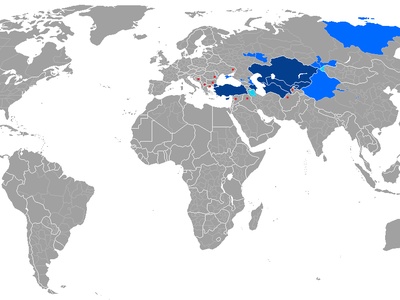
Northern Kyrgyz
Northern Kyrgyz covers the north and capital region; it forms the basis of Standard Kyrgyz, spoken by most Kyrgyz. Highly mutually intelligible with other Kyrgyz dialects; conservative phonology influenced by Russian loanwords. Sources: Ethnologue; Kyrgyz National Academy.
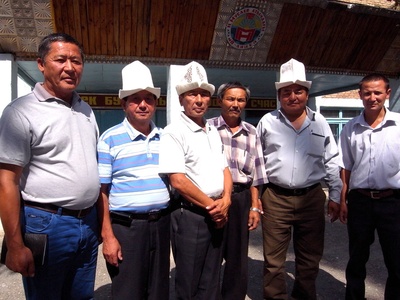
Southern Kyrgyz
Southern Kyrgyz is spoken in the south; shows phonetic differences such as affricate weakening and vowel shifts, with heavy Uzbek/Tajik lexical influence. Mutually intelligible with Northern dialect but distinct accent and vocabulary. Sources: Ethnologue; regional linguistic studies.
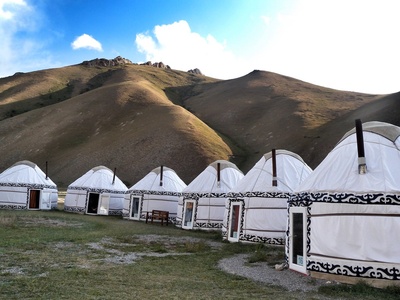
Naryn (Central) Kyrgyz
Naryn (Central) dialect is highland Kyrgyz with many conservative grammatical features and older vocabulary. Fewer speakers; intelligible to other Kyrgyz speakers though accents and some words differ. Source: Kyrgyz National Academy; academic papers.
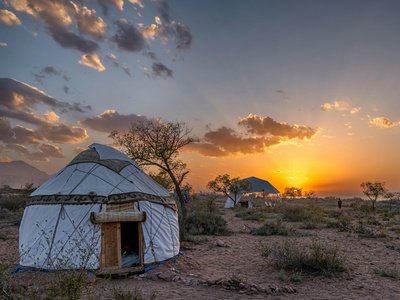
Issyk-Kul
Issyk-Kul dialect spoken around the lake shows distinctive intonation and local lexical items tied to mountain and lake life. Generally intelligible with standard Kyrgyz, notable for preserving some archaic forms. Sources: regional surveys; Ethnologue.
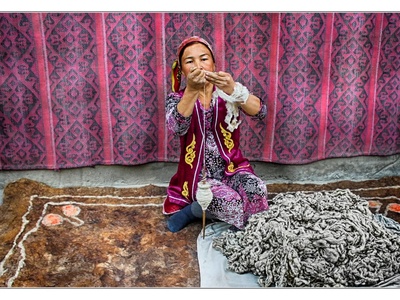
Fergana Uzbek
Fergana Uzbek is the main Uzbek dialect used by Uzbek communities in southern Kyrgyzstan. It is distinct from Kyrgyz (a Turkic language) and not mutually intelligible with it; intelligible with Uzbek varieties. Sources: Ethnologue; regional studies.