Nauru’s compact landscape holds layers of industrial and wartime history: rusting jetties, abandoned processing sites, and concrete defenses tucked between villages and the raised central plateau. These remains are easy to reach in a short visit, and they tell the island’s story through place rather than pages.
There are 5 Ruins in Nauru, ranging from Aiwo old phosphate jetty to WWII bunkers (central plateau). For each site the entries are organized by Location (district & GPS),Era / origin,Condition / access — you’ll find below.
Can I visit these sites in person and are any off-limits?
Many sites are visible from public areas and can be approached, but some sit on unstable ground or private property and should not be entered. Check local guidance, heed signs or fences, and ask residents or a guide if access is unclear to avoid safety or permission issues.
What should I bring and how do I stay safe while visiting?
Wear sturdy shoes, bring sun protection, water and a GPS/offline map, and avoid climbing or entering deteriorating structures. Respect local rules and cultural sensitivities, don’t remove artifacts, and be tide-aware when visiting coastal jetties.
Ruins in Nauru
| Name | Location (district & GPS) | Era / origin | Condition / access |
|---|---|---|---|
| Command Ridge | Yaren & -0.53,166.92 | WWII Japanese occupation, 1942–1945 | Concrete ruins and earthworks; open but uneven, caution |
| WWII bunkers (central plateau) | Central plateau (various) & -0.52,166.93 | WWII Japanese fortifications, 1940s | Scattered concrete bunkers; partially collapsed, limited formal access |
| Aiwo old phosphate jetty | Aiwo & -0.52,166.90 | Phosphate export infrastructure, early–mid 20th century | Rusted, partially collapsed jetty; coastal access, unstable metal |
| Phosphate tramway remains | Aiwo–Anabar coastal fringe & -0.52,166.93 | Phosphate mining tramway, early 1900s–1970s | Scattered rails and sleepers; visible roadside, uneven ground |
| Aiwo processing works ruins | Aiwo & -0.52,166.90 | Phosphate processing, mid–20th century | Concrete foundations and machinery bases; fenced or hazardous |
Images and Descriptions

Command Ridge
Perched on Nauru’s highest ground, Command Ridge holds Japanese WWII headquarters ruins, gun emplacements and concrete foundations. It’s visually striking and historically important; visitors should take care on uneven ground and respect memorial sites.
WWII bunkers (central plateau)
Across the mined central plateau are scattered Japanese bunkers and tunnel entrances tucked among ruined phosphate workings. These worn concrete structures tell of the island’s wartime occupation and are visible from mining roads; exercise caution exploring.
Aiwo old phosphate jetty
Aiwo’s derelict jetty and loading frames are haunting reminders of Nauru’s phosphate boom. The rusted gantries jut into the sea and make for dramatic photos; shoreline access is possible but structures are unsafe to climb.
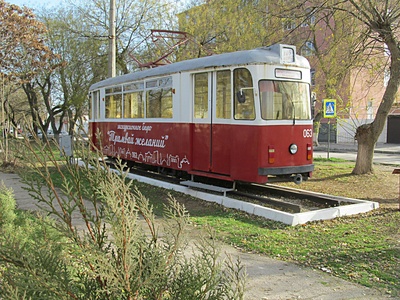
Phosphate tramway remains
Remnants of the island’s narrow-gauge phosphate tramway—short lengths of rails, sleepers and rusted hardware—dot the coastal fringe and plateau edge. They trace the path of industrial transport that shaped modern Nauru and are easy to spot from local roads.
Aiwo processing works ruins
Near Aiwo’s industrial area lie concrete slabs, foundations and ruined machinery bases from former processing facilities. The site illustrates past industrial scale and environmental change; parts may be fenced or unsafe, so view from a distance.