Thailand’s landscape is dotted with abandoned cities, temple complexes and fortified sites that trace centuries of trade, faith and conflict. Walking through crumbling brickwork and shaded chedis gives a direct sense of how communities changed across time and terrain.
There are 22 Ruins in Thailand, ranging from Ayutthaya Historical Park to Wiang Kum Kam. For each entry, you’ll find below the data organized as Location (province, coords),Era,Significance so you can quickly see where it is, when it dates from and why it matters — you’ll find below.
When is the best time to visit the ruins?
The cool, dry season (roughly November–February) is the most comfortable for sightseeing; many sites have little shade and can be muddy or flooded in the monsoon. Check opening hours, bring sun protection and sturdy shoes, and plan longer drives between remote ruins.
Are the sites easy to access and suitable for self-guided visits?
Many major sites are visitor-friendly with clear paths and on-site information, but some ruins are remote or partly overgrown. Public transport or local tours can simplify access; respect site rules (modest dress, no climbing where prohibited) and verify current conditions before you go.
Ruins in Thailand
| Name | Location (province, coords) | Era | Significance |
|---|---|---|---|
| Ayutthaya Historical Park | Phra Nakhon Si Ayutthaya province, Ayutthaya, 14.35,100.57 | 14th–18th century (Ayutthaya period) | Former Siamese capital, extensive royal ruins |
| Wat Mahathat (Ayutthaya) | Phra Nakhon Si Ayutthaya province, Ayutthaya, 14.35,100.57 | 14th century (Ayutthaya) | Iconic Buddha head entwined in tree roots |
| Wat Phra Si Sanphet | Phra Nakhon Si Ayutthaya province, Ayutthaya, 14.35,100.57 | 14th–15th century (Ayutthaya) | Royal temple with distinctive three chedis |
| Wat Chaiwatthanaram | Phra Nakhon Si Ayutthaya province, Ayutthaya, 14.34,100.57 | 17th century (Ayutthaya) | Riverside temple with Khmer-influenced prang |
| Sukhothai Historical Park | Sukhothai province, Sukhothai Thani, 17.01,99.82 | 13th–15th century (Sukhothai period) | Birthplace of Thai art and early state architecture |
| Wat Mahathat (Sukhothai) | Sukhothai province, Sukhothai Thani, 17.01,99.82 | 13th century (Sukhothai) | Central temple with iconic seated Buddha ruins |
| Si Satchanalai Historical Park | Sukhothai province, Si Satchanalai, 17.50,99.70 | 13th–15th century (Sukhothai period) | Secondary Sukhothai city with elegant stupas |
| Kamphaeng Phet Historical Park | Kamphaeng Phet province, Kamphaeng Phet, 16.48,99.52 | 13th–15th century (Sukhothai/Ayutthaya) | Fortified city ruins along the Ping River |
| Phimai Historical Park | Nakhon Ratchasima province, Phimai, 14.43,102.03 | 11th–12th century (Khmer) | Major Khmer temple in Thailand, Khmer art exemplar |
| Prasat Phanom Rung | Buriram province, Chaloem Phra Kiat, 14.57,103.10 | 10th–13th century (Khmer) | Hilltop sandstone Khmer temple with sunrise alignment |
| Prasat Muang Tam | Buriram province, Prakhon Chai, 14.52,103.12 | 10th–12th century (Khmer) | Moated Khmer temple near Phanom Rung |
| Prasat Sikhoraphum | Surin province, Sikhoraphum, 14.89,103.49 | 12th century (Khmer) | Well-preserved sandstone carvings and towers |
| Phra Prang Sam Yot | Lopburi province, Lopburi, 14.79,100.65 | 12th–13th century (Khmer) | Iconic three-prang Khmer shrine, monkey population |
| King Narai’s Palace (Wang Narai) | Lopburi province, Lopburi, 14.79,100.65 | 17th century (Ayutthaya) | Ruined royal palace with audience hall remains |
| Ban Chiang Archaeological Site | Udon Thani province, Ban Chiang, 17.40,102.43 | 1,500 BCE–900 CE (Bronze Age) | UNESCO Bronze Age settlement, ancient pottery |
| Phu Phra Bat Historical Park | Udon Thani province, Ban Phue, 17.33,102.62 | Prehistoric–Dvaravati | Striking rock formations with ancient shrines and cave art |
| Si Thep Historical Park | Phetchabun province, Si Thep, 15.77,101.16 | 7th–12th century (Dvaravati–Angkorian) | Large walled city with Dvaravati and Khmer remains |
| U Thong Historical Park | Suphan Buri province, U Thong, 14.49,100.08 | 6th–14th century (Dvaravati–Ayutthaya) | Early urban center with ancient stupas and walls |
| Chiang Saen Historical Park | Chiang Rai province, Chiang Saen, 20.31,100.11 | 7th–14th century (Dvaravati–Lanna) | Riverside walled city ruins and ancient chedis |
| Wiang Kum Kam | Chiang Mai province, Chiang Mai, 18.70,99.01 | 13th century (early Lanna) | Buried city excavations near Chiang Mai |
| Wat Si Chum (Sukhothai) | Sukhothai province, Sukhothai Thani, 17.01,99.82 | 13th century (Sukhothai) | Giant seated Buddha enclosed in mondop window |
| Mueang Fa Daet Song Yang | Roi Et province, Don Han, 16.07,103.66 | 6th–11th century (Dvaravati) | Dvaravati earthworks and carved sema stones |
Images and Descriptions
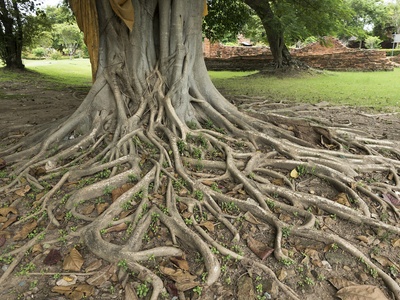
Ayutthaya Historical Park
A sprawling UNESCO site with ruined palaces, temples and stupas from the Ayutthaya Kingdom. Easy day-trip from Bangkok, with walkable ruins, museums and boat views that bring Thailand’s medieval capital to life for history-minded travelers.
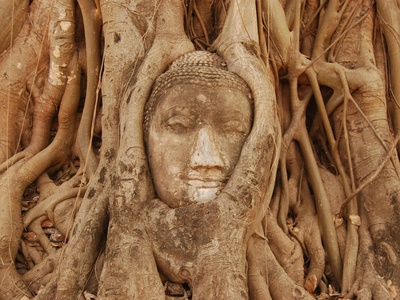
Wat Mahathat (Ayutthaya)
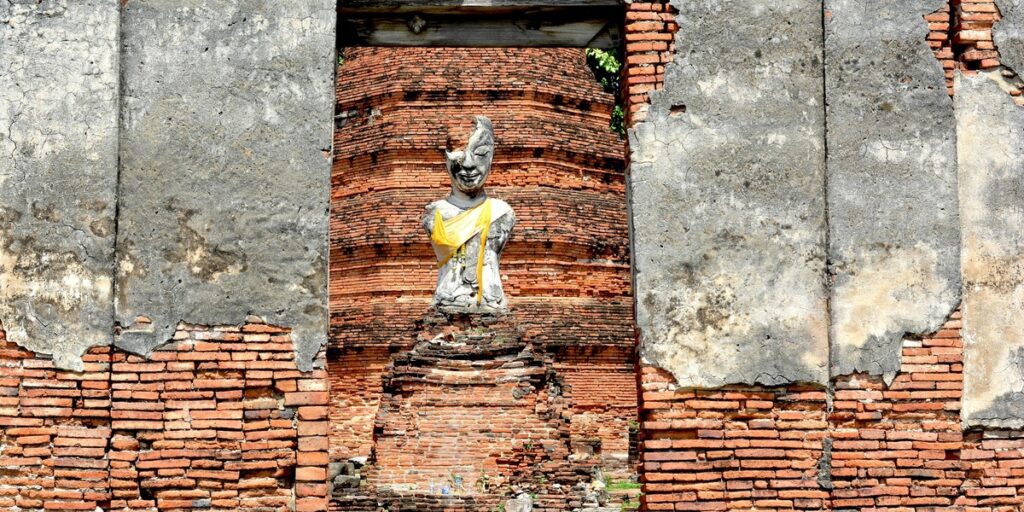
One of Ayutthaya’s most photographed ruins, famed for a Buddha head wrapped by tree roots amid crumbling chedis. Accessible within the historical park, it’s a poignant stop to feel the scale of Ayutthaya’s former grandeur.
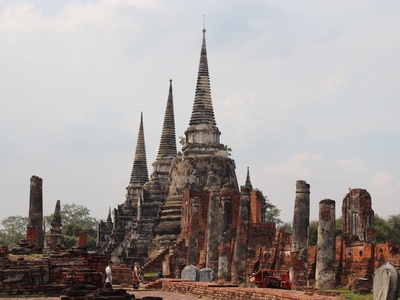
Wat Phra Si Sanphet
The former royal temple of Ayutthaya palace grounds, known for its row of large bell-shaped chedis. Well-preserved foundations make it easy to imagine courtly rituals; popular on combined historical-park itineraries.
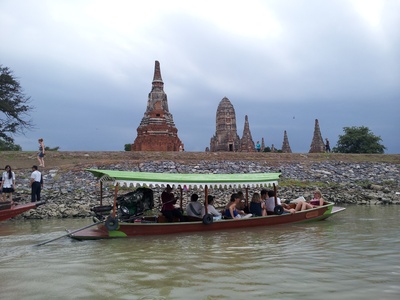
Wat Chaiwatthanaram
A dramatic riverfront temple complex with a central prang and symmetrical galleries. Dramatic at sunrise or sunset, it’s slightly outside the main island and offers panoramic views and photographic ruins.
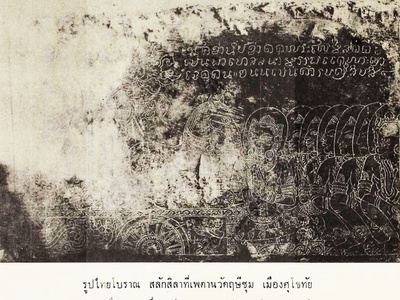
Sukhothai Historical Park
Sukhothai’s temples, Buddha images and water features represent early Thai aesthetics. Bicycles, shaded paths and interpretive signs make the large park visitor-friendly for history lovers and photographers.
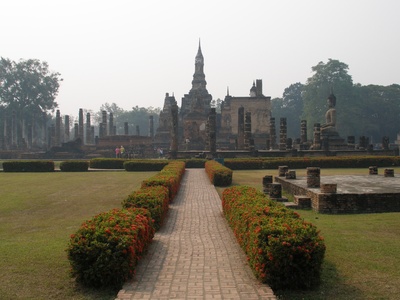
Wat Mahathat (Sukhothai)
The principal temple of Sukhothai Historical Park, notable for its spacious chedi and Buddha images. It anchors the park and is a must-see to understand Sukhothai’s religious and artistic traditions.
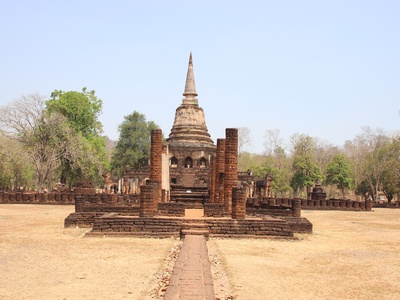
Si Satchanalai Historical Park
Less-visited than Sukhothai town, Si Satchanalai offers quieter temple ruins, moats and restored galleries. It provides a more tranquil insight into Sukhothai-era urban planning and ceramics production.
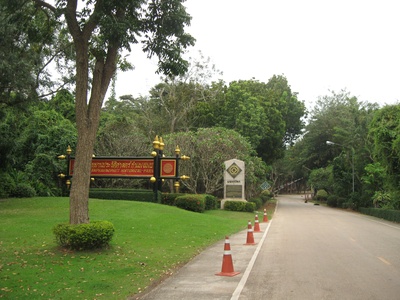
Kamphaeng Phet Historical Park
A riverside complex of walled enclosures, stupas and ordination halls demonstrating medieval Thai defensive and religious architecture. Paths and riverside views make it a rewarding stop between Sukhothai and Tak.
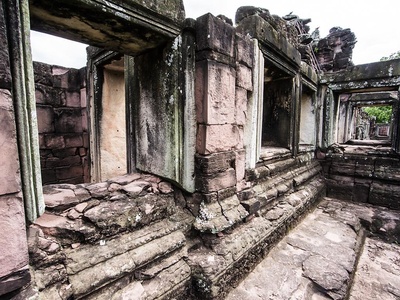
Phimai Historical Park
A substantial Khmer sanctuary with stone galleries and a central sanctuary aligned like Angkorian temples. The scale and carved lintels are impressive; well signposted and reachable by road from Nakhon Ratchasima.
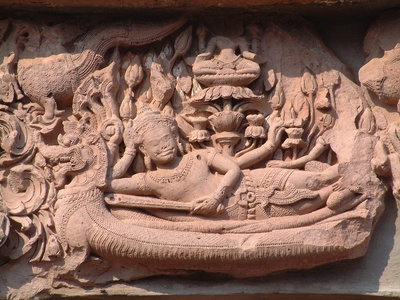
Prasat Phanom Rung
This hilltop Khmer temple sits on an extinct volcano and is famed for precise sunrise alignments through its doorways. The dramatic site offers extensive carvings and seasonal light events popular with photographers.
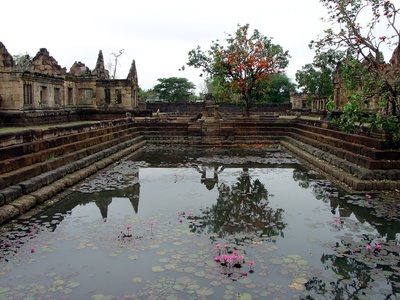
Prasat Muang Tam
A compact, moated Khmer complex with towers and sanctuary layout similar to Phanom Rung. Easy to combine with Phanom Rung, it offers carved lintels and relaxed exploration around the moat.
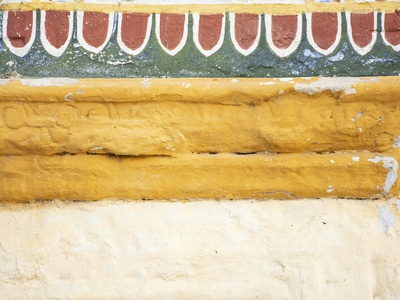
Prasat Sikhoraphum
Smaller than Phimai or Phanom Rung but finely carved, Sikhoraphum’s towers and lintels show classic Khmer motifs. Good for travelers seeking less-crowded Khmer monuments in northeastern Thailand.
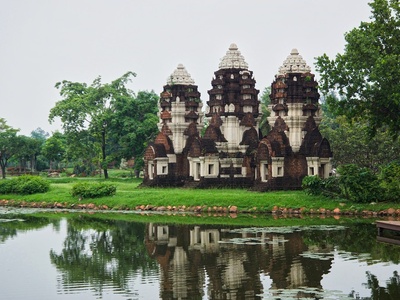
Phra Prang Sam Yot
A compact Khmer shrine of three prangs in Lopburi town, famed for resident macaques. Close to the train station, it’s a quirky and photogenic stop on central Thailand itineraries.
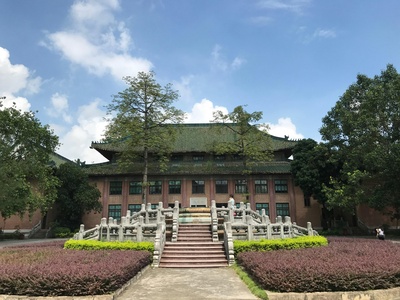
King Narai’s Palace (Wang Narai)
The ruined 17th-century palace of King Narai offers brick foundations, a rare European-style audience hall and a museum. It gives insight into royal life during late Ayutthaya and is walkable in Lopburi town.
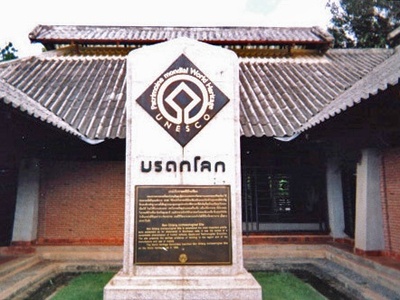
Ban Chiang Archaeological Site
A UNESCO-listed prehistoric site with extensive burial mounds and pottery remains that rewrote Southeast Asian prehistory. On-site museum displays artifacts; reach by road from Udon Thani for a deep-dive into Bronze Age life.
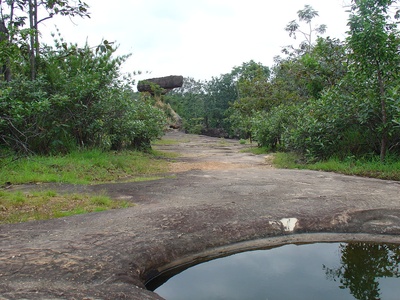
Phu Phra Bat Historical Park
Known for dramatic sandstone formations, prehistoric shrines and early Buddhist carvings, Phu Phra Bat blends natural scenery with archaeological interest. Trails and signage explain the site’s ritual history and rock art.
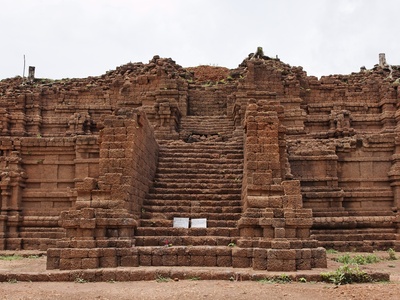
Si Thep Historical Park
An extensive ancient city with moats, walls and sema stones showing Dvaravati and later Khmer influence. The site is less touristy, offering a sense of scale and archaeology off the main tourist routes.
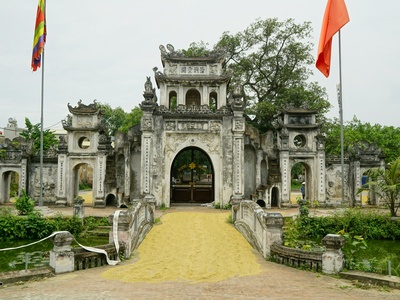
U Thong Historical Park
U Thong preserves ruins from Dvaravati through Ayutthaya periods, including chedis, city walls and inscriptions. It’s a key site for understanding early Thai state development and easy from Suphan Buri town.

Chiang Saen Historical Park
Ruins of an early northern Thai city on the Mekong with old walls, chedis and museums showing Lanna artifacts. Pleasant riverside walks and proximity to Golden Triangle tours make it visitable.
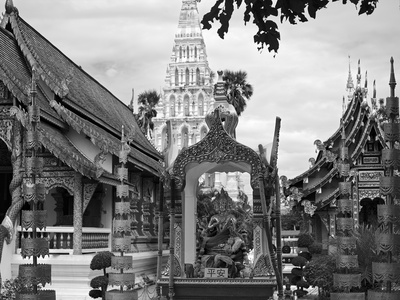
Wiang Kum Kam
A partly buried and excavated city just outside Chiang Mai with restored stupas and foundations. Accessible by short drive or bicycle tours, it offers intimate archaeological context for the rise of Chiang Mai.
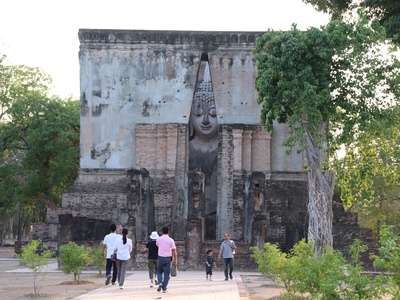
Wat Si Chum (Sukhothai)
Famous for the monumental seated Buddha visible through a narrow mondop opening, Wat Si Chum conveys Sukhothai religious scale and drama. It’s a highlight stop inside Sukhothai Historical Park.
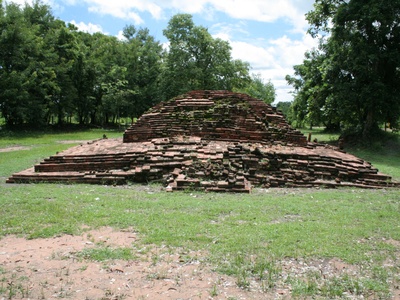
Mueang Fa Daet Song Yang
An important Dvaravati-period site with earthworks, lotus-basin remains and carved sema boundary stones. It’s lesser-known but valuable for understanding central Thailand’s early Buddhist communities and boundary rituals.