Uzbekistan sits at a crossroads of languages and cultures, where regional towns, trade routes and neighboring countries have shaped how people speak. Local speech varies with history, ethnicity and contact with Tajik, Kazakh and Russian communities, creating a patchwork of recognizably Uzbek but distinct varieties.
There are 15 Dialects in Uzbekistan, ranging from Andijan Uzbek to Uzbek Russian (Central Asian Russian). To make these easy to compare, you’ll find below the entries organized by Language,Region,Notable features so you can scan geography, key traits and influences at a glance — you’ll find the full list below.
How do dialects differ across regions of Uzbekistan?
Differences are mostly phonetic and lexical: vowel quality, consonant shifts, and local words reflect historical contact (e.g., Tajik in the east, Kazakh in the north). Urban varieties may adopt Russian loanwords and simplified endings, while rural speech preserves older grammar and regional vocabulary, so accent and word choice usually signal where a speaker is from.
Are these dialects mutually intelligible with standard Uzbek?
Yes — most dialects are mutually intelligible with standard Uzbek, especially in everyday conversation. However, heavy local vocabulary, pronunciation shifts or Russian-influenced speech can require a bit more effort; media, education and mobility tend to promote understanding across regions.
Dialects in Uzbekistan
| Name | Language | Region | Notable features |
|---|---|---|---|
| Tashkent Uzbek | Uzbek (Karluk Turkic) | Tashkent city and surrounding viloyat | Urban phonology, Uzbek loanwords into Russian |
| Fergana Valley Uzbek | Uzbek (Karluk Turkic) | Fergana Valley (Andijan, Namangan, Fergana) | Preserves archaic vowels, rich local lexicon |
| Andijan Uzbek | Uzbek (Karluk Turkic) | Andijan city and district | Front vowel retention, distinctive intonation patterns |
| Namangan Uzbek | Uzbek (Karluk Turkic) | Namangan region | Lexical archaisms, slower speech rhythm |
| Bukhara Uzbek | Uzbek (Karluk Turkic) | Bukhara region and oasis areas | Persian/Tajik influence, conservative morphology |
| Samarkand Uzbek | Uzbek (Karluk Turkic) | Samarkand region | Strong Tajik contact, Persian loanwords common |
| Khorezm Uzbek | Uzbek (Karluk Turkic) | Khorezm/Khiva (Xorazm) region | Conservative consonant clusters, local lexemes |
| Surxondaryo Uzbek | Uzbek (Karluk Turkic) | Surxondaryo (south Uzbekistan) | Tajik contact features, loanword density high |
| Kashkadarya Uzbek | Uzbek (Karluk Turkic) | Qashqadaryo region (Shahrisabz, Qarshi) | Rural phonetic conservatism, unique idioms |
| Standard Uzbek (Tashkent-based) | Uzbek (Karluk Turkic) | Nationwide (media, education) | Codified grammar, normative pronunciation |
| Samarkand Tajik (Samarqandi) | Tajik (Persian) | Samarkand city and suburbs | Central Tajik features, Uzbek lexical influence |
| Bukhori (Bukharan Jewish Tajik) | Tajik (Judeo-Persian) | Bukhara, historical Jewish quarters | Hebrew loanwords, archaic Persian features |
| Bukhara Tajik | Tajik (Persian) | Bukhara region and surrounding oases | Rural Persian forms, Uzbek contact |
| Surxondaryo Tajik | Tajik (Persian) | Surxondaryo region (Termiz area) | Southern Tajik features, code-switching common |
| Uzbek Russian (Central Asian Russian) | Russian (East Slavic) | Urban Uzbek cities (Tashkent, Samarkand) | Uzbek loanwords, reduced palatalization |
Images and Descriptions
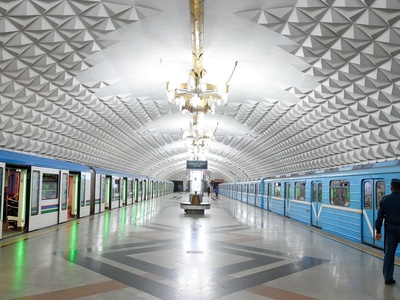
Tashkent Uzbek
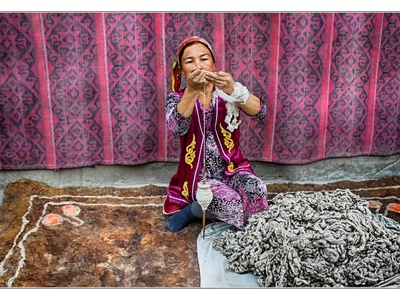
The prestige urban variety based on Tashkent speech used in media and education; spoken by city residents and migrants. Notable for fast tempo, some lexical innovation, and shaping the modern standard Uzbek heard nationwide.
Fergana Valley Uzbek
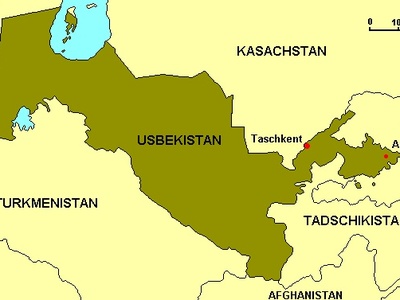
A cluster of closely related rural and urban varieties spoken across the densely populated Fergana Valley. Known for conservative phonology, distinct vocabulary, and high mutual intelligibility with other Uzbek dialects.
Andijan Uzbek
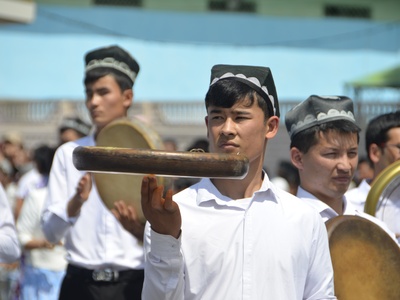
Local Fergana variety centered on Andijan; common among market traders and rural migrants. Features conservative vowel sounds and distinctive sentence intonation, often perceived as particularly “vivid” by other Uzbeks.
Namangan Uzbek
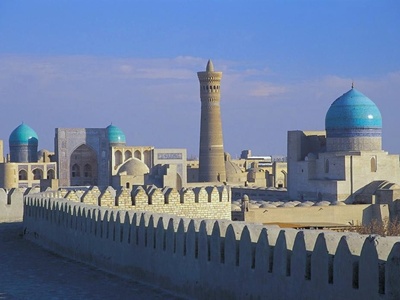
Regional speech of Namangan with traditional vocabulary and slightly slower, clearer articulation. Maintains folk expressions and is strongly associated with local identity in the eastern valley.
Bukhara Uzbek
Urban and oasis Uzbek spoken around Bukhara with heavy historical Tajik/Persian contact. Older generations show more Persian loanwords; mutual intelligibility with standard Uzbek remains high.
Samarkand Uzbek
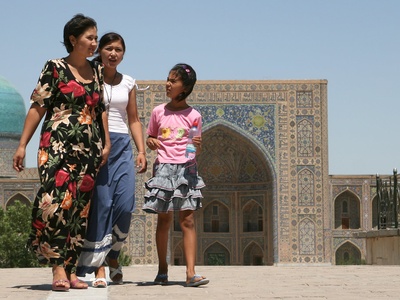
A Tajik-influenced Uzbek variety from Samarkand with many Persianisms and mixed speech patterns. Widely used in mixed Uzbek–Tajik communities; notable for code-switching and bilingualism.

Khorezm Uzbek
Spoken in Khorezm province around Urgench and Khiva; shows archaisms in consonant clusters and unique local vocabulary, shaped by historical isolation in the lower Amu Darya delta.
Surxondaryo Uzbek
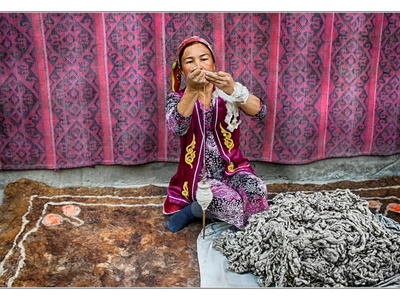
Southern Uzbek variety near the Tajik border; strongly influenced by Tajik phonology and vocabulary. Common among farmers and townspeople, with frequent bilingualism.
Kashkadarya Uzbek
Regional speech around Qarshi and Shahrisabz exhibiting conservative rural phonology and distinctive proverbs and idioms tied to local culture and agriculture.
Standard Uzbek (Tashkent-based)
The standardized literary form promoted after independence, based largely on Tashkent speech. Used in broadcasting, education, and official domains; serves as the reference for formal communication and literacy.
Samarkand Tajik (Samarqandi)
A Persian-Tajik variety spoken in Samarkand with classic Tajik grammar but heavy Uzbek contact. Widely used by ethnic Tajiks in urban and rural areas; valued for cultural traditions and local literature.
Bukhori (Bukharan Jewish Tajik)
The traditional Judeo-Tajik dialect historically used by Bukharan Jews in Bukhara and Samarkand. Characterized by Hebrew and Turkic loans and preservation of older Persian vocabulary; many speakers emigrated but community speech persists.
Bukhara Tajik
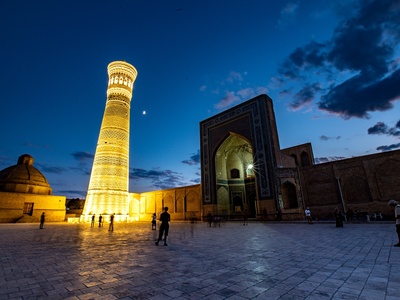
The Tajik variety of Bukhara exhibits older Persian morphology with strong Uzbek lexical influence. Spoken by local Tajik communities in oasis towns and villages, often in bilingual settings.
Surxondaryo Tajik
Tajik spoken in southern Uzbekistan near the Afghan border; retains southern Tajik phonology and shows frequent code-switching with Uzbek in daily life.
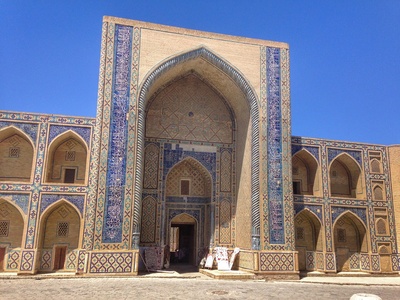
Uzbek Russian (Central Asian Russian)
Local Russian varieties shaped by Uzbek contact, loanwords, and prosodic changes. Common among older generations, multilingual families, and in urban trade; distinct from metropolitan Russian in vocabulary and pronunciation.