Laos is a patchwork of rivers, mountains and valleys where language reflects local history as much as geography. Across upland villages and riverine towns, communities keep their speech alive through daily life, ceremonies and storytelling — making the country’s linguistic map both varied and meaningful.
There are 23 Dialects in Laos, ranging from Akha to White Hmong (Hmong Daw). For each entry you’ll find below Region(s),Language family,Speakers so you can quickly see where a dialect is spoken, which language family it belongs to, and how many people use it; this layout makes comparisons and regional patterns easy to spot, and you’ll find below the full list and details.
How different are these dialects from standard Lao?
Many dialects share vocabulary and grammar with Lao but differ in sounds, tone systems and some core words; lowland Tai varieties tend to be more mutually intelligible with standard Lao, while highland languages (like Akha or Hmong varieties) belong to different families and are largely distinct, often requiring interpretation for full understanding.
Where can I listen to recordings or learn more about specific dialects?
Look for university language archives, the ELAR and RWAAI repositories, Ethnologue entries, and community-uploaded audio collections on sites like YouTube; local cultural centers and NGOs in Laos also sometimes publish recordings and materials for learners.
Dialects in Laos
| Name | Region(s) | Language family | Speakers |
|---|---|---|---|
| Vientiane Lao | Vientiane, Vientiane Prefecture, central provinces | Tai-Kadai | 1,500,000 |
| Luang Prabang Lao | Luang Prabang, northern provinces | Tai-Kadai | 400,000 |
| Southern Lao (Champasak Lao) | Champasak, Salavan, Sekong, Attapeu | Tai-Kadai | 900,000 |
| Phuan | Xiangkhouang, Vientiane, parts of central Laos | Tai-Kadai | 200,000 |
| Phu Thai | Savannakhet, parts of central-southern Laos | Tai-Kadai | 250,000 |
| Tai Lue | Luang Namtha, Oudomxay, Phongsaly | Tai-Kadai | 100,000 |
| Tai Dam | Oudomxay, Luang Namtha, northern areas | Tai-Kadai | 30,000 |
| Saek | Mekong corridor in central Laos | Tai-Kadai | 7,000 |
| Nyo (Nyaw) | Borikhamxay, Khammouane, central-eastern Laos | Tai-Kadai | 25,000 |
| Khmu | Widespread in northern and central Laos | Austroasiatic | 420,000 |
| Bru (Bruu) | Savannakhet, Salavan, Khammouane | Austroasiatic | 300,000 |
| Katu | Sekong, Salavan, central-southern Laos | Austroasiatic (Katuic) | 150,000 |
| Pacoh (Pako) | Attapeu, Sekong (border areas) | Austroasiatic (Katuic) | 12,000 |
| Jru’ (Laven) | Sekong, Attapeu | Austroasiatic (Bahnaric) | 30,000 |
| Suay (Kuy) | Savannakhet, Khammouane, Salavan pockets | Austroasiatic | 25,000 |
| Nyaheun | Attapeu and adjacent areas | Austroasiatic | 4,000 |
| Phong (Phuong/Phong-Kniang) | Khammouane, Bolikhamxai | Austroasiatic | 15,000 |
| White Hmong (Hmong Daw) | Xieng Khouang, Luang Prabang, northern uplands | Hmong-Mien | 150,000 |
| Green Hmong (Hmong Njua) | Overlapping northern communities with White Hmong | Hmong-Mien | 120,000 |
| Iu Mien (Yao) | Phongsaly, northern Laos | Hmong-Mien | 70,000 |
| Akha | Phongsaly, Luang Namtha | Sino-Tibetan (Tibeto-Burman) | 40,000 |
| Lahu | Phongsaly and nearby highlands | Sino-Tibetan | 8,000 |
| Thavung (Aheu) | Scattered northern/central localities | Austroasiatic (Vietic) | 1,200 |
Images and Descriptions

Vientiane Lao
The prestige Central Lao variety around Vientiane and central provinces; it is essentially the standard national variety, fully mutually intelligible with Standard Lao, spoken by urban and lowland communities, vigorous use in media, schooling, and everyday life.
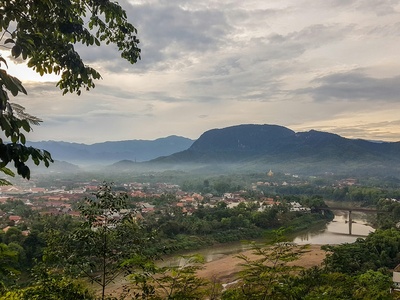
Luang Prabang Lao
Northern Lao variety centered on Luang Prabang and northern provinces; closely related to Standard Lao with minor phonological and lexical differences, generally mutually intelligible, widely spoken locally but declining among youth as education and migration introduce national standard.

Southern Lao (Champasak Lao)
Southern Lao dialect of Champasak, Salavan, Sekong and Attapeu provinces; shares core grammar with Standard Lao but has distinctive tone and vocabulary, mostly intelligible; vital in rural life but pressure from central media and migration is reducing intergenerational transmission.
Phuan
Phuan is a Tai variety spoken in parts of Xiangkhouang, Vientiane and neighboring provinces; fairly close to Lao with good mutual intelligibility, though distinct vocabulary persists. Community use remains strong in villages but younger generations shift toward Standard Lao.
Phu Thai
Phu Thai, spoken in Savannakhet and nearby districts, is a Southwestern Tai variety with strong local identity; largely intelligible with Lao but keeps unique phonology and folk vocabulary. Vital in rural life but urban migration weakens use.
Tai Lue
Tai Lue occurs in northern Laos (Luang Namtha, Oudomxay and Phongsaly); it is related to other Tai languages, partly intelligible with Lao but distinct in tone and vocabulary. Local use is robust in villages though younger speakers often use Lao.
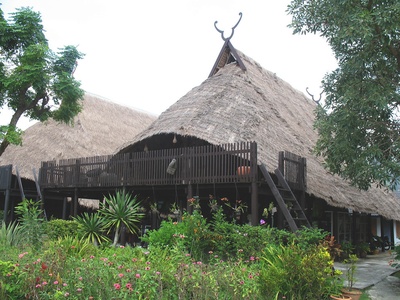
Tai Dam
Tai Dam (Black Tai) communities live in northern Laos; their speech shares core Tai features but low mutual intelligibility with Standard Lao due to phonology and lexicon. Vitality is moderate — older speakers maintain it, but younger people often shift.
Saek
Saek is a small Tai variety found along the Mekong in central Laos; it remains largely unintelligible to Lao speakers without exposure. Spoken by a few thousand, it is endangered, with declining village use and pressure from dominant Lao.
Nyo (Nyaw)
Nyo is a Tai variety in parts of central and eastern Laos (Borikhamxay, Khammouane); closely related to Lao with high mutual intelligibility, often treated as a local Lao dialect. Widely used locally and intergenerationally, vitality is stable.
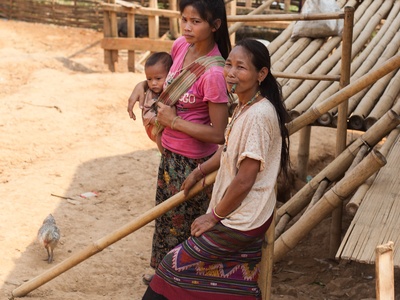
Khmu
Khmu (Austroasiatic) is widespread in northern and central Laos, with many dialects; it’s not mutually intelligible with Lao. With hundreds of thousands of speakers, Khmu remains socially strong in rural areas but faces schooling and urbanization pressures.
Bru (Bruu)
Bru, an Austroasiatic language, is spoken in Savannakhet, Salavan and surrounding areas; it is not mutually intelligible with Lao. Strong local use persists, but mixed settlement and Lao schooling are creating gradual language shift among youth.
Katu
Katu is spoken by communities in Sekong, Salavan and central-southern Laos; an Austroasiatic Katuic language not intelligible with Lao. Community use remains vital in some areas but media and schooling in Lao reduce daily domains.
Pacoh (Pako)
Pacoh (Pako) is spoken along the Laos–Vietnam border in Attapeu and Sekong; a Katuic Austroasiatic language with low mutual intelligibility with Lao. Small speaker base and migration make it vulnerable, with declining intergenerational use.
Jru’ (Laven)
Jru’ (Laven) is a Bahnaric Austroasiatic language spoken in Sekong and Attapeu; not mutually intelligible with Lao. Village-level use is still common, but assimilation to Lao in schools and markets threatens long-term vitality.
Suay (Kuy)
Kuy (Suay) is an Austroasiatic language spoken in Savannakhet and Khammouane; not intelligible with Lao. While communities use Kuy at home and in rituals, many speakers are bilingual and the language is under pressure from Lao.
Nyaheun
Nyaheun is a small Mon-Khmer language of Attapeu province; not mutually intelligible with Lao and spoken by only a few thousand. It is endangered, with shrinking domains of use and few young fluent speakers.
Phong (Phuong/Phong-Kniang)
Phong (Phuong/Phong-Kniang) varieties occur in Khammouane and Bolikhamxai; Austroasiatic and not intelligible with Lao. Local usage continues in villages, but small speaker numbers and Lao influence make vitality fragile indeed.
White Hmong (Hmong Daw)
White Hmong is a major Hmong-Mien variety in Xieng Khouang, Luang Prabang and northern uplands. Not intelligible with Lao; used in villages, markets and rituals. Vitality is moderate with bilingualism and migration affecting use.
Green Hmong (Hmong Njua)
Green Hmong (Hmong Njua) occurs among overlapping communities with White Hmong in northern Laos; mutually intelligible with other Hmong varieties but not Lao. Strong cultural use persists, though education in Lao influences younger generations.
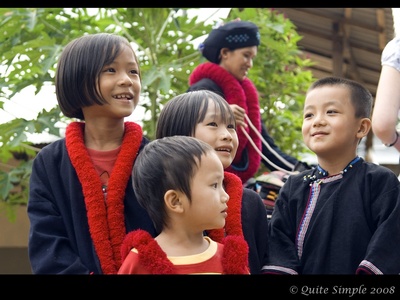
Iu Mien (Yao)
Iu Mien (Yao) communities live in Phongsaly and northern Laos; a Hmong-Mien language not intelligible with Lao. Maintained in village life and ritual contexts, although young people increasingly use Lao for schooling and work.
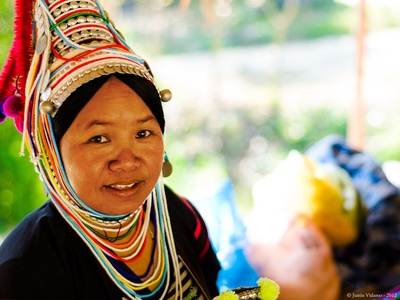
Akha
Akha is a Tibeto-Burman language spoken in Phongsaly and Luang Namtha; not intelligible with Lao. Village use remains important for identity; however migration, intermarriage and schooling in Lao reduce intergenerational transmission.
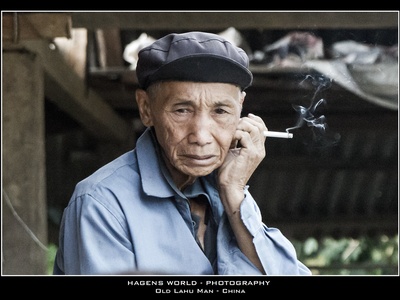
Lahu
Lahu communities in northern Laos speak a Sino-Tibetan variety not intelligible with Lao. Small speaker numbers and contact with Lao and Thai make Lahu vulnerable, though some villages retain active use and traditional practices.
Thavung (Aheu)
Thavung (Aheu) is a small Vietic Austroasiatic variety in parts of northern and central Laos; not mutually intelligible with Lao. With only a few thousand speakers, its use is endangered, limited to elders and remote villages.