Denmark’s past is visible in scattered stone foundations, church ruins and earthworks that mark Viking forts and monastic sites. Whether you’re into history, photography or a relaxed road trip, tracing these remnants offers a direct link to different eras across the country.
There are 21 Ruins in Denmark, ranging from Aggersborg to Øm Abbey; the list is organized with Region / town, Era (period), and Condition & access, which you’ll find below.
Are these ruins generally open to the public?
Most sites are freely accessible, especially earthworks and castle ruins on public land, but access can vary—some monastic sites sit within protected areas or private grounds. Check the Condition & access column for each entry and look up local municipal or heritage pages before visiting.
How should I plan a route to see several ruins in one trip?
Use the Region / town column to group nearby sites, then prioritize by Era (period) or Condition & access to match interest and practicality; coastal and island ruins may require ferries or seasonal access, so factor transport times and opening notes from the list into your itinerary.
Ruins in Denmark
| Name | Region / town | Era (period) | Condition & access |
|---|---|---|---|
| Hammershus | Bornholm, near Allinge | 13th c. | Large stone ruin; well-signed paths and viewpoints |
| Gamleborg | Bornholm, near Rønne | Iron Age | Earthwork fortification ruins; countryside trails open |
| Jelling | Jelling, Vejle Municipality | 10th c. (Viking Age) | Well-preserved monuments; visitor centre and paths |
| Lindholm Høje | Aalborg | Viking Age / Iron Age | Stone ship and mounds visible; museum nearby |
| Aggersborg | Aggersborg, North Jutland | 10th c. (Viking Age) | Earthwork ring fortress; trails and access |
| Fyrkat | Hobro, Mariagerfjord | 10th c. (Viking Age) | Circular earthworks; museum displays nearby |
| Trelleborg (Slagelse) | Slagelse | Viking Age (10th c.) | Earthworks and excavated foundations; visitor paths |
| Borgring | Near Køge | Viking Age (10th c.) | Earthen ramparts and excavation traces; public access |
| Nonnebakken | Odense | Viking Age / Medieval | Motte/earthwork remains in public park; accessible |
| Kalø Slot | Rønde, Djursland | 14th c. | Island ruins reachable by causeway; exposed masonry |
| Vordingborg Castle Ruins | Vordingborg | 12th–14th c. | Partial tower and foundations; park access |
| Søborg Slot | North Zealand | 12th–15th c. | Hill and masonry ruins; hiking access |
| Næsbyhoved Slot | Odense area | 13th–15th c. | Earthworks, moats and fragmentary walls; public park |
| Øm Abbey | Ry, Silkeborg Municipality | 12th–16th c. | Stone ruins with paths and signage; public access |
| Dueholm Monastery | Nykøbing Mors | 13th c. | Cloister ruins and museum displays; seasonal hours |
| Skanderborg Castle Ruins | Skanderborg | 12th–15th c. | Earthworks, foundations and park trails |
| Dybbøl Banke | Sønderborg | 19th c. (1864) | Preserved trenches, earthworks and museum; public battlefield |
| Højerup Old Church (Stevns Klint) | Højerup, Stevns | 12th c. | Cliff-top partial ruin; path and viewpoint |
| Gamle Bygdelod (Viborg Castle bank) | Viborg | 12th–16th c. | Earthworks and foundations in park; accessible |
| Nykøbing Falster Slot Ruins | Nykøbing Falster | 13th–16th c. | Foundations and park remains; public access |
| Gamle Bygning (Kalundborg foundations) | Kalundborg | 12th–15th c. | Masonry foundations in park; local signage |
Images and Descriptions

Hammershus
Northern Europe’s largest medieval fortress ruins perched on a cliff. Hammershus offers extensive masonry remains, towers and curtain walls with dramatic sea views. It’s a must-see for medieval history, strategic Baltic trade and Crusader-era power struggles on Bornholm.
Gamleborg
Gamleborg is an Iron Age hillfort with impressive earthen ramparts and stone foundations. Visible ramparts and ditches reveal defensive layout; interpretive signs explain early medieval settlement patterns and Bornholm’s role in regional trade and defense.
Jelling
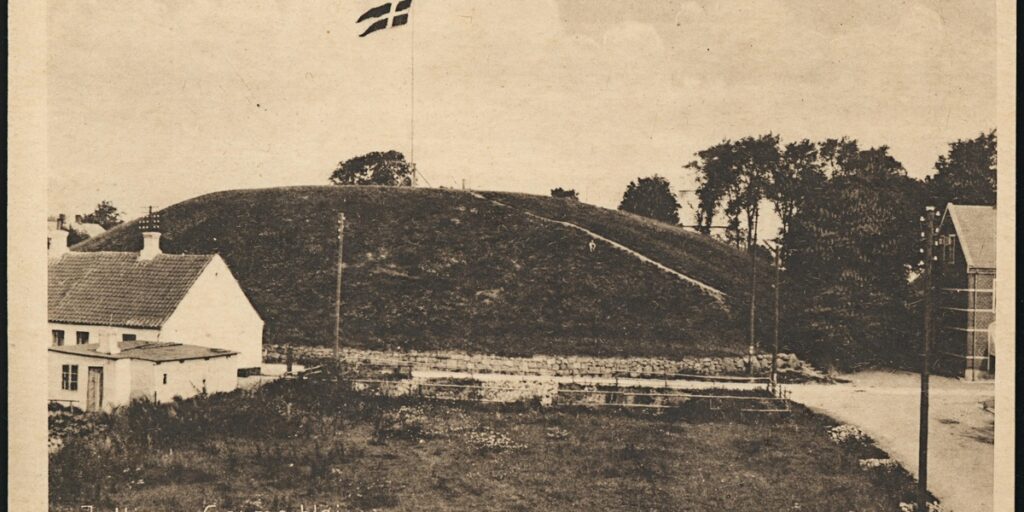
The royal Jelling complex contains UNESCO-listed runestones, burial mounds and a timber church site. Emperor Harald Bluetooth’s stones mark Denmark’s Christianization and kingdom formation; archaeological remains and interpretation make it vital for Viking-Age history.
Lindholm Høje
A major Viking-Age cemetery with hundreds of stone settings and burial mounds overlooking the Limfjord. Lindholm Høje’s stone ship and graves give rare insight into Viking funerary practices and local settlement continuity into the Iron Age.
Aggersborg
Aggersborg is Denmark’s largest Viking ring fortress with circular ramparts visible as earthworks. Excavations revealed gates and post-holes; the open landscape and signage help visitors imagine the stronghold’s military and administrative role in the Viking Age.
Fyrkat
Fyrkat preserves a near-circular fortress rampart and surrounding ditches, with archaeological finds interpreted at a local centre. The visible earthworks and nearby reconstructions (kept separate) contextualize Viking military organization and settlement planning.
Trelleborg (Slagelse)
Trelleborg is one of Denmark’s famous Viking ring-forts, with clear ramparts and excavated timber building footprints. The site and museum exhibits illustrate craft production, military logistics and the centralizing power of Viking kings.
Borgring
Borgring is a recently excavated circular fortress showing large earthen ramparts and internal structures. Excavations have exposed gateworks and postholes; the site illuminates royal control and coastal defense in the Viking period.
Nonnebakken
Nonnebakken is a raised motte and earthwork once hosting a Viking Age fortress and later medieval structures. Located within Odense, the visible mound and park signage connect visitors to the city’s early defensive history and monastic neighborhoods.
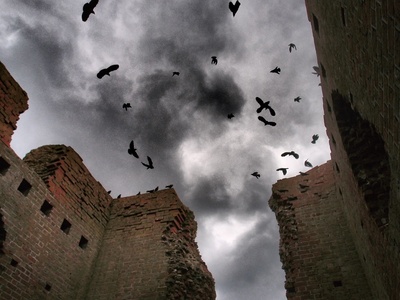
Kalø Slot
Kalø Castle stands as atmospheric coastal ruins on a small island, with surviving curtain walls and foundations. Accessible by a low-causeway path, the site recalls medieval royal authority, Danish internal conflicts and coastal defense on Djursland.
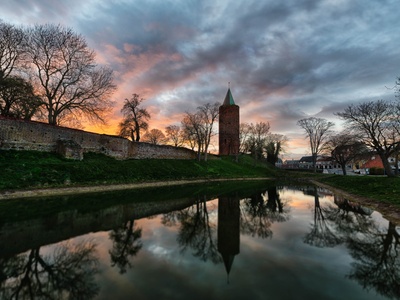
Vordingborg Castle Ruins
Vordingborg’s medieval castle survives as a prominent tower and scattered ruins within a park. The site’s remaining masonry and earthworks show its past strategic importance controlling south Zealand and maritime routes in the Middle Ages.
Søborg Slot
Søborg Castle ruins crown a wooded ridge with visible stone remains and moat traces. Once a royal and episcopal stronghold, the ruin offers hiking access and views while illustrating conflicts between church and crown in medieval Denmark.
Næsbyhoved Slot
Næsbyhoved’s ruined castle site retains moats, ramparts and foundation stones near Odense. The landscape preserves medieval defensive features and local noble residence traces, useful for visitors interested in feudal Denmark and archaeological parkland settings.
Øm Abbey
Øm Abbey is a sizeable Cistercian ruin with surviving cloister foundations, chapter house traces and extensive earthworks. The site provides insight into monastic life, medieval agriculture and the Reformation’s impact on church properties in Denmark.
Dueholm Monastery
Dueholm preserves medieval monastery foundations and fragments integrated with a local museum. Visitors see cloister remains and learn about monastic economy, island life and ecclesiastical networks in northern Jutland.
Skanderborg Castle Ruins
Skanderborg’s castle survives primarily as embankments and foundation stones around a lake. The atmospheric park preserves the medieval footprint of a royal hunting-seat and administrative center, with interpretive signage for visitors.
Dybbøl Banke
Dybbøl Banke features preserved redoubts and trenches from the 1864 Second Schleswig War. As one of Denmark’s most important 19th-century battlefields, the site offers trails, a museum and dramatic displays of 19th-century fortification warfare.
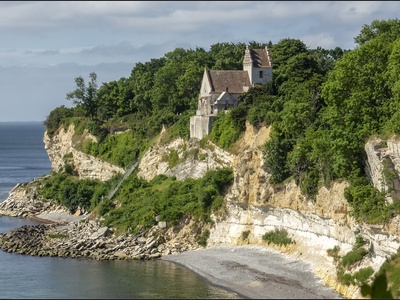
Højerup Old Church (Stevns Klint)
Perched on Stevns Cliff, Højerup Old Church is a dramatic coastal ruin, part of the cliff collapsed into the sea in the 18th century. The remaining chancel and cliff-top setting highlight coastal erosion and medieval parish life.
Gamle Bygdelod (Viborg Castle bank)
Viborg Castle’s medieval defensive bank and fragmentary foundations survive as landscape features inside the town. These earthworks mark the former royal stronghold and provide visitors with a tangible sense of medieval urban fortification.
Nykøbing Falster Slot Ruins
Ruins of Nykøbing Falster castle include low foundations and moat outlines in the town center. The site recalls the region’s medieval administration and offers a quiet historic stop near Falster’s waterfront and town attractions.
Gamle Bygning (Kalundborg foundations)
Kalundborg retains medieval foundation fragments and earthworks from former defensive structures. These modest ruins convey the town’s medieval urban development and maritime importance on Zealand’s western coast.