No entries meet the defined criteria for “Ruins in Bhutan”
Define “ruins” as long‑abandoned, structurally collapsed or archaeologically exposed sites that are no longer in active use. Apply that definition strictly and find none in Bhutan that fit. Bhutan’s historic buildings are mostly still used, repaired, or conserved, so a stand‑alone list of true ruins does not exist.
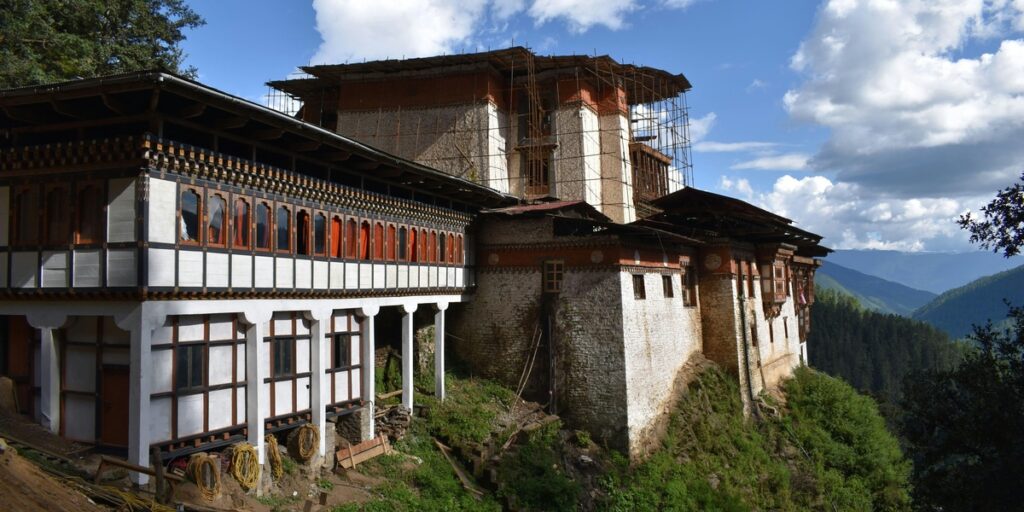
Explain why the criteria produce this result. Bhutan’s fortress‑monasteries (dzongs) and temples serve as living centers of worship and administration. Care by monasteries, local communities, and the government keeps them standing. The country’s cultural norms favor repair and reuse over abandonment. Also, Bhutan has few large ancient urban centers that would decay into classic ruins. Expect damage or partial collapse only in isolated cases, not widely abandoned ruin sites.
Give technical and historical context and note near matches. Many historic structures are timber and earth, so they decay unless repaired. Fires, earthquakes, and weather have damaged some places, but these are usually restored. Near matches include partially damaged dzongs (for example, the fire‑damaged sections of Drukgyel Dzong near Paro), old watchtowers, abandoned farmsteads, and small archaeological traces like rock shelters or field terraces. These almost fit the “ruins” label but are either under conservation, still used in part, or are only fragmentary remains.
List related categories that do exist and what to explore instead. Look for “historic and active sites” such as dzongs, monasteries, temples, traditional villages, and documented archaeological sites. Explore conservation reports, government tourism pages, and academic surveys for damaged or historic structures. For practical plans, search for “historic sites in Bhutan,” “damaged dzongs,” or “archaeological finds in Bhutan” instead.