Rwanda’s geographic compactness hides a subtle regional variety in speech: small shifts in pronunciation, a few local words, and distinct phrase choices mark different communities across the country. Those differences matter to linguists, local communicators, and travelers who want to pick up regional nuances.
There are 5 Dialects in Rwanda, ranging from Central (Kigali) to Western (Rusizi/Rubavu). For each dialect you’ll find below data organized as Region (districts/province), Speakers (est.), and Key features & intelligibility — practical notes and examples you’ll find below.
How mutually intelligible are these dialects?
Most dialects of Kinyarwanda are highly mutually intelligible; speakers from different regions can generally understand one another with little difficulty. Differences are mainly in accent, some local vocabulary, and occasional pronunciation shifts, with Western varieties showing more cross-border influence.
Will knowing these dialect labels help me when traveling or researching?
Yes—knowing the dialect labels helps you interpret regional media, understand place-based vocabulary, and ask locals more precisely about speech differences, but learning standard Kigali speech covers the basics for communication throughout Rwanda.
Dialects in Rwanda
| Dialect name | Region (districts/province) | Speakers (est.) | Key features & intelligibility |
|---|---|---|---|
| Central (Kigali) | Kigali City; Gasabo, Kicukiro, Nyarugenge | 2,500,000 | Urban pronunciation, lexical borrowings; basis of standard; fully intelligible |
| Northern (Musanze) | Musanze, Gicumbi, Burera, Rulindo, Gakenke | 2,700,000 | Conservative vowel traits, minor consonant variants; fully intelligible |
| Southern (Huye/Butare) | Huye, Nyanza, Nyamagabe, Nyaruguru, Gisagara | 2,600,000 | Distinct local lexicon, softer sibilants; fully intelligible |
| Western (Rusizi/Rubavu) | Rusizi, Rubavu, Nyamasheke, Ngororero, Karongi | 2,600,000 | Intonation differences, loan influence from Congolese varieties; fully intelligible |
| Eastern (Kayonza) | Kayonza, Kirehe, Ngoma, Gatsibo, Nyagatare | 1,600,000 | Lexical archaisms, faster speech tempo; fully intelligible |
Images and Descriptions
Central (Kigali)
Spoken in Kigali and surrounding districts, this urban variety forms the basis of Rwanda’s standard Kinyarwanda used in media, education and government. It shows urban pronunciations and borrowings from French/English; widely viewed as the prestige form (general surveys).

Northern (Musanze)
Found in Rwanda’s volcanic north (Musanze, Gicumbi, Burera), this variety retains some older pronunciations and local vocabulary. Speakers easily understand standard Kinyarwanda; variation is mainly accentual and lexical rather than grammatical (dialect surveys).
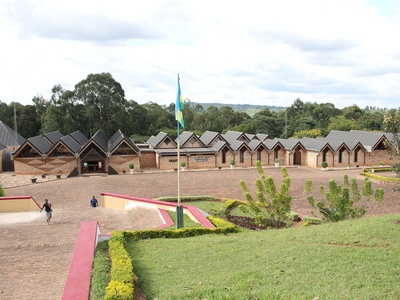
Southern (Huye/Butare)
Common in the south around Huye and Nyanza, this regional variety is noted for some unique vocabulary and a softer sibilant quality. It coexists with standard forms in education and local media (regional linguistic notes).
Western (Rusizi/Rubavu)
Spoken along Rwanda’s western corridor, western Kinyarwanda shows intonational patterns and occasional lexical influence from neighbouring Congolese Kinyarwanda/Kirundi varieties. Mutual comprehension with standard Kinyarwanda is strong (field reports).
Eastern (Kayonza)
Eastern varieties around Kayonza and the far east preserve some older words and tend to have a brisker speech rate. These differences are notable locally but do not impede understanding of standard Kinyarwanda (regional studies).