New Zealand has roughly 25 million sheep versus about 5.1 million people (2023) — a ratio that often surprises visitors and hints at the country’s rural roots.
It’s an island nation in the South Pacific with a land area of about 268,000 km². Landscapes, wildlife and a living Māori culture shape daily life and global perceptions.
If you’ve ever asked what is New Zealand known for, the answer is layered: dramatic scenery and outdoor adventure, unique biodiversity and conservation efforts, Māori arts and language revival, plus an outsized role in film, tech and exports. The rest of the article breaks those ideas into four themes and eight numbered points, with examples like bungee in 1988 and The Lord of the Rings films (2001–2003) to anchor the story.
Dramatic Landscapes and Outdoor Recreation
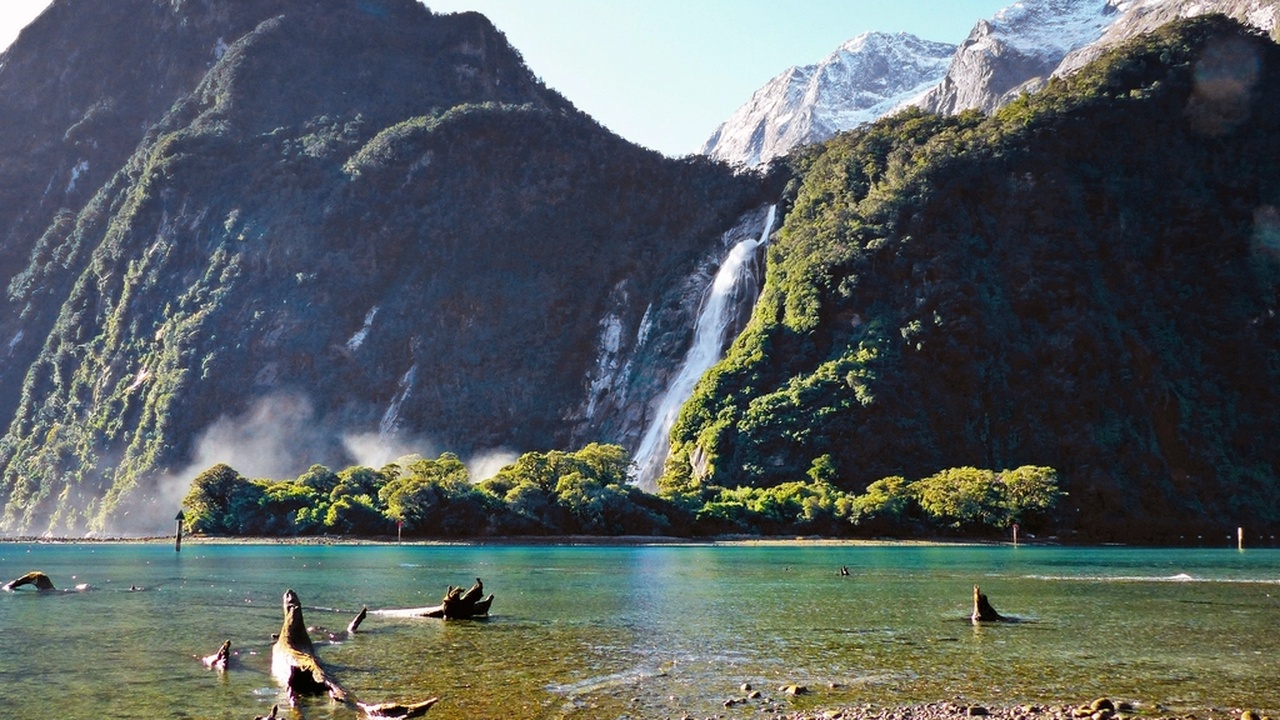
Mountains, fiords, glaciers, lakes and a jagged coastline give New Zealand a dramatic backdrop. Those landscapes underpin tourism, outdoor jobs and a strong national identity tied to the land.
National parks such as Fiordland and Tongariro protect big swathes of that scenery and support guiding, farming and local services. The variety — from alpine peaks to sheltered bays — fuels businesses like guiding companies, shuttle operators and hut managers.
Protected tracks attract international hikers and help rural economies stay viable. The landscape isn’t just a postcard; it’s livelihoods, sports and conservation all at once.
1. Fiords, Mountains and World-class Hiking
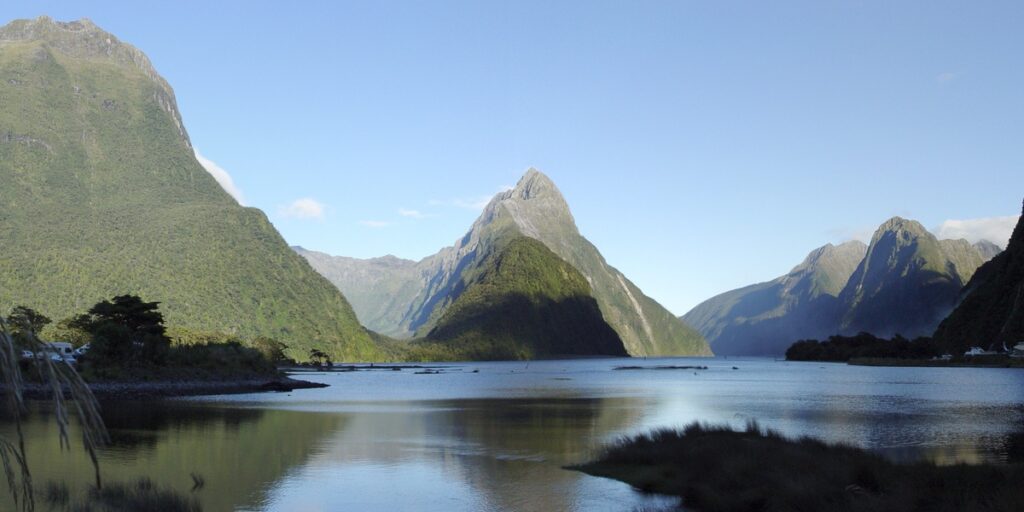
New Zealand is famous for dramatic fiords and alpine trails. Fiordland National Park, a UNESCO World Heritage–listed area, showcases glaciated fiords such as Milford Sound.
The Southern Alps run the length of the South Island and include Aoraki / Mount Cook, the country’s highest peak. The Great Walks network contains 10 official tracks — Routeburn, Kepler and Milford among them — with multi-day huts and maintained routes.
Those tracks support local guiding firms and eco-tourism. Milford Sound cruises draw hundreds of thousands of visitors annually, and alpine guides offer seasonal employment and training. Hikers should carry proper gear, check weather forecasts and book huts in advance.
2. Beaches, Coasts and World-class Surfing
New Zealand’s coastline is long and varied — roughly 15,000 km of indented shoreline offers surf beaches, sheltered bays and marine reserves. Coastal recreation is a year-round draw.
Bay of Islands is renowned for sailing and dolphin tours. Cathedral Cove on the Coromandel Peninsula is a scenic coastal walk. Raglan and Piha are internationally known surf breaks; Raglan’s left-hand point attracts surfers from around the world.
Marine reserves and coastal operators support local economies and conservation messaging. Fishing, kayaking, diving and surf schools are important sources of income for many communities.
Unique Biodiversity and Conservation
Isolated evolution gave New Zealand many species found nowhere else. That high endemism led to a national focus on conservation after human settlement caused extinctions and predator introductions.
Modern efforts mix predator control, island eradications and fenced sanctuaries to restore native fauna. Conservation itself supports jobs, research and nature-based tourism.
3. Endemic Wildlife: Kiwi, Kākāpō and More
New Zealand is synonymous with species found nowhere else. There are five kiwi species — brown, great spotted, little spotted, Okarito / rowi and tokoeka — and reptiles like the tuatara persist on predator-free islands.
The kākāpō, a flightless parrot, has been the focus of an intensive recovery programme. Its population climbed to roughly 250 birds by the early 2020s thanks to captive and island-based management.
Wildlife tours, kiwi sanctuaries and volunteer programmes drive funding for conservation and create tourism experiences tied to these unique animals.
4. Conservation Innovations and Predator-free Efforts
New Zealand has ambitious conservation goals, including the national Predator Free 2050 target to eradicate rats, stoats and possums. The programme coordinates government, iwi and community efforts.
Fenced sanctuaries such as Zealandia in Wellington show measurable wildlife returns inside urban settings. Island eradication projects have restored bird populations and boosted ecotourism in places where predators were removed.
These projects create research jobs and training for pest control, monitoring and eco-guiding. Challenges remain — cost and scale are large — but local success stories keep momentum strong.
Māori Culture, Language and the Arts
Māori culture is a living, public-facing identity in New Zealand. Language, ceremony and arts play a big role in civic life and tourism.
Historical context matters: Māori arrived over 700 years ago and the Treaty of Waitangi was signed in 1840. Today Te Reo Māori appears in schools, media and official settings.
5. Living Māori Culture and Te Reo Revival
Te Reo Māori became an official language in 1987 and immersion schools (kura kaupapa Māori) now teach generations in the language. Bilingual signage and Māori broadcasting are increasingly common.
Kapa haka performances and marae protocols (pōwhiri) feature at national events and in cultural tourism. Waitangi Day observances are an important public moment for reflection and celebration.
Māori-led tourism enterprises and arts organisations also generate revenue and strengthen cultural transmission.
6. Indigenous Art, Film and Storytelling on the World Stage
New Zealand punches above its size in film and creative arts. Peter Jackson’s The Lord of the Rings (2001–2003) and The Hobbit films showcased locations and craft skills to a global audience.
Weta Workshop and Weta Digital became internationally recognized studios, and film tourism grew as a result. Contemporary filmmakers such as Taika Waititi have further raised New Zealand’s profile.
That creative sector produces jobs in effects, design and tourism, and it exports services and cultural products abroad.
Adventure, Innovation and Global Trade
Adventure tourism, major agricultural exports and a growing tech and creative-tech cluster form a three-part identity for New Zealand’s economy.
These sectors combine to support regional jobs, university research and export revenues that reach global markets.
7. Adventure Sports and Queenstown’s Global Brand
Queenstown is often called the adventure capital of the world. AJ Hackett’s commercial bungee operation at Kawarau Bridge began in 1988 and helped define modern adventure tourism here.
Today Queenstown hosts jet boating, skydiving, heli-skiing and guided multi-activity operators. The brand draws international visitors, creates seasonal employment and supports local training programmes.
Adventure activities also drive associated services — transport, hospitality, equipment hire — and push strong safety and accreditation standards.
8. Film, Tech and Agricultural Exports
New Zealand’s economy mixes big agricultural exports with a nimble creative-tech sector. Fonterra, the dairy cooperative formed in 2001, anchors dairy exports that still account for a large share of goods leaving the country.
Tech entrepreneurs have also shipped global products: Xero was founded in 2006 and became a leading cloud accounting platform. Weta Digital continues to win international contracts for visual effects.
Those industries provide jobs, university partnerships and export revenue. They also diversify income away from farming while keeping rural supply chains and agri-innovation strong.
Summary
- Small population, big impact: with ~5.1 million people but 25 million sheep and dramatic scenery, New Zealand’s landscapes and rural economy shape its global image.
- Conservation and culture define modern identity — Predator Free 2050 ambition and Māori language revival (Te Reo official since 1987) stand out as national priorities.
- Adventure and creativity sell the country abroad: Queenstown’s 1988 bungee, LOTR (2001–2003) film tourism and firms like Weta and Xero show practical economic benefits.
- Support responsible travel or local conservation groups — visit a kiwi sanctuary or an iwi-led cultural centre to learn and contribute directly to communities.