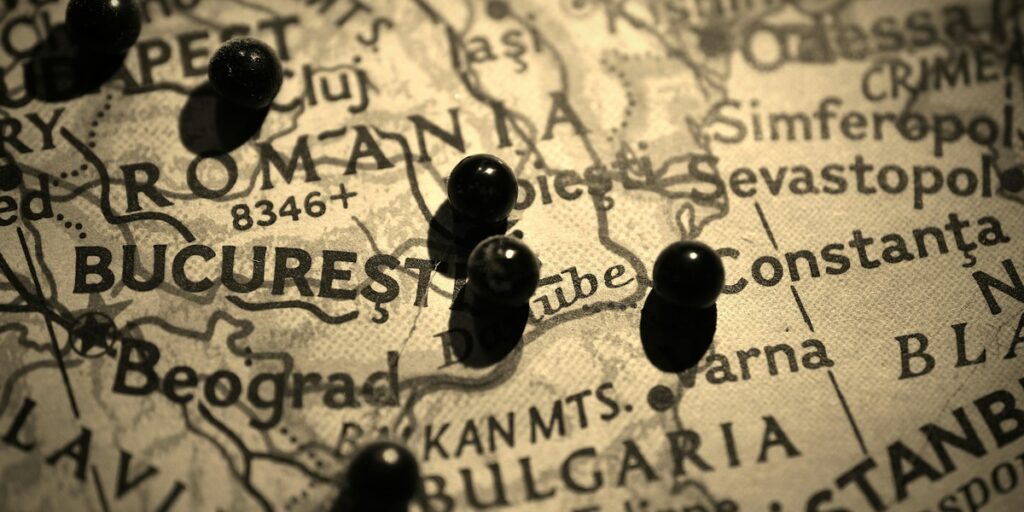
Romania’s language map reflects centuries of movement across mountains, plains and borders. Regional speech shows up in everyday conversation, place names and folk culture, so listening closely tells you a lot about local history and contact with neighbors.
There are 7 Dialects in Romania, ranging from Banat to Wallachian. For each you’ll find Region(s),Speakers (est.),Distinguishing features (max 15 words) presented in a compact table you’ll find below.
How different are these dialects from standard Romanian?
Most dialects are mutually intelligible with standard Romanian but differ in pronunciation, rhythm and some vocabulary; rural varieties and older speakers preserve stronger regional forms that may require a little acclimation.
Will speaking standard Romanian let me be understood everywhere in Romania?
Yes — standard Romanian is widely used and understood in media, schools and cities; using it will generally work, though adopting a few local words or softer pronunciations can help in informal, rural settings.
Dialects in Romania
| Dialect | Region(s) | Speakers (est.) | Distinguishing features (max 15 words) |
|---|---|---|---|
| Wallachian | Muntenia, Oltenia, Bucharest, southern Romania | 5,500,000 | unstressed vowel reduction; palatalization; specific vowel shifts |
| Moldavian | Moldova region: Iași, Suceava, Botoșani, Neamț, Vaslui | 4,000,000 | conservative vowels; distinct intonation; certain diphthong patterns |
| Transylvanian | Transylvania: Cluj, Sibiu, Brașov, Alba, Mureș | 3,200,000 | conservative phonology; Hungarian/German loanwords; archaic lexical items |
| Banat | Banat: Timiș, Caraș-Severin, western Arad | 1,100,000 | Serbo-Croatian influences; vowel shifts; distinct consonant patterns |
| Crișana | Crișana: Bihor, parts of Arad and Sălaj | 700,000 | palatal consonants; diphthong patterns; Hungarian loanwords |
| Maramureș | Maramureș, northern Romania, parts of Satu Mare, Bistrița-Năsăud | 600,000 | archaic phonology; preserved vowel lengths; distinct intonation |
| Dobrujan | Dobruja: Constanța, Tulcea, coastal areas | 900,000 | Balkan influences; Slavic/Turkish loanwords; coastal lexical items |
Images and Descriptions
Wallachian
Spoken across southern Romania, Wallachian heavily influenced the standard language through Bucharest. It features vowel reductions, palatalizations, and regional subvarieties. Urban and rural differences are clear, but speech remains mutually intelligible with other Romanian dialects.

Moldavian
Common in eastern Romania, Moldavian retains conservative pronunciations and distinctive intonation. It preserves some archaic forms and local lexical items, played a role in regional literature, and remains important in rural speech traditions.
Transylvanian
Spoken across central Transylvania, this dialect is relatively conservative and shows many Hungarian and German loanwords. Notable for archaic phonemes and some syntactic traits; urban centers produce mixed varieties due to historical multilingualism.
Banat
Found in western Romania, Banat Romanian reflects Serbo-Croatian influence and unique vowel shifts. It preserves certain consonantizations and regional vocabulary, reflecting Banat’s multicultural borderland history. Speakers often identify strongly with local speech.
Crișana
Spoken in Bihor and neighboring areas, Crișana blends Transylvanian and Banat features. It shows palatal consonants and characteristic diphthong patterns, along with Hungarian loanwords, and has lively rural idioms and a clear regional identity.
Maramureș
Maramureș dialect, in northern counties, preserves archaic phonology and many old lexical items. Known for conservative pronunciation and distinct intonation, it’s valued for folklore preservation and strong local identity across mountain communities.
Dobrujan
Dobrujan Romanian, on the Black Sea coast, shows Balkan influences with Slavic and Turkish loanwords and coastal vocabulary. It features vowel changes and lexical archaisms tied to maritime life and the region’s multiethnic history.