Thailand’s sounds and words shift noticeably from the northern hills to the southern coast: everyday speech reflects history, migration, and local identity. Markets, homes, and festivals are full of regional terms and pronunciations that don’t always match the Bangkok standard, so a quick guide helps make sense of who speaks what where.
There are 24 Dialects in Thailand, ranging from Akha to Teochew (community dialect). For each entry I list Region,Speakers (est.),Family or status so you can compare geographic spread, population size, and linguistic affiliation — you’ll find those details below.
How do these dialects differ from standard Thai?
Differences show up in pronunciation, vocabulary, and sometimes grammar: northern and northeastern varieties can be unintelligible to central Thai speakers, while others are mutually intelligible with only accent or word-choice changes. Many dialects also serve as markers of local identity and coexist with bilingualism in Thai.
How reliable are the speaker numbers and classifications?
Estimates come from censuses, academic surveys, and community reports, so they vary in precision and timeliness; urban migration and language shift can reduce speaker counts. Treat the table figures as useful approximations rather than exact headcounts.
Dialects in Thailand
| Name | Region | Speakers (est.) | Family or status |
|---|---|---|---|
| Bangkok Thai | Bangkok and central provinces | 10,000,000 | Central Thai (urban variety) |
| Eastern Thai | Chonburi, Rayong, Chanthaburi | 1,500,000 | Central branch (regional variety) |
| Isan (Northeastern Lao) | Northeast (Isan provinces) | 20,000,000 | Tai–Kadai (Lao group) |
| Kham Mueang (Northern Thai / Lanna) | North (Chiang Mai, Chiang Rai, Lampang) | 6,000,000 | Tai–Kadai (Northern Thai) |
| Southern Thai (Pak Tai) | South (Nakhon Si Thammarat, Songkhla) | 4,000,000 | Tai–Kadai (Southern Thai) |
| Pattani Malay (Yawi) | Deep south (Pattani, Yala, Narathiwat) | 2,000,000 | Austronesian (Malay) — regional dialect |
| Satun Malay | Satun, parts of Phatthalung | 200,000 | Austronesian (Malay) — local dialect |
| Northern Khmer (Khmer Surin) | Surin, Buriram, Sisaket provinces | 1,400,000 | Austroasiatic (Khmer) — regional variety |
| Mon | Central and western provinces (Kanchanaburi, Samut Sakhon) | 100,000 | Austroasiatic (Monic) — minority language |
| Karen (Sgaw & Pwo) | West and north (Tak, Mae Hong Son, border areas) | 700,000 | Sino-Tibetan (Karenic) — community dialects |
| Shan (Tai Yai) | Northern border provinces (Mae Hong Son, Chiang Mai) | 300,000 | Tai–Kadai (Tai Shan) — related to Burmese Shan |
| Tai Lue | Chiang Rai, Phayao, parts of north | 70,000 | Tai–Kadai (Tai Lue) — regional Tai language |
| Tai Khuen (Khün) | Golden Triangle area (Chiang Rai) | 40,000 | Tai–Kadai (Khün) — Highland Tai variety |
| Phu Thai | Northeast (Nakhon Phanom, Sakon Nakhon) | 200,000 | Tai–Kadai (Tai) — regional ethnic variety |
| Phuan | Northeast and parts of north (Loei, Sakhon Nakhon) | 200,000 | Tai–Kadai (Phuan) — regional Tai variety |
| Kuy (Kuay) | Northeastern border provinces (Nakhon Ratchasima, Surin) | 250,000 | Austroasiatic (Kuy/Mon-Khmer) — local language |
| Hmong (White/Green Hmong) | North and Northeast highlands | 150,000 | Hmong-Mien (Hmongic) — minority language |
| Akha | Highlands of northern Thailand (Mae Hong Son, Chiang Rai) | 95,000 | Sino-Tibetan (Loloish) — hill-tribe language |
| Lahu | Northern highlands (Chiang Mai, Chiang Rai) | 80,000 | Sino-Tibetan (Loloish) — hill-tribe language |
| Lisu | Northern Thailand (Chiang Mai area) | 40,000 | Sino-Tibetan (Loloish) — hill-tribe language |
| Cham | Southern and central communities (Phuket, Ranong) | 10,000 | Austronesian (Chamic) — minority language |
| Moken | Andaman coastal communities (Mergui archipelago influence) | 5,000 | Austronesian (Moken) — sea-nomad language |
| Teochew (community dialect) | Urban Chinese communities (Bangkok, Phuket) | 600,000 | Sinitic (Min) — heritage community dialect |
| Hokkien (Phuket/penang heritage) | Phuket, parts of south | 400,000 | Sinitic (Hokkien) — community dialect |
Images and Descriptions
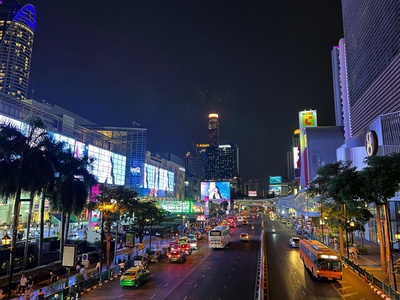
Bangkok Thai
The urban variety of Central Thai that shapes national media and Standard Thai; widely spoken in Bangkok and nearby provinces. Notable for fast tempo, colloquial vocabulary and reduced vowels. Example: ไปไหน (pai nai) “Where are you going?”

Eastern Thai
Spoken along Thailand’s eastern seaboard, it features distinct vowel shifts and lexical items from fishing and coastal life. Recognizable intonation and some Khmer loanwords. Example: สวัสดี (sà-wàt-dii) “Hello”
Isan (Northeastern Lao)
The Lao-related dialect cluster of northeastern Thailand, widely used in daily life and folk music. Shares grammar with Lao but increasingly influenced by Central Thai. Example: ไปไหน (pai nai / Isan ใช้ไปไส) “Where are you going?”
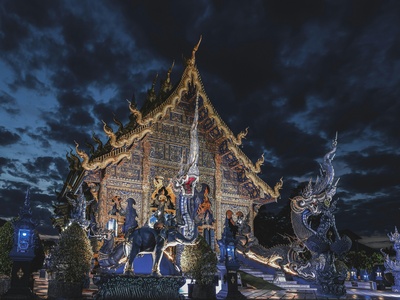
Kham Mueang (Northern Thai / Lanna)
Northern Thai spoken across the old Lanna realm, with its own vocabulary, tone patterns, and script history. Distinct pronouns and honorifics separate it from Standard Thai. Example: สวัสดี (sà-wàt-dii) “Hello”
Southern Thai (Pak Tai)
Coastal and interior southern dialect with different consonant realizations and unique vocabulary; more conservative vowels in places, strong regional identity. Example: สบายดีไหม (sabai dii mai) “How are you?”
Pattani Malay (Yawi)
The Malay variety used by Malay-Muslim communities in the deep south, distinct from Thai and written in Arabic-derived Jawi historically. Strongly different grammar and vocabulary. Example: สวัสดี/Assalamualaikum (local greetings)
Satun Malay
A Malay dialect in southwestern Thailand with influences from Kelantanese Malay and Thai; used in daily life and coastal culture, with unique phonology and lexicon. Example: สวัสดี (greeting used alongside Malay forms)
Northern Khmer (Khmer Surin)
A Khmer dialect in northeastern Thailand distinct from Cambodian Khmer in tone realization and loanwords from Thai and Lao. Important for rural identity and temple culture. Example: สวัสดี (khmer greeting alongside Thai)
Mon
Mon is an older regional language with long historical presence in central Thailand. Still spoken in communities, it preserves unique sounds and vocabulary unlike Tai languages. Example: สวัสดี (local Mon greetings used in community)
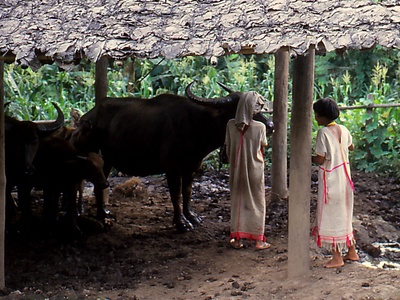
Karen (Sgaw & Pwo)
Two major Karen varieties used in upland and border communities; notable for voicing contrasts and overlay with Thai in schools and markets. Important ethnic identity markers. Example: สวัสดี (Karen communities use native greetings locally)
Shan (Tai Yai)
Shan is a Tai language spoken by Shan communities in western Thailand. It shares features with Northern Thai and Shan in Myanmar, with distinct tones and vocabulary. Example: สวัสดี (local Shan greeting)
Tai Lue
Tai Lue communities speak a Tai language with its own script and cultural traditions. It differs in phonology and lexicon from Northern Thai but shares broader Tai roots. Example: สวัสดี (local Tai Lue greeting)
Tai Khuen (Khün)
A smaller Tai variety around the Golden Triangle with conservative Tai features and community-specific vocabulary; culturally tied to local towns. Example: สวัสดี (local Khün greeting)
Phu Thai
Phu Thai is an ethnic Tai language in Isan with distinct phonetic and lexical traits. Speakers maintain folk traditions and a separate identity from mainstream Isan Lao. Example: สวัสดี (Phu Thai community greetings)
Phuan
Phuan is a Tai variety with conservative features preserved in smaller towns. It has vocabulary and tone patterns that differ from neighboring Isan and Northern Thai. Example: สวัสดี (local Phuan greeting)
Kuy (Kuay)
Kuy is an Austroasiatic language spoken by ethnic Kuy communities with unique phonology and lexicon. It has been in close contact with Thai and Khmer for centuries. Example: สวัสดี (Kuy community greetings)
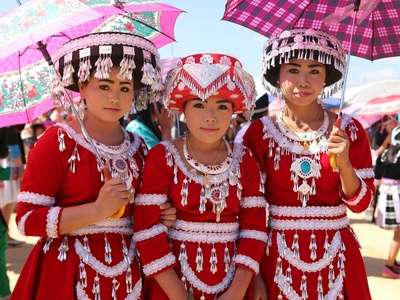
Hmong (White/Green Hmong)
Hmong community languages are tonal and distinct from Tai languages, with rich oral traditions, textile culture, and clan-based speech varieties. Frequently bilingual in Thai. Example: สวัสดี (Hmong communities use Hmong greetings)
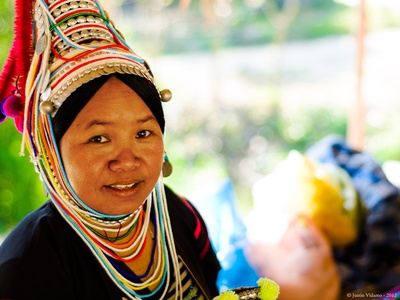
Akha
Akha is a Loloish language with complex phonetics and clan-based speech registers. Spoken in mountain villages and culturally distinct from lowland Thai. Example: สวัสดี (Akha community greeting)
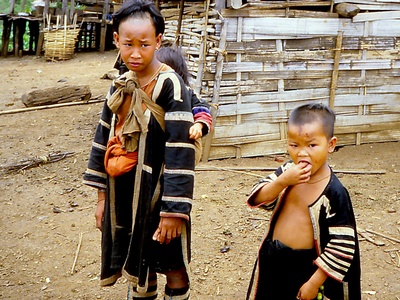
Lahu
Lahu speakers inhabit northern highlands with dialectal diversity and distinctive phonology. Language use is tied to village life and shifting bilingualism with Thai. Example: สวัสดี (Lahu community greetings)
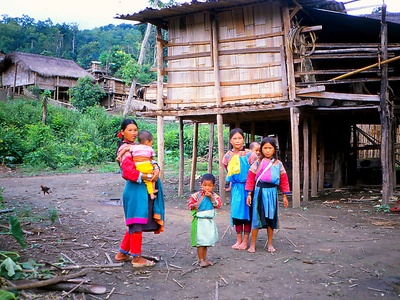
Lisu
Lisu communities speak a tonal language with its own script traditions in some groups. Present in upland markets and known for colorful cultural dress. Example: สวัสดี (Lisu community greeting)
Cham
The Cham speak a Chamic Austronesian language descended from Champa; used in small coastal and island communities with Arabic-script heritage in religious contexts. Example: สวัสดี (Cham community greetings)
Moken
Moken is spoken by sea nomad communities along the Andaman coast. Notable for maritime vocabulary, unique culture, and shrinking speaker numbers due to modernization. Example: สวัสดี (Moken community greeting)
Teochew (community dialect)
Teochew is a Chinese variety historically used by many Thai-Chinese families, especially in commerce. Usage is declining but remains important in temples, markets, and family domains. Example: สวัสดี (community uses Teochew alongside Thai)
Hokkien (Phuket/penang heritage)
Hokkien is a Southern Min variety spoken in coastal trading communities like Phuket; influential in local food, commerce, and cultural festivals, though Thai often dominates younger generations. Example: สวัสดี (Hokkien community greeting)