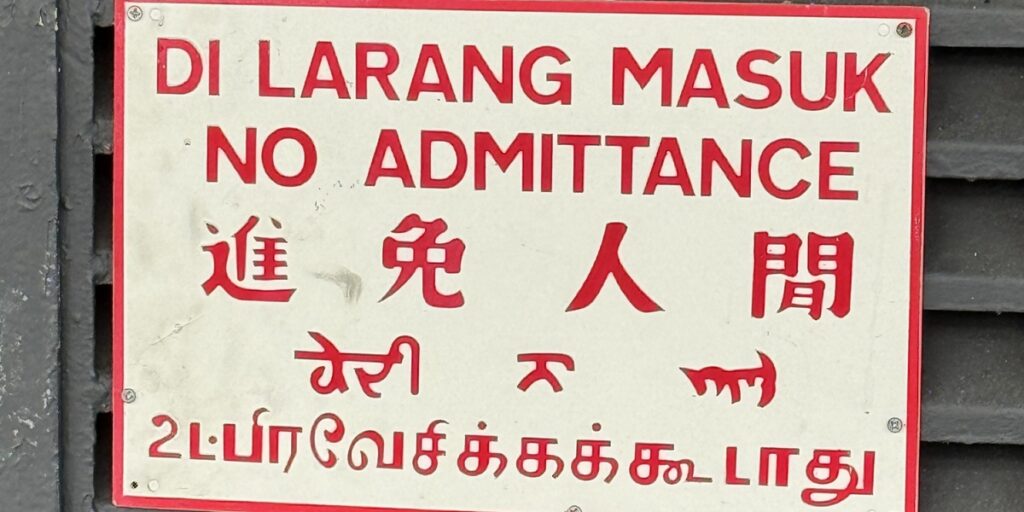
Malaysia sits at the crossroads of maritime Southeast Asia, where centuries of trade, migration and island geography have shaped distinct speech communities from the peninsula to Borneo. Local identity, commerce and contact with Chinese, Indian and indigenous languages mean regional varieties often carry their own pronunciations, vocabulary and social roles.
There are 26 Dialects in Malaysia, ranging from Baba Malay (Peranakan Malay) to Terengganu Malay. For each entry, you’ll find below the key details organized as Region(s),Base language/family,Speakers (est) so you can quickly compare geographic spread, linguistic roots and estimated populations — you’ll find below.
How different are these dialects from standard Malay?
Differences range from minor pronunciation shifts and local vocabulary to deeper grammatical and lexical divergence; some varieties (like certain Bornean or creole forms) can be hard for an average Malay speaker to fully understand. Historical contact with other languages also creates unique loanwords and expressions that mark regional identity.
Which dialects are most vulnerable and how is that tracked?
Smaller community dialects and island varieties with few speakers face the greatest risk, especially where younger people shift to national Malay or English. Researchers track vulnerability through speaker counts, intergenerational transmission, school use and documentation efforts (surveys, recordings and academic studies).
Dialects in Malaysia
| Name | Region(s) | Base language/family | Speakers (est) |
|---|---|---|---|
| Kelantanese Malay | Kelantan, northern Terengganu | Malay (Austronesian) | 2,000,000 |
| Terengganu Malay | Terengganu coast, parts of Kelantan and Pahang | Malay (Austronesian) | 1,200,000 |
| Kedah Malay | Kedah, Perlis, mainland Penang | Malay (Austronesian) | 1,600,000 |
| Perak Malay | Perak, parts of northern Selangor | Malay (Austronesian) | 900,000 |
| Pahang Malay | Pahang, southern Terengganu, inland east coast | Malay (Austronesian) | 700,000 |
| Johor–Riau Malay | Johor, Malacca, southern Peninsular coast | Malay (Austronesian) | 3,000,000 |
| Negeri Sembilan Malay | Negeri Sembilan (Minangkabau-influenced) | Malay (Austronesian) | 800,000 |
| Penang Malay | Penang island and mainland Seberang Perai | Malay (Austronesian) | 300,000 |
| Selangor/Kuala Lumpur Malay (Urban Malay) | Klang Valley, Selangor, Kuala Lumpur | Malay (Austronesian)/sociolect | 3,000,000 |
| Baba Malay (Peranakan Malay) | Melaka, Penang, historical Straits settlements | Malay-based creole | 50,000 |
| Brunei Malay (in Malaysia) | Labuan, adjacent Sabah districts | Malay (Austronesian) | 100,000 |
| Kedayan | Labuan, west Sabah, parts of Sarawak border | Malay (Austronesian) | 80,000 |
| Sabah Malay | Coastal Sabah (Kota Kinabalu, Sandakan, Tawau) | Malay (Austronesian) | 700,000 |
| Sarawak Malay | Coastal Sarawak (Kuching, Sibu, Samarahan) | Malay (Austronesian) | 400,000 |
| Kuching Malay | Kuching metropolitan area, western Sarawak | Malay (Austronesian) | 150,000 |
| Sandakan Malay | Sandakan and nearby east Sabah towns | Malay (Austronesian) | 40,000 |
| Penang Hokkien | Penang, northern Perak, Seberang Perai | Hokkien (Min Nan Sinitic) | 600,000 |
| Ipoh Hokkien | Ipoh and surrounding Perak towns | Hokkien (Min Nan Sinitic) | 200,000 |
| Melaka Hokkien | Melaka city and nearby areas | Hokkien (Min Nan Sinitic) | 100,000 |
| Johor Hokkien | Johor Bahru and southern Johor coast | Hokkien (Min Nan Sinitic) | 120,000 |
| Malaysian Cantonese | Urban centres across Malaysia (KL, Ipoh, Sarawak) | Cantonese (Yue Sinitic) | 1,200,000 |
| Malaysian Hakka | Ipoh, Klang Valley, Sarawak, Sabah communities | Hakka (Sinitic) | 700,000 |
| Teochew (Malaysian Teochew) | Penang, Klang Valley, Johor Chinese communities | Teochew (Min Nan Sinitic) | 300,000 |
| Fuzhou (Foochow) dialect (Sibu) | Sibu and central Sarawak Chinese communities | Fuzhou (Min Dong Sinitic) | 150,000 |
| Hainanese (Malaysian Hainanese) | Penang, Klang Valley, Johor Chinese communities | Hainanese (Sinitic) | 150,000 |
| Manglish (Colloquial Malaysian English) | Nationwide urban and mixed communities | English (creole/colloquial) | 6,000,000 |
Images and Descriptions

Kelantanese Malay
Distinct east-coast Malay with conservative grammar, unique vowels and glottal stops; strong local oral traditions and proverbs. Commonly uses “kito” for “we”; sounds and vocabulary can be unintelligible to other Malaysians.
Terengganu Malay
An eastern Malay variety with melodic intonation and distinctive vowel shifts, rich fishing and maritime vocabulary, and unique pronouns. Locals often say “kamek” for “I”; culturally tied to coastal and adat traditions.
Kedah Malay
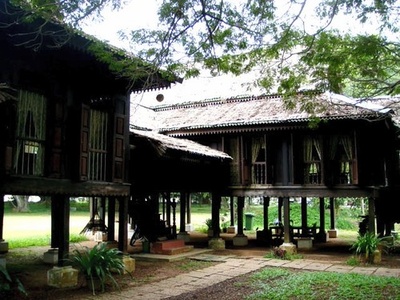
A northern Peninsular Malay variety with clipped vowels and characteristic lexical items; influences from Thai across the border. Common in rural and agricultural communities; sounds noticeably different to central Peninsular Malay speakers.
Perak Malay
Central-northern variety with a mix of coastal and interior features, softer consonants and local vocabulary tied to tin‑mining and local cuisine. Perak speech includes unique terms for everyday life and old town expressions.
Pahang Malay
Inland Malay with vowel changes and conservative grammatical forms; many rural idioms and rural cultural references. Often perceived as rustic, with distinctive pronouns and agglutinative features compared with coastal varieties.
Johor–Riau Malay
Coastal southern Malay cluster that heavily influenced Modern Standard Malay; lowland pronunciation and maritime vocabulary. Polite registers and many idioms originate here; often considered the prestige southern Malay base.
Negeri Sembilan Malay
A Malay dialect shaped by Minangkabau settlers with nasalized vowels and distinct pronouns; rich adat (custom) vocabulary. It retains some archaic forms and shows Minangkabau syntactic influence in everyday speech.
Penang Malay
Island Malay shaped by trade and multicultural contact; vocabulary borrows from Hokkien and English. Penang Malay is informal, rhythmic, and tied to local Penang identity, with many food- and market-related expressions.
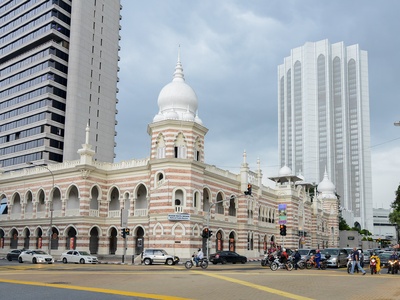
Selangor/Kuala Lumpur Malay (Urban Malay)
Rapidly evolving urban colloquial Malay mixing Malay, English and Chinese loanwords. Characterized by slang, code-mixing (“Manglish” influence) and flexible grammar; widely used among urban youth and in media.
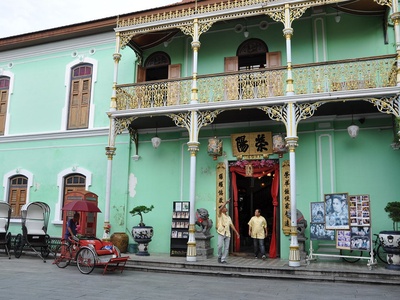
Baba Malay (Peranakan Malay)
Peranakan Malay (Baba) is a Malay-derived creole with heavy Hokkien and Portuguese loanwords, used historically by Straits Chinese. It preserves archaisms and ritual vocabulary; often heard in family and cultural ceremonies.
Brunei Malay (in Malaysia)
A coastal Malay variety closely related to Brunei speech, with distinct pronouns and vocabulary. Present in Labuan and border communities; rich in boat, fishing and royal vocabulary reflecting Bruneian cultural links.
Kedayan
A Malayic variety blending Malay and local Austronesian features, traditionally spoken by Kedayan communities. Notable for agricultural and herbal vocabulary, conservative pronouns, and use in local ceremonies and oral lore.
Sabah Malay
Sabah Malay serves as a regional lingua franca with lexical influence from indigenous languages and Bajau. It features simplified grammar and coastal vocabulary; varies markedly between west and east Sabah towns.
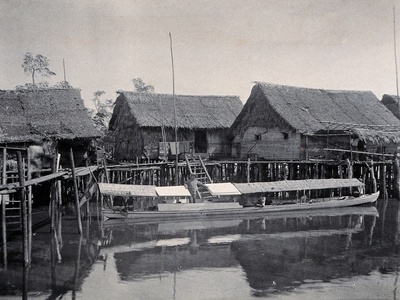
Sarawak Malay
Distinct Bornean Malay with reduced morphology and many loanwords from Iban and other Dayak languages. Sarawak Malay is a pragmatic trade and urban vernacular with recognizable local phonology and slang.
Kuching Malay
Local Kuching variety notable for rapid speech, unique intonation and borrowings from Bidayuh and Chinese languages. Strong urban identity and distinctive food- and river-related vocabulary; widely used in casual settings.
Sandakan Malay
A coastal Sabah variety with heavy Bajau and indigenous lexical influence; used as an everyday lingua franca. Sandakan Malay shows distinct pronunciation and maritime vocabulary linked to eastern Sabah life.
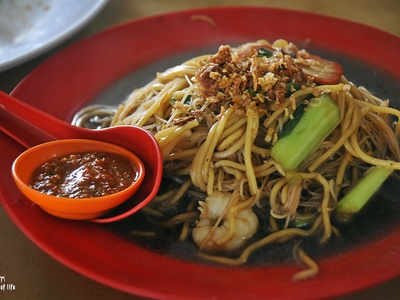
Penang Hokkien
A lively Peninsular Hokkien variety mixing Hokkien Chinese, Malay and English loanwords. Famous for colloquial expressions, Peranakan influence and rapid speech; widely heard in markets and family settings in Penang.
Ipoh Hokkien
Perak Hokkien variant with a slightly different tone and vocabulary from Penang Hokkien; reflects local mining and food culture. Common in older communities and local commerce.
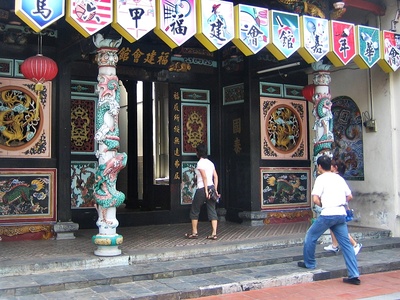
Melaka Hokkien
Melaka Hokkien carries strong Peranakan influence and Portuguese loanwords in a coastal port-city speech style. It preserves many archaic terms and is tied closely to Chinese-Peranakan heritage in Melaka.
Johor Hokkien
A southern Hokkien variant shaped by proximate Teochew and Malay speakers; features loanwords and local pronunciations. Prominent in southern trade towns and among older Chinese communities.
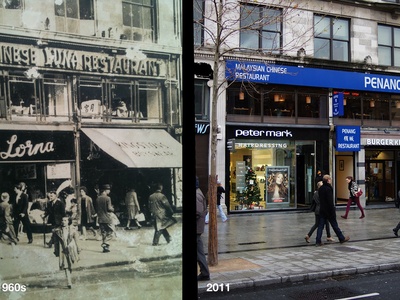
Malaysian Cantonese
Cantonese spoken in Malaysia with local lexical borrowings from Malay and English, plus tonal and phonological shifts in informal speech. Major urban Chinese communities use it in markets, media and family life.
Malaysian Hakka
Hakka variants in Malaysia (Sixian, Hailu influences) show regional pronunciation and agricultural vocabulary. Communities maintain clan associations and distinct Hakka cuisine-related terms; speech varies by migration history.
Teochew (Malaysian Teochew)
Teochew in Malaysia preserves strong Teochew phonology and rapid speech, with Malay loanwords in daily life. Culturally linked to seafood cuisine and opera traditions; remains robust in family use.
Fuzhou (Foochow) dialect (Sibu)
Foochow dialect in Sibu preserves Fuzhou phonology and distinct vocabulary, brought by 19th-century migrants. Central to Sibu Chinese identity, it appears in business, clan rituals and local media.
Hainanese (Malaysian Hainanese)
Hainanese in Malaysia features unique phonetics and marine-related lexicon, historically linked to coffee shops and service trades. It retains strong group identity among older generations and in local cuisine.
Manglish (Colloquial Malaysian English)
A colloquial English variety mixing Malay, Chinese dialects and Tamil elements; rich in local slang, particles like “lah” and code‑mixing. Common in informal speech, social media and popular culture across Malaysia.