Morocco’s streets, markets and mountains are threaded with many ways of speaking: urban Arabic in bustling Casablanca, Berber varieties in the High Atlas, and coastal and southern forms shaped by history and migration. Listening across regions gives a quick sense of how language marks identity and place.
There are 19 Dialects in Morocco, ranging from Casablanca Arabic (Casawi) to Tashelhit (Shilha). For each entry you’ll find below Language family, Region(s) spoken, Estimated speakers so you can compare origins, geographic reach and relative size at a glance — useful whether you’re studying linguistics, planning travel, or just curious about local speech patterns; you’ll find below the full list and details.
How different are these dialects from each other?
Differences vary: some varieties (like urban Moroccan Arabic vs. Classical/Modern Standard Arabic) are mutually intelligible in basic conversation but differ in vocabulary, pronunciation and grammar; others, especially Berber languages such as Tashelhit, are distinct enough to be considered separate languages with their own syntax and lexicon. Context, education and exposure also affect how well speakers understand one another.
Can a visitor get by with one common dialect or should they learn several phrases?
Most visitors manage with Moroccan Arabic (Darija) and French in cities, but learning local greetings or a few words in regional Berber dialects goes a long way in rural areas and shows respect; carrying a phrase list keyed to region (as in the table you’ll find below) is the most practical approach.
Dialects in Morocco
| Name | Language family | Region(s) spoken | Estimated speakers |
|---|---|---|---|
| Moroccan Arabic (Darija) | Arabic — Maghrebi | Nationwide, urban and rural areas across Morocco | 33,000,000 |
| Casablanca Arabic (Casawi) | Arabic — Maghrebi | Casablanca and greater Casablanca metro | 3,700,000 |
| Rabat Arabic (Rbati) | Arabic — Maghrebi | Rabat, Salé, Kenitra region | 2,000,000 |
| Fez Arabic (Fessi) | Arabic — Maghrebi | Fez and surrounding prefecture | 1,000,000 |
| Marrakesh Arabic (Marrakshi) | Arabic — Maghrebi | Marrakesh and nearby areas | 1,000,000 |
| Tangier/Tetouan Arabic (Northern Arabic) | Arabic — Maghrebi | Tangier, Tetouan, Al Hoceima, Rif coast | 2,000,000 |
| Meknes Arabic | Arabic — Maghrebi | Meknes and nearby rural zones | 700,000 |
| Tafilalt Arabic (Eastern Oasis Arabic) | Arabic — Maghrebi | Tafilalt oases (Errachidia) and eastern oases | 200,000 |
| Hassaniya (Sahrawi Arabic) | Arabic — Maghrebi | Southern provinces, Western Sahara, Guelmim region | 1,000,000 |
| Tashelhit (Shilha) | Amazigh — Tashelhit | Anti-Atlas, Souss valley, High Atlas, Agadir area | 4,000,000 |
| Central Atlas Tamazight | Amazigh — Central Atlas | Central High Atlas mountains, Ifrane, Midelt area | 3,000,000 |
| Tarifit (Riffian) | Amazigh — Riffian | Rif region: Al Hoceima, Nador, northern coast | 1,000,000 |
| Ghomara | Amazigh — Ghomara | Western Rif foothills near Chefchaouen | 20,000 |
| Senhaja de Srair | Amazigh — Zenati/Sanhaja | Srair area near Al Hoceima and Nador | 150,000 |
| Iznasen (Beni Iznassen Tamazight) | Amazigh — Zenati | Northeast near Berkane and Oujda | 120,000 |
| Figuig Tamazight | Amazigh — Zenati | Figuig oasis region near Algeria border | 20,000 |
| Judeo-Moroccan Arabic | Arabic — Judeo-Arabic (Morocco) | Historically across Moroccan Jewish quarters (Mellahs) | 10,000 |
| Haketia (Judeo-Spanish of Morocco) | Ibero-Romance — Haketia | Northern Morocco (Tangier, Tetouan) historically | 5,000 |
| Moroccan Sign Language (LSM) | Sign language — Moroccan Sign Lang. | Deaf communities nationwide (schools, associations) | 50,000 |
Images and Descriptions

Moroccan Arabic (Darija)
The everyday colloquial Arabic spoken nationally, blending Arabic, Amazigh, French and Spanish influences. Highly variable regionally but largely mutually intelligible; fast speech, unique vocabulary and simplified grammar distinguish it from other Maghrebi forms.
Casablanca Arabic (Casawi)
Urban, cosmopolitan Darija with many French loanwords and rapid pace; shaped by migration and commerce. Recognizable by intonation and slang, widely heard in media and popular culture across Morocco.
Rabat Arabic (Rbati)
A polished urban Darija known for clearer pronunciation and conservative vocabulary compared with other cities. Influenced by administration and media, it often acts as a perceived “standard” urban speech in official contexts.
Fez Arabic (Fessi)
Conservative urban dialect noted for archaic pronunciations and classical-like features. Fessi dialect retains certain classical consonant articulations and local vocabulary, reflecting the city’s long scholarly and historical traditions.
Marrakesh Arabic (Marrakshi)
Distinctive southern urban Darija with melodic intonation and Berber substrate influences. Popular in tourism and media, Marrakshi speech mixes Arabic and Amazigh vocabulary and is known for its expressive slang.
Tangier/Tetouan Arabic (Northern Arabic)
Northern pre-Hilalian Arabic with noticeable Spanish and Mediterranean influences, melodic prosody, and some distinct lexical items. Shares features with Andalusi heritage and differs in pronunciation from southern varieties.
Meknes Arabic
A regional urban-rural variety of Darija with features intermediate between Fes and Rabat speech. Known locally for conservative vowels and particular rural lexical items, often intelligible across northern Morocco.
Tafilalt Arabic (Eastern Oasis Arabic)
Eastern Moroccan Arabic with strong rural character and Amazigh substrate influence. Preserves older lexical items and phonetic traits not common in coastal urban varieties, linked to oasis community life.
Hassaniya (Sahrawi Arabic)
A Bedouin-derived Maghrebi Arabic with strong Saharan and Mauritanian ties. Distinctive phonology and vocabulary, less mutual intelligible with northern Darija varieties; important among Sahrawi communities.
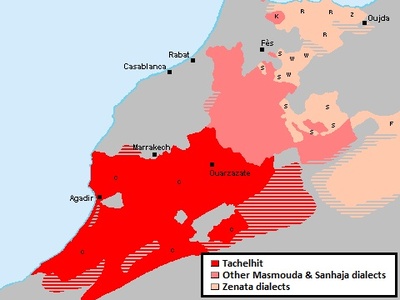
Tashelhit (Shilha)
The largest Amazigh variety in Morocco, spoken widely in the south. Characterized by unique phonetics, rich oral poetry (amasigh), and substantial mutual bilingualism with Darija in many communities.
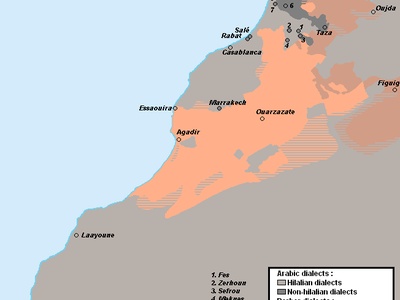
Central Atlas Tamazight
Spoken by mountain communities with clear dialectal zones; notable for its consonant inventory and verb morphology. Strong oral tradition and increasing presence in education and media in Amazigh revival movements.
Tarifit (Riffian)
A northern Amazigh variety with distinct phonology and vocabulary, influenced by Mediterranean contacts. Strong regional identity, active cultural production, and partial mutual intelligibility with other Amazigh varieties.
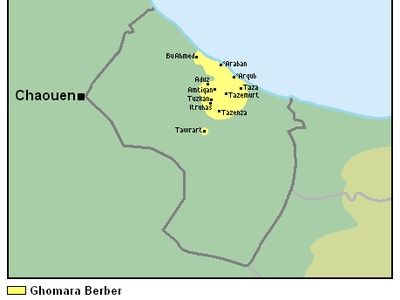
Ghomara
A small northern Berber variety with coastal Rif features and historical contact with Arabic and Spanish. Locally robust in some villages but vulnerable; notable for unique lexical items and phonetic traits.
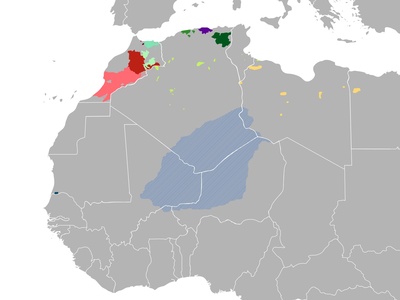
Senhaja de Srair
A Zenati Amazigh variety of the Rif foothills with conservative rural grammar and strong local identity. Shows heavy contact influence from Tarifit and Arabic, with shifting bilingualism patterns.
Iznasen (Beni Iznassen Tamazight)
Northeastern Zenati Amazigh variety with Algerian contacts and unique lexical items. Spoken in rural and small-town communities, increasingly influenced by Arabic and urban migration.
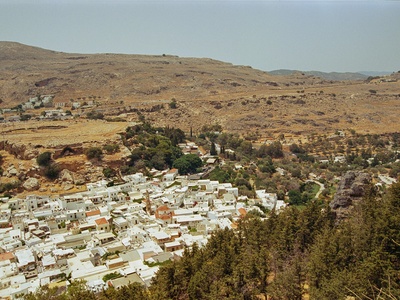
Figuig Tamazight
A small oasis Amazigh variety with unique oral traditions and strong local identity. Isolated by geography, it preserves archaic features but faces pressure from Arabic and population movement.
Judeo-Moroccan Arabic
A heritage Judeo-Arabic variety once widespread in Moroccan Jewish communities, mixing Arabic, Hebrew, Amazigh and Spanish elements. Few speakers remain in Morocco; many transmitters live abroad, preserving unique vocabulary and liturgical usage.
Haketia (Judeo-Spanish of Morocco)
A Judeo-Spanish blend spoken historically in northern Moroccan Jewish communities, rich in Hebrew and Arabic loanwords. Now rare in Morocco but significant culturally; preserves Andalusi lexicon and coastal Mediterranean flavor.
Moroccan Sign Language (LSM)
The primary sign language used by deaf Moroccans, with regional variation. Not a dialect of Arabic but a fully fledged language community; used in education, community life, and increasing advocacy for recognition.