Malta’s language landscape reflects centuries of contact across the central Mediterranean, where trade, migration and political change shaped how people speak today. Small communities and official institutions keep different speech forms alive, giving the islands a layered linguistic profile.
There are 5 Indigenous Languages in Malta, ranging from Maltese to Siculo-Arabic. Information is organized with Status,Family,Speakers (approx) so you can quickly see each language’s current vitality, linguistic affiliation and rough population figures — you’ll find below.
Are Maltese and Siculo-Arabic still used in daily life?
Maltese is the national language and widely used in homes, media and government; Siculo-Arabic refers to historical varieties that influenced Maltese and survives mainly in linguistic features, place names and historical records rather than as a separate, widespread day-to-day tongue.
How accurate are the speaker numbers and what affects them?
Speaker estimates are approximate, drawn from censuses, academic surveys and field reports; small population sizes, bilingualism, language shift and differing survey methods mean numbers should be treated as indicative rather than exact.
Indigenous Languages in Malta
| Name | Status | Family | Speakers (approx) |
|---|---|---|---|
| Maltese | Living | Semitic (Siculo-Arabic, heavy Romance influence) | 520,000 |
| Old Maltese | Historic | Semitic (early Maltese, Siculo‑Arabic substrate) | Extinct |
| Siculo-Arabic | Historic | Semitic (Maghrebi/Sicilian Arabic branch) | Extinct |
| Punic | Extinct | Semitic (Canaanite branch, Neo‑Phoenician) | Extinct |
| Maltese Sign Language | Endangered | Sign language (local origin with external influences) | 1,000 |
Images and Descriptions

Maltese
National language of Malta spoken across Malta and Gozo today; evolved from medieval Siculo‑Arabic with massive Italian/English influence. Notable as the only Semitic language that is an official EU language and central to Maltese identity and literature.
Old Maltese
Historic stage of Maltese attested in medieval and early modern documents (notably fifteenth century onwards). Spoken on the islands as the language evolved into modern Maltese; notable for showing the gradual Romance borrowing visible in today’s language.
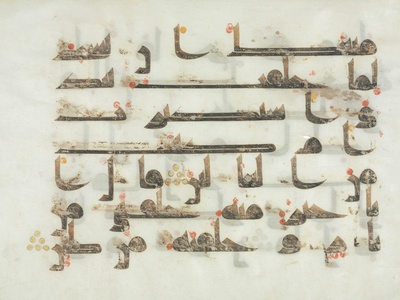
Siculo-Arabic
Medieval variety of Arabic spoken in Sicily and Malta after the Arab conquests (9th–13th centuries). It is the direct ancestor of Maltese; notably, it survived in Malta while disappearing from Sicily, leaving a lasting Semitic base for Maltese.
Punic
Variety of Phoenician spoken during Phoenician and Carthaginian presence (from around the 8th century BC) on Malta until Romanization. Some place names and archaeological inscriptions hint at its local presence; it influenced early toponymy though it is now extinct.

Maltese Sign Language
Sign language used by Malta’s Deaf community, developed locally in the 20th century with contacts from other sign languages. It remains small and vulnerable; notable for incorporating Maltese cultural concepts and being distinct from British or American sign systems.