Chad’s sweep of desert, savanna and mountain terrain preserves traces of long trade networks, prehistoric communities and colonial-era towns. From crumbling forts to rock art panels and market towns, the sites tell a varied story of human life across central Africa.
There are 18 Historical Places in Chad, ranging from Abéché to Zouar. For each site you’ll find below entries organized as Location (region; coordinates),Era / date,Significance (max 15 words) to help you compare age, setting and why each place matters — you’ll find below.
How were these sites identified and dated?
Sites are identified through a mix of archaeological surveys, historical records, local knowledge and conservation listings; dating relies on architectural typology, inscriptions, radiocarbon or archival references when available, so confidence varies by site.
Can I visit these places, and what should I prepare?
Many sites are remote and require local guides, permits or regional travel arrangements; check current security advisories, plan for the dry season, respect cultural restrictions, and arrange transport and accommodations in advance.
Historical Places in Chad
| Name | Location (region; coordinates) | Era / date | Significance (max 15 words) |
|---|---|---|---|
| Ennedi Massif | Ennedi-Est;20.53,21.88 | Neolithic–historic (c.10,000 BCE–recent) | Spectacular rock art and prehistoric archaeological shelters |
| Guelta d’Archei | Ennedi-Est;18.59,21.95 | Holocene rock art (c.6,000 BCE onward) | Sacred guelta with extensive prehistoric rock art |
| Lakes of Ounianga | Borkou;20.90,20.90 | Holocene (c.10,000 years) | Ancient oases with long human habitation and cultural importance |
| Toros-Menalla (Toumaï site) | Borkou/Djurab;17.50,18.80 | c.7 million years | Discovery site of early hominid Sahelanthropus (“Toumaï”) |
| Koro Toro fossil site | Bahr el Gazel;12.00,17.63 | Pleistocene (hundreds of thousands years) | Important Pleistocene fossil site for early hominids |
| Abéché | Ouaddaï;13.83,20.85 | 18th–19th century | Capital of Ouaddai Sultanate, historic caravan and trade center |
| Massenya | Chari-Baguirmi;10.68,16.36 | 16th–19th century | Former Bagirmi Sultanate capital with royal tombs |
| Faya-Largeau | Borkou;18.08,20.06 | Prehistoric–colonial | Key oasis town; Tubu cultural center; colonial-era forts |
| Bardaï | Tibesti;20.29,17.03 | Historic–anthropological | Tibesti cultural center and gateway to ancient rock art |
| Zouar | Tibesti;20.20,17.33 | Historic | Historic Tibesti oasis town with traditional architecture |
| N’Djamena (Fort-Lamy area) | Chari-Baguirmi;12.12,15.05 | Late 19th century onward | Colonial-era administrative center with historic markets and buildings |
| Sarh | Moyen-Chari;9.15,18.38 | 19th–20th century | Colonial river port and regional trade center |
| Bongor | Mayo-Kebbi Est;8.37,15.28 | Pre-colonial–colonial | Important riverine town on the Logone, historic trade hub |
| Léré | Mayo-Kebbi Ouest;9.23,14.75 | Pre-colonial | Historic lakeside town with traditional settlements and trade |
| Mongo | Guéra;12.18,18.68 | Pre-colonial–colonial | Regional market town with historic fortifications and cultural festivals |
| Ati | Batha;12.86,19.92 | Pre-colonial | Historic crossroads town with traditional markets and cultural heritage |
| Moussoro | Barh el Gazel;12.64,17.92 | Pre-colonial–colonial | Gateway to the Sahel; historic caravan stop and cultural site |
| Historic Tibesti rock art sites | Tibesti;20.40,17.10 | Neolithic–historic | Extensive petroglyph and pictograph ensembles important to archaeology |
Images and Descriptions

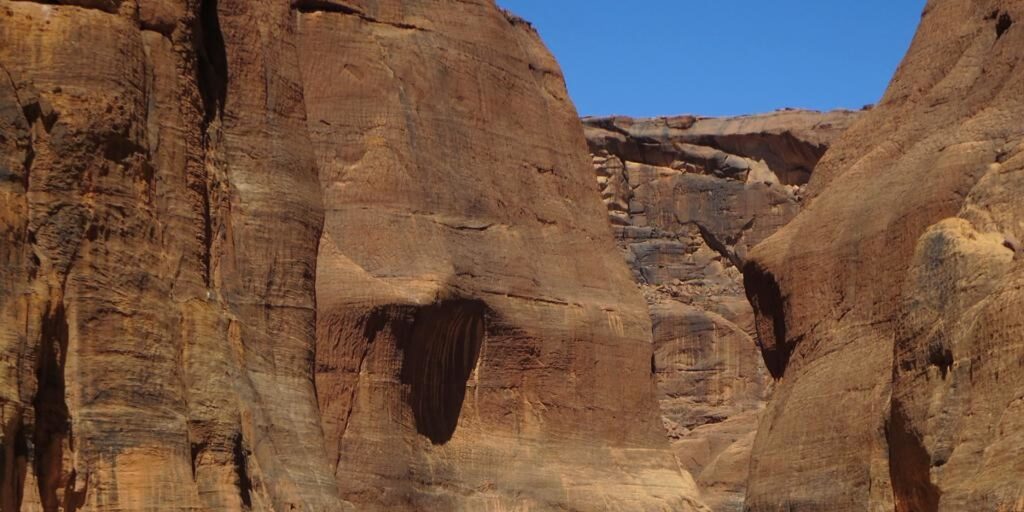
Ennedi Massif
Large sandstone plateau in northeastern Chad. It contains cliffs, arches, and thousands of rock paintings. People lived here for millennia and left art showing cattle and hunters. It is a UNESCO World Heritage site and a key entry for Chad’s ancient human history.
Guelta d’Archei
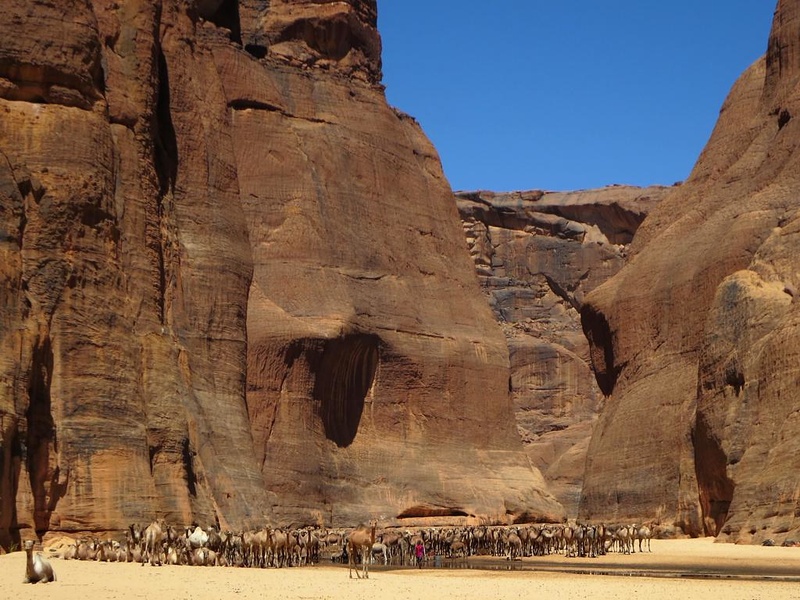
A deep, rocky oasis pool set in steep canyon walls in the Ennedi. It holds water year-round and once sheltered West African crocodiles. The site sits beside dramatic cliffs and rock art panels. It serves as a striking example of desert water points that supported past life.
Lakes of Ounianga
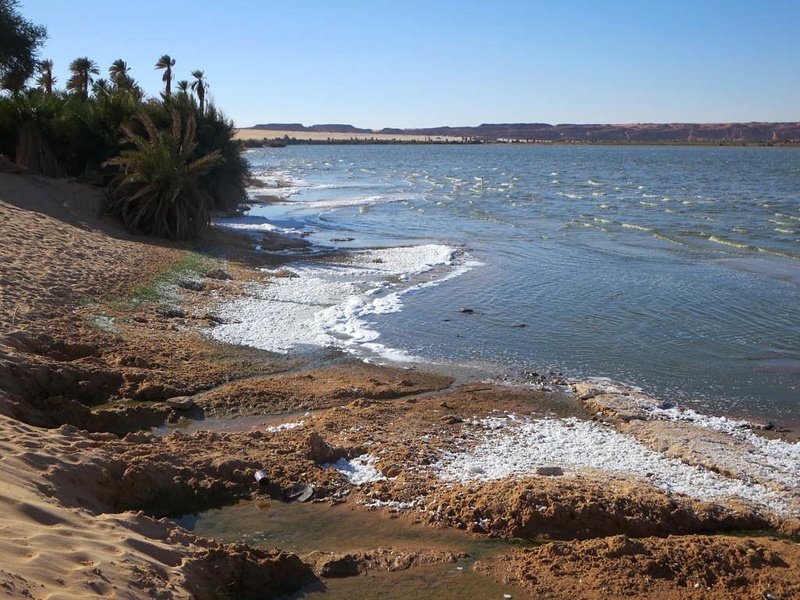
A chain of salt and fresh lakes in the Sahara of northern Chad. They form a rare, stable oasis system fed by ancient groundwater. The lakes sit among sand dunes and support local palm groves and wildlife. UNESCO protects them for their unique hydrology and long human use.
Toros-Menalla (Toumaï site)
Fossil site in the Djurab Desert where early hominid bones were found. Researchers recovered Sahelanthropus tchadensis (nicknamed Toumaï), dated about seven million years old. The find changes ideas about early human ancestors in Africa. The spot is crucial for paleoanthropology.
Koro Toro fossil site
Fossil locality in central Chad known for early hominid remains. Excavations produced jaw and tooth fossils of ancient ape-like and human-like species. The site dates to a few million years ago and helps map hominid spread across Africa. It supports the long record of human origins in Chad.
Abéché
Major town in eastern Chad and former capital of the Ouaddaï Sultanate. It hosts old markets, mosques, and colonial-era buildings. The town served as a regional trade and political center for centuries. It illustrates the Sahelian kingdom and colonial histories of Chad.
Massenya
Historic town on the Chari River and former capital of the Baguirmi kingdom. It contains royal tombs and old mosque sites. The town marks the precolonial state networks that shaped central Chad. It remains important for local culture and history.
Faya-Largeau
Oasis town in northern Chad and trading center of the Borkou region. It grew around a French colonial fort and airfield. The town connects Saharan routes and desert communities. It shows colonial-era influence in the Sahara.
Bardaï
Main town of the Tibesti Mountains and base for mountain travel. It sits among volcanic peaks and ancient rock art sites. Bardaï serves as a gateway to Tibesti history and nomadic life. It retains traditional Tubu culture and mountain fort sites.
Zouar
Highland town near the volcanic massif of Emi Koussi in Tibesti. It links traders and shepherds in the mountain region. The town lies close to numerous rock engravings and old trails. It reflects the remote mountain history of northern Chad.
N’Djamena (Fort-Lamy area)
Capital city district built around the colonial Fort-Lamy site. It holds government offices, markets, and museums. The area shows layers of Chad’s colonial and postcolonial history. It provides easy access to national archives and cultural collections.
Sarh
River port town on the Chari River in southern Chad. It developed as a trade and transport hub for cotton and river goods. The town contains colonial-era buildings and local markets. It illustrates southern Chad’s economic and cultural links to the river.
Bongor
Town on the Logone River near the Cameroon border. It functions as a fishing and river trade center. The town hosted precolonial and colonial exchange routes. It remains important for Logone basin communities and history.
Léré
Market town near lakes and wetlands in western Chad. It lies close to Lake Léré and local fishing areas. The town served historic trade routes and regional leaders. It helps explain the lake and Sahel livelihoods of the west.
Mongo
Regional capital in the Guéra highlands with rocky hills and old quarters. It grew as an administrative center under colonial rule. The town contains local markets, fort-like hills, and cultural sites. It highlights central Chad’s ethnic and historical mix.
Ati
Town in the Batha region and crossroads for Saharan and Sahelian routes. It holds markets, traditional buildings, and colonial traces. The town sits near pastoral lands and older precolonial sites. It shows how central Chad links north and south.
Moussoro
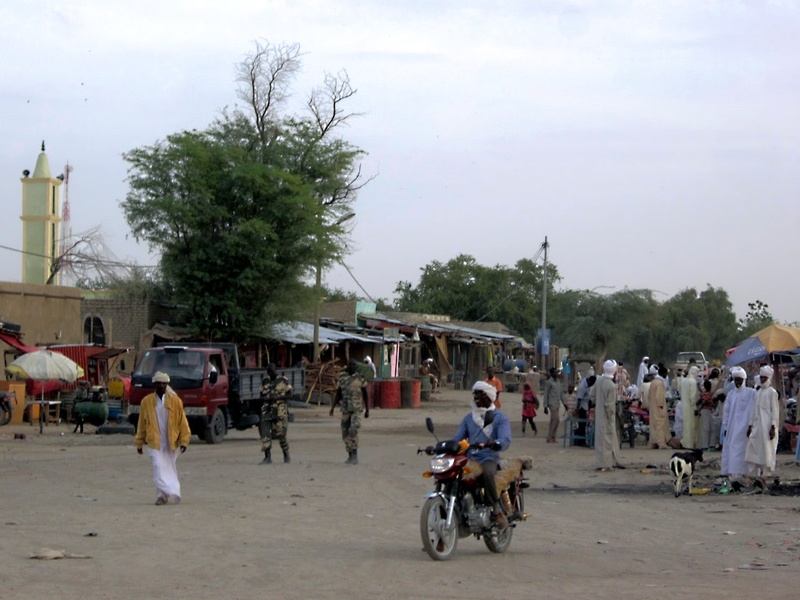
Key town on the route from the capital to northern Chad. It appears as a trading and travel stop with old colonial posts. The town is a gateway to Ennedi and nearby rock art. It reflects caravan routes and modern transport history.
Historic Tibesti rock art sites
Clusters of rock paintings and engravings across the Tibesti Mountains. Images show cattle, humans, and wild animals and date back thousands of years. The art records changes in climate and human life in the Sahara. These sites form some of Chad’s richest prehistoric records.