On February 7, 1974, Grenada became independent from Britain — a milestone that helped sharpen local pride and renewed interest in island traditions that predate colonial rule.
Those customs still turn up in big public festivals, back-yard kitchens and community workshops across the three main inhabited islands (Grenada, Carriacou and Petite Martinique). With a population of roughly 112,000, the island nation keeps cultural life tightly woven into everyday routines.
Understanding these practices—festivals, music and masquerade, food and craft—offers a clear window onto how people remember history, support local livelihoods and welcome visitors. This piece lays out 10 important traditions in Grenada grouped into three categories: Cultural Celebrations and Festivals; Music, Dance, and Masquerade; and Food, Craft, and Everyday Traditions.
Across the list you’ll see how events like Spicemas and the Carriacou Regatta draw tourists and keep skills alive, while spice harvests and household remedies carry practical knowledge from one generation to the next.
Cultural Celebrations and Festivals
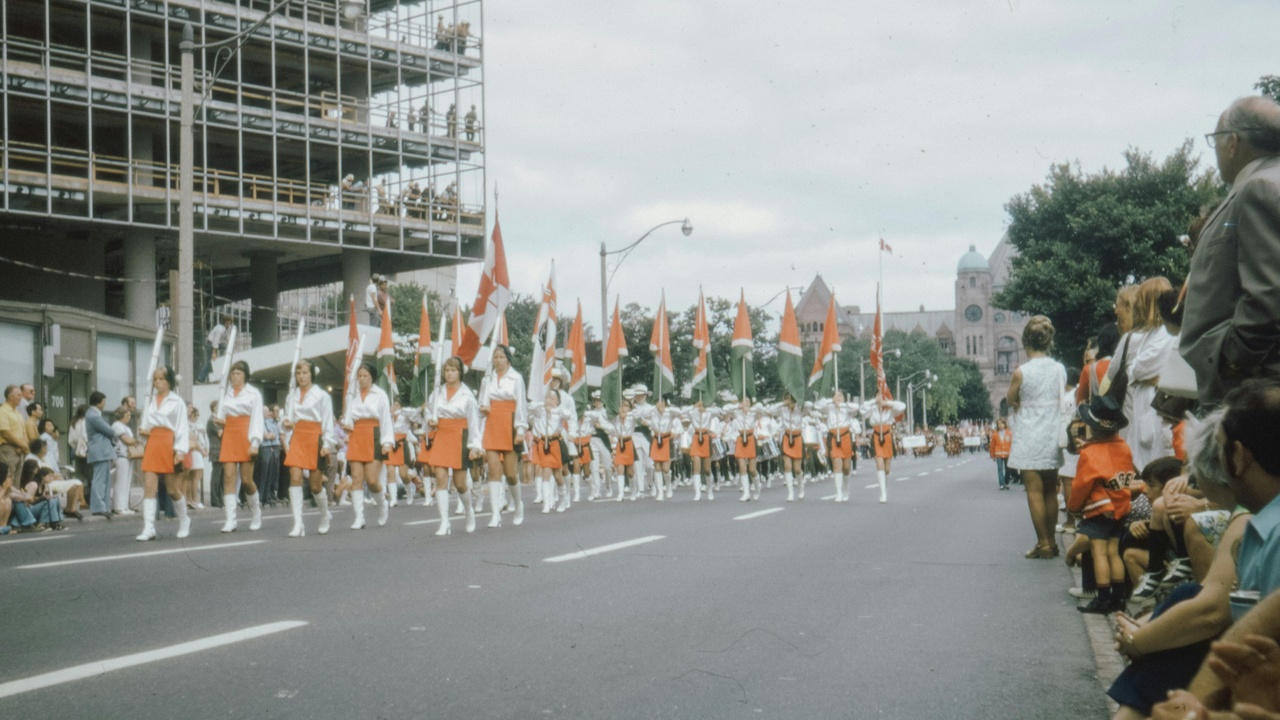
Public festivals are where national identity gets performed in full color. They mark agricultural cycles, religious dates and historic milestones while drawing both locals and international visitors into shared ritual.
Festivals drive income for many small businesses: bands hire costume makers, vendors sell food and drink from stalls, and informal tour guides help visitors navigate events. Seasonality is important—several major gatherings cluster around late July to early August, and harvest times trigger village-level fairs.
Below are three flagship celebrations that show how pageantry, seamanship and spice agriculture shape community life and the island’s tourist calendar.
1. Spicemas (Carnival) — Grenada’s lively August festival
Spicemas is the island’s main carnival season, running in the late July–early August window that culminates in energetic road marches and street parties.
Street parades bring together masquerade bands, steelpan groups and soca/calypso musicians. Calypso monarch competitions and calypso tents showcase topical songwriting, while bands display elaborate costumes made in community workshops months in advance.
The economic impact is visible: hotels and guesthouses see higher occupancy, costume makers and food vendors earn seasonal income, and musicians secure bookings that support year-round creative work. Spicemas draws thousands of participants and visitors, and locals often begin planning their costumes and sets well ahead of the season.
2. Carriacou Regatta — boat races and island seamanship
The Carriacou Regatta is an annual sailing and boatbuilding festival centered on Hillsborough (Carriacou) and renowned across the Grenadines.
Traditional wooden workboats and schooners are repaired and launched for competitive races. Local boatyards are active in the weeks before the event, and younger apprentices learn hull-planking, caulking and rigging from elder craftsmen.
Regatta week increases tourist traffic to Carriacou, supports guesthouses and restaurants, and keeps seamanship skills in daily use—skills that also underpin fishing and inter-island transport.
3. Nutmeg and spice-related harvest customs
Nutmeg is central to Grenada’s identity as the “Island of Spice.” The crop’s importance goes beyond export value to shape village rhythms during harvest season.
Hurricane Ivan (2004) devastated nutmeg trees across the islands, and the long recovery since then has become part of local memory. Harvest rituals, communal picking and small-scale processing—drying, shelling and bagging—help keep the craft alive on smallholder farms.
Spice-focused market days and occasional fairs let rural communities sell nutmeg, mace and other products directly to visitors, preserving techniques passed down across generations on Grenada, Carriacou and Petite Martinique.
Music, Dance, and Masquerade
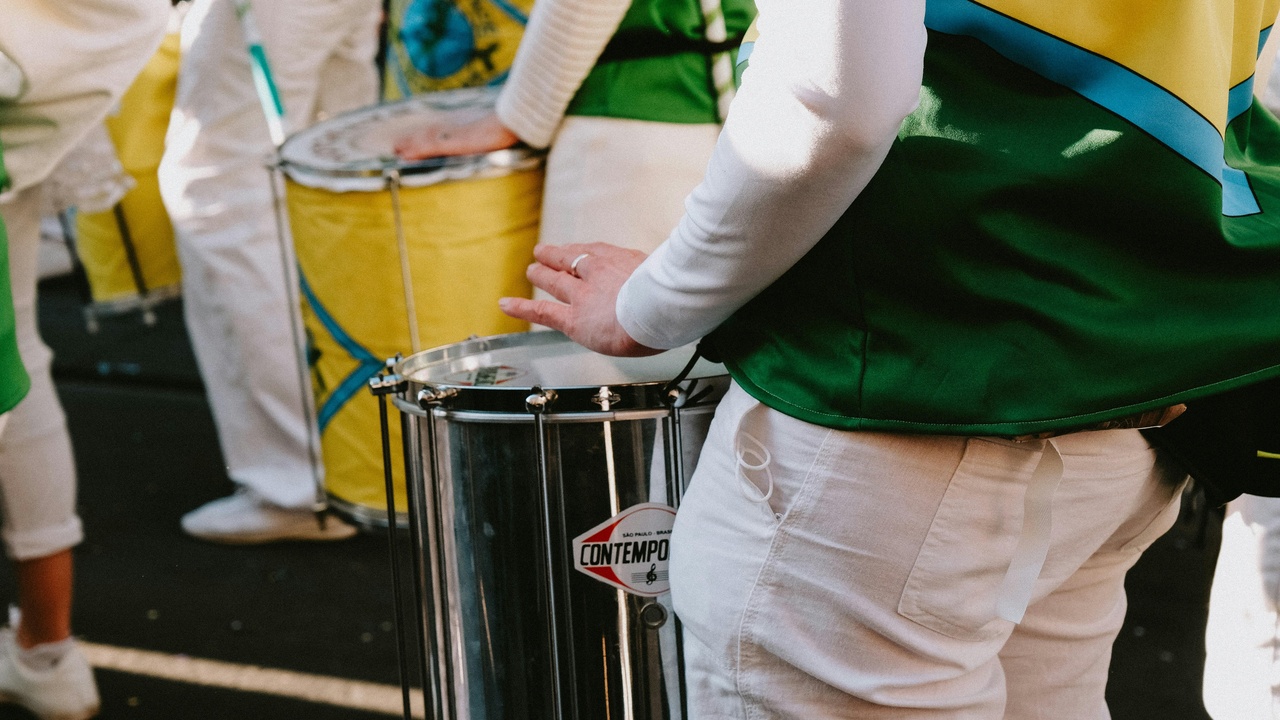
Music and masquerade are the island’s living archive—hybrid forms that mix African, European and indigenous influences and that appear at both public and private rituals.
From births and weddings to funerals and carnival, these practices encode memory and resistance. Much of the learning happens orally or through apprenticeship, which helps maintain distinct repertoires and performance techniques.
The next three traditions illustrate how percussion, theatrical mas and songwriting organize social life and offer livelihoods for performers and makers.
4. Big Drum — communal drumming and ancestral songs
Big Drum is a percussion-led tradition often played at celebrations and wakes, using a set of hand-played drums, sticks and call-and-response singing.
Ensembles perform songs that recall ancestors and plantation-era memories, and the repertoire varies from one parish to another. Groups regularly play at community fetes, school events and funerary wakes.
Teaching happens by sitting with experienced drummers. Local schools and cultural groups sometimes invite Big Drum ensembles to perform, and recorded fieldwork documents many of the song texts that elders still sing.
5. Jab Jab and masquerade characters — theatrical protest and play
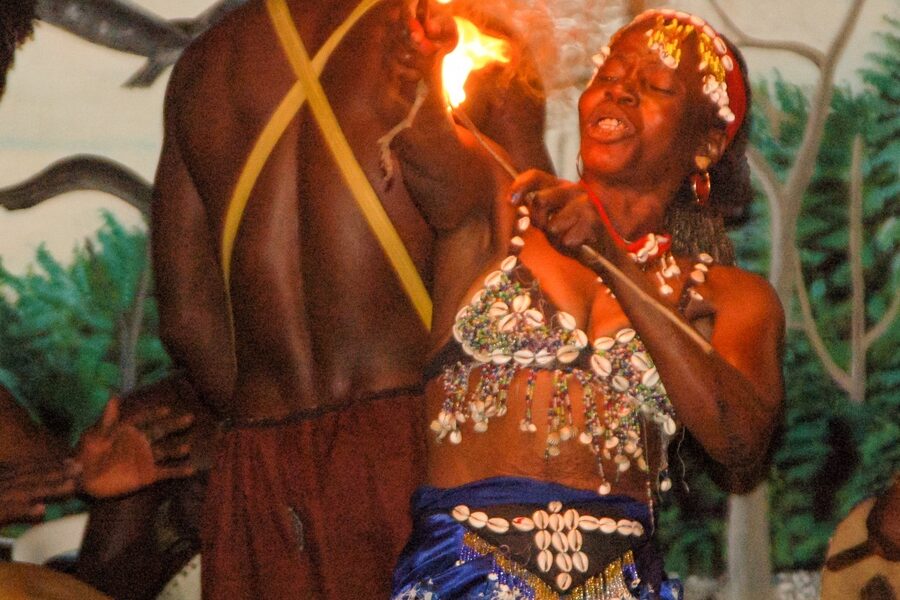
Jab Jab is a striking masquerade character seen during carnival, where performers often smear themselves with oil or paint and carry chains, flags or horns.
The form descends from African masquerade practices and serves to invert social norms during carnival—mixing satire, catharsis and historical memory. Groups rehearse costumes and choreography in advance, and the sensory elements—sound, smell, sight—are central to the experience.
Masquerade crews provide a space for political commentary as well as communal play, and many towns host costume workshops where youths learn craft and performance skills from seasoned mas players.
6. Calypso and Soca competitions — modern storytelling through song
Calypso and soca are the lyrical engines of carnival: calypso leans toward topical storytelling, while soca drives the energy of road marches.
Calypso monarch competitions judge lyrics, delivery and crowd response as singers tackle politics, local gossip and social themes. Soca performers create high-tempo tracks that bands play during street mas, and radio stations often help songs travel regionally.
For many artists, songwriting and live shows contribute to household income through performances, recordings and airplay across the Caribbean.
Food, Craft, and Everyday Traditions
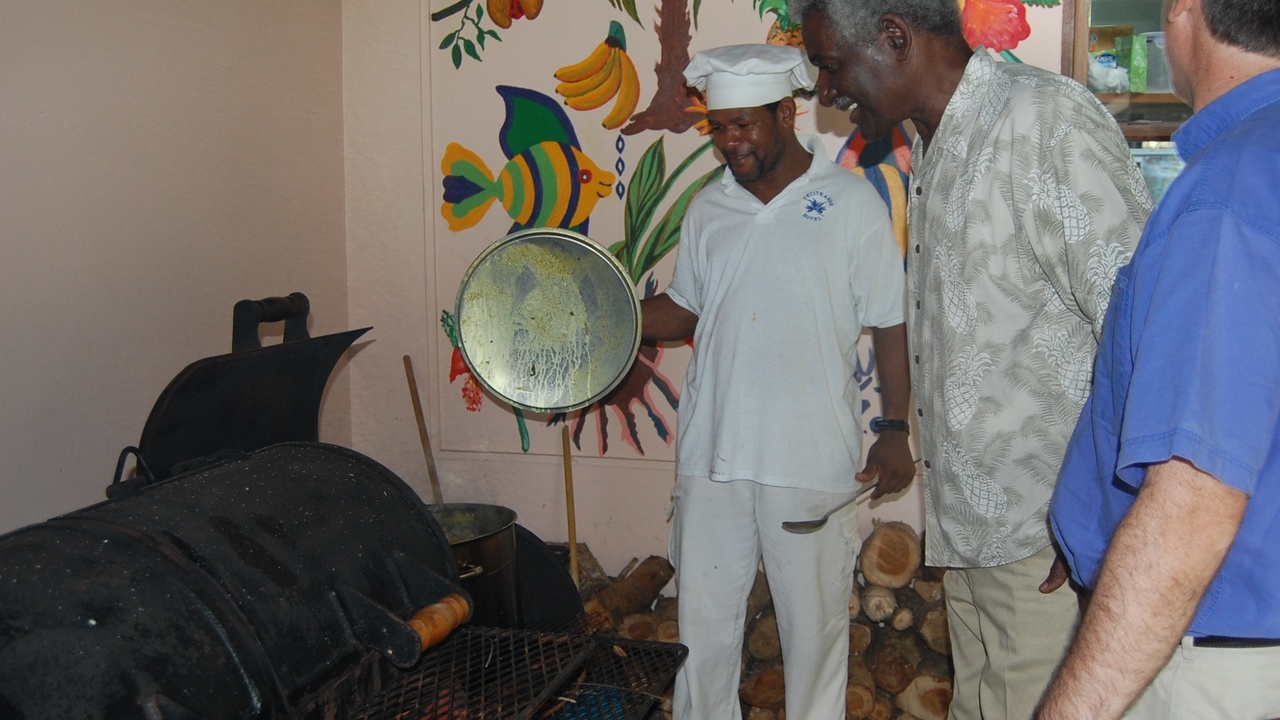
Culinary habits, practical crafts and household rituals sustain daily life and pass on useful knowledge. These practices matter for identity, food security and small-scale economies.
Food customs bring people together—family Oil Down days or market meals—and crafts like boatbuilding and woodworking remain vital in coastal villages. Traditional medicine and storytelling link health, memory and moral lessons across generations.
The following four items show how daily habits reinforce community bonds and preserve skills that are both practical and cultural.
7. Oil Down and communal food culture
Oil Down is Grenada’s national one-pot dish, usually cooked for communal gatherings and family events.
Typical ingredients include breadfruit, coconut milk, salted meats, dumplings or other provisions layered and simmered until the liquid is absorbed. Large communal pots and rotating hosts are common during village Oil Down days.
Recipes vary by family, and street vendors or festival stalls often feature Oil Down to introduce visitors to local flavors. Food tourism in guidebooks frequently highlights this dish as a must-try.
8. Boatbuilding, woodcraft and applied island skills
Small-scale boatbuilding remains an important applied craft, especially on Carriacou where boatyards in Hillsborough are well known.
Workshops follow apprenticeship-style learning: apprentices help on hulls, learn planking and finish varnish, and slowly acquire the seamanship knowledge needed for fishing and transport. Seasonal repairs support regattas and local fisheries.
Handmade wooden boats and smaller craft are sometimes sold to visitors as artisanal goods, and elders pride themselves on keeping these techniques alive for practical and cultural reasons.
9. Traditional medicine and herbal knowledge
“Bush medicine” refers to plant-based remedies and home treatments commonly used in Grenadian households for minor ailments.
Families use herbs for colds, digestive discomfort and aches, with knowledge often gendered and passed from elders to younger generations. Markets sometimes feature herbalists who prepare teas or poultices for everyday use.
These remedies play a complementary role alongside formal healthcare, and elders teach plant identification and preparation as part of family routine rather than formal training.
10. Storytelling, folklore and oral history
Oral traditions—folktales, proverbs and family histories—are central to how communities transmit values and recall past events.
Anansi-style tales, accounts of plantation-era struggles and recollections of storms like Hurricane Ivan (2004) all circulate through elders, school projects and recorded oral histories. Storytelling happens at bedtime, during wakes and at community gatherings.
Schools and cultural organizations sometimes record these narratives, helping preserve language and memory while keeping younger generations connected to local identity.
Summary
These ten practices show how Grenada’s cultural life ties together festivals, musical performance, foodways and everyday skills. From Spicemas and the Carriacou Regatta to nutmeg harvests, the island’s customs support local economies and preserve knowledge passed across generations.
Resilience is a recurring theme: communities rebuilt nutmeg groves after Hurricane Ivan in 2004, and younger artisans continue apprenticeships in boatyards and costume workshops. Grenada’s independence in 1974 also helped sharpen public interest in preserving these forms.
- Festivals such as Spicemas both preserve culture and generate seasonal income for musicians, costume makers and vendors.
- Music and masquerade (Big Drum, Jab Jab, calypso/soca) encode history and offer spaces for satire and social commentary.
- Food and craft traditions—Oil Down, nutmeg harvesting, boatbuilding—anchor community life and practical skills.
- Oral histories and herbal knowledge keep memory and useful practices alive across the three main inhabited islands.
- Visitors can support this resilience by attending events respectfully, buying local crafts and learning family recipes from community hosts.