Mali’s cultural landscape stretches from the Niger River’s floodplains to the edge of the Sahara, and its communities speak a rich mix of languages tied to history, trade and local identity. That variety shapes daily life, music, storytelling and regional connections across cities and villages.
There are 10 Indigenous Languages in Mali, ranging from Bambara to Tamasheq. For each language, entries are organized as ISO code,Family,Speakers (est), and you’ll find the full list below.
How common are these languages across Mali?
Bambara is widely spoken and often used as a lingua franca, while other languages are regional—some concentrated in riverine areas, others in northern or southern communities. Speaker numbers vary a lot by language and region; the list below gives estimated speaker counts so you can see which tongues are most widespread.
How reliable are the speaker estimates and codes used?
Estimates come from a mix of national surveys, linguistic databases and academic work, so they should be treated as approximations; smaller languages in remote areas are likelier to have uncertain figures. ISO codes help identify each language consistently across sources, and the list notes the best-available estimates.
Indigenous Languages in Mali
| Name | ISO code | Family | Speakers (est) |
|---|---|---|---|
| Bambara | bam | Mande | 3,300,000 (2019) |
| Fula | ful | Atlantic‑Congo | 1,900,000 (2019) |
| Maninka | n/a | Mande | 900,000 (2018) |
| Soninke | snk | Mande | 400,000 (2019) |
| Dogon | n/a | Dogon (Niger‑Congo) | 600,000 (2013) |
| Tamasheq | tmh | Berber (Afro‑Asiatic) | 400,000 (2016) |
| Songhay | son | Songhay | 500,000 (2018) |
| Bozo | n/a | Mande | 150,000 (2015) |
| Senufo | n/a | Senufo (Niger‑Congo) | 120,000 (2015) |
| Kassonké | n/a | Mande | 300,000 (2013) |
Images and Descriptions

Bambara
Spoken widely in southern and central Mali (Bamako, Koulikoro, Sikasso), Bambara remains a vigorous national lingua franca with millions of native speakers; it’s a Manding Mande language and central to Malian media, commerce, and interethnic communication.
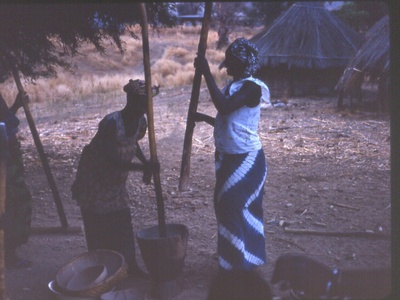
Fula
Fulfulde (Fula) is spoken by Fulani communities across Mali’s Mopti, Gao, Timbuktu and northern Sahel; it’s an Atlantic‑Congo language with a vigorous pastoral speaker community and strong oral traditions, often used regionally for cattle-herding networks and markets.
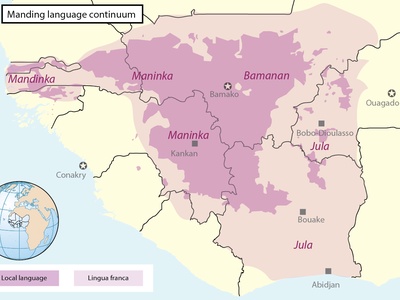
Maninka
Maninka (Malinke) is a Manding Mande language spoken mainly in western and southwestern Mali (Kayes, Koulikoro, Sikasso); it remains vigorous in rural areas, central to local identity, oral history, and regional music traditions.
Soninke
Soninke is a Mande language spoken in Kayes and parts of western Mali by the Soninke people; once linked to the ancient Ghana Empire, its speaker base is smaller and considered vulnerable though community cultural institutions preserve language use.
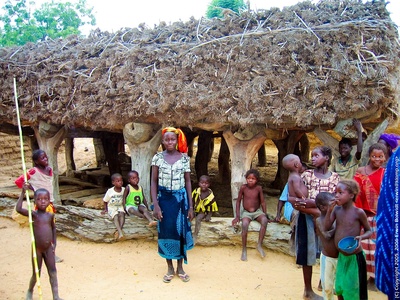
Dogon
The Dogon label covers a cluster of related Niger‑Congo languages spoken on the Bandiagara Escarpment and central Mali; many varieties are locally vigorous but some smaller Dogon tongues face endangerment due to migration and language shift to Bambara or French.
Tamasheq
Tamasheq (Tuareg) is a Berber (Afro‑Asiatic) language of nomadic and sedentary Tuareg communities across northern Mali (Kidal, Timbuktu, Gao); vitality varies, with many speakers maintaining traditions but some communities affected by displacement and declining intergenerational transmission.
Songhay
Songhay comprises several closely related languages along the Niger River in Gao, Timbuktu, and Mopti; many varieties like Koyra Chiini are regionally vital, used in trade and local media, while smaller northern variants risk declining speaker numbers.
Bozo
Bozo languages are spoken by riverine fishing communities along the Niger in Mopti and Timbuktu; they are Mande relatives with lively intergenerational use in many villages and a strong cultural identity tied to fishing and riverine life.
Senufo
Senufo languages are spoken in southern Mali (Sikasso region) by farming communities; part of the larger Senufo family, they remain actively used locally but are smaller in Mali compared with neighboring Ivory Coast and Burkina Faso populations.
Kassonké
Kassonké (Khassonké) is a Manding Mande language in the Kayes region and along the Senegal border; vigorous in rural communities, closely related to Bambara and Maninka, often mutually intelligible and central to local trade and social life.