Mongolia’s vast steppes and mountain valleys have shaped more than nomadic lifestyles — they’ve created pockets of speech that reflect local history, contact, and terrain. From highland clans to urban migrants, language in Mongolia shifts subtly from one region to the next.
There are 8 Dialects in Mongolia, ranging from Darkhad to Ulaanbaatar. For each, you’ll find below data organized by Region, Speakers (est.), Distinctive features so you can quickly compare where each variety is spoken, how many people use it, and what sets it apart — you’ll find below.
How different are these dialects from the standard language used in Ulaanbaatar?
Most varieties remain mutually intelligible with the Ulaanbaatar-based standard, especially within central and eastern areas, but regional speech can show distinct pronunciation, vocabulary, or grammar. Some northern or remote varieties preserve older forms or loanwords tied to local history, so comprehension may drop for speakers with no exposure.
How reliable are the “Speakers (est.)” figures in the list?
Speaker counts are estimates drawn from census data, field surveys, and linguistic studies; they can vary due to bilingualism, seasonal migration, and differing survey methods. Treat the numbers as approximate indicators of scale rather than exact headcounts.
Dialects in Mongolia
| Dialect | Region | Speakers (est.) | Distinctive features |
|---|---|---|---|
| Khalkha | Central, northern, eastern provinces of Mongolia | 2,400,000 | vowel harmony; palatalized consonants; unstressed vowel reduction |
| Ulaanbaatar | Ulaanbaatar city and surrounding suburbs | 1,000,000 | urban vocabulary; rapid speech; many Russian/English loans |
| Darkhad | Darkhad Valley, northwestern Khövsgöl aimag | 10,000 | archaic phonology; preserved long vowels; conservative grammar |
| Khotgoid | Northwestern Mongolia (Uvs, parts of Khovd, Bulgan areas) | 100,000 | consonant clusters; vowel shifts; transitional Oirat traits |
| Torgut | Western Mongolia (Khovd, Govi-Altai fringes) | 60,000 | Oirat reflexes; vowel quality differences; unique lexicon |
| Dörbet | Western Mongolia (Khovd, Uvs and nearby districts) | 40,000 | conservative consonant clusters; Oirat morphology |
| Oirat (Altai group) | Altai, Khovd, Bayan-Ölgii and Uvs regions (western Mongolia) | 150,000 | vowel mergers; preserved voiced consonants; unique vocabulary |
| Khoton | Khovd and surrounding western Mongolia communities | 3,000 | Oirat base with Turkic borrowings; unique lexical items |
Images and Descriptions

Khalkha
Khalkha is the dominant Mongolian dialect and the basis of the national standard, spoken across much of Mongolia. It features typical Mongolian vowel harmony, palatal contrasts and reduced unstressed vowels, serving as the main reference for media and education nationwide.
Ulaanbaatar
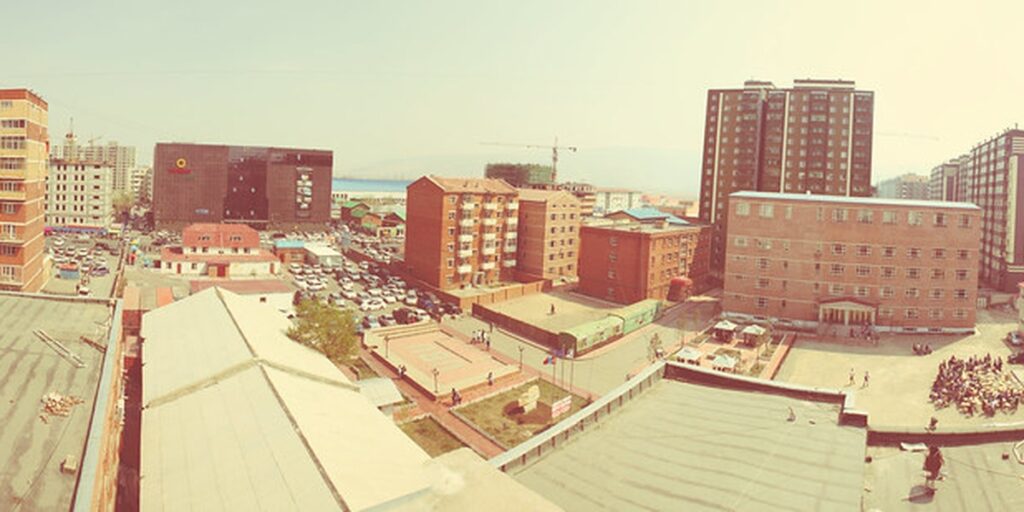
The Ulaanbaatar dialect is an urban Khalkha variety shaped by city life, migration and media. It shows faster speech, youth slang and many loanwords, making it distinct from rural Khalkha while remaining mutually intelligible with the national standard.
Darkhad
Darkhad is a conservative northern Khalkha variety found in a remote valley. It preserves older phonological and morphological features—such as long vowels and conservative inflection—making it important for studies of historical Mongolian and local identity.
Khotgoid
Khotgoid is a regional variety bridging Khalkha and western Oirat features. Spoken in northwestern provinces, it displays distinctive consonant clusters and vowel changes, reflecting contact with western Mongolic varieties and local innovations.
Torgut
Torgut is a western Mongolic variety with clear Oirat heritage, spoken in parts of Khovd and the Altai foothills. It differs from Khalkha in vowel quality and many lexical items, reflecting historical westward migrations and local cultural links.
Dörbet
Dörbet is an Oirat-speaking variety in western Mongolia notable for conservative consonant clusters and distinctive verbal morphology. It forms part of the broader Altai Oirat cluster and is important for understanding western Mongolian linguistic diversity.
Oirat (Altai group)
The Altai Oirat cluster comprises several western Mongolian varieties spoken across Mongolia’s far west. These dialects retain archaisms and differ substantially from Khalkha in phonology and lexicon, reflecting long-term western Mongolic traditions.
Khoton
Khoton speech is an Oirat-derived variety heavily influenced by neighboring Turkic languages in western Mongolia. Spoken by a small community, it features many loanwords and local phonetic traits that mark a distinct regional identity.