Tunisia sits at the crossroads of the Mediterranean and the Sahara, with a long history of migration, trade and empire that shaped a layered population. From coastal cities to mountain villages, the country’s communities reflect both indigenous roots and centuries of external influence.
There are 10 Tunisia Ethnic Groups, ranging from Amazigh (Berbers) to Turkish / Ottoman descendants (Kouloughli); for each, you’ll find below the key details organized as Population share (%),Main locations,Primary language(s), and other brief notes — you’ll find below.
Who are the Amazigh (Berbers) in Tunisia and where do they live?
The Amazigh are the indigenous peoples of North Africa, present in parts of southern and northwestern Tunisia (areas like Matmata, Chenini and some Atlas foothills). Many speak local Tamazight varieties alongside Arabic and maintain distinct place names, traditions and crafts, even as urban migration and language shift have reduced visible numbers.
What is the history and status of Turkish / Ottoman descendants (Kouloughli) in Tunisia?
Kouloughli descend from Ottoman soldiers and administrators who settled and intermarried locally during Ottoman rule; they are most associated with coastal cities such as Tunis and Sfax. Over generations they largely integrated linguistically into Arabic-speaking society, though family names, architecture and some cultural practices reflect their Ottoman heritage.
Tunisia Ethnic Groups
| Ethnic group | Population share (%) | Main locations | Primary language(s) |
|---|---|---|---|
| Arabs | 98% | Nationwide; major cities Tunis, Sfax, Sousse, Kairouan | Tunisian Arabic, Modern Standard Arabic, French widely used |
| Amazigh (Berbers) | 1–2% | Southern and central regions: Matmata, Tataouine, Chenini, Kasserine, Djerba pockets | Tunisian Berber dialects (various Tamazight forms), Tunisian Arabic bilingual |
| Black Tunisians (Sub‑Saharan descent) | 3–10% | Urban centers Tunis, Sfax, Sousse; southern oases and coastal towns | Tunisian Arabic; French and various Sub‑Saharan languages among recent migrants |
| Tunisian Jews | ≈0.01% (≈1,000) | Djerba (Hara), Tunis (La Goulette), historic communities in Sfax and Sousse | Historically Judeo‑Arabic; French and Hebrew used in religious life |
| European Tunisians (French, Italian, Maltese) | 0.1–0.5% | Coastal cities: Tunis, Bizerte, Sfax, Sousse, La Goulette | French, Italian, Maltese historically; many speak Arabic |
| Turkish / Ottoman descendants (Kouloughli) | 1–2% | Tunis, coastal regions, some inland towns | Tunisian Arabic; cultural memory of Ottoman Turkish |
| Romani / Dom (Nawar) | 0.1–0.5% | Urban neighborhoods in Tunis, Sfax; itinerant presence in central Tunisia | Domari/Romani varieties historically; Tunisian Arabic |
| Haratin | 0.5–2% | Southern oases and Sahara fringes: Tozeur, Kebili, Gafsa | Tunisian Arabic and Bedouin dialects; some Berber |
| Levantine Tunisians (Syrian, Lebanese descendants) | ≤0.1% | Tunis, Sfax, Sousse; historic merchant quarters | Levantine Arabic dialects, Tunisian Arabic, French |
| Andalusians / Spanish descendants (historic) | ≤0.1% historically | Historic quarters in Tunis and coastal towns | Spanish historically, now Tunisian Arabic and French |
Images and Descriptions
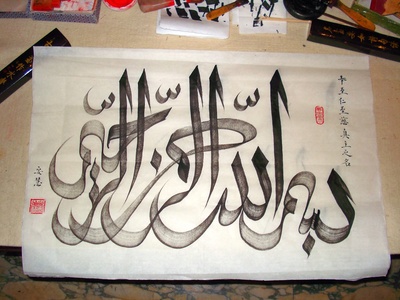
Arabs
The dominant group in Tunisia, largely Arabized people whose ancestry mixes indigenous Berbers with Arab settlers from the 7th century onward. Arabic language and Islamic traditions shape national culture, with strong French colonial-era linguistic and institutional influence.
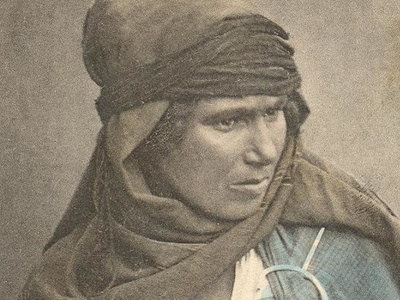
Amazigh (Berbers)
Indigenous North African peoples with millennia-old roots in Tunisia. Small, resilient communities preserve Berber languages, oral traditions, and distinct architecture in mountain and oasis towns while many have been culturally Arabized over centuries.

Black Tunisians (Sub‑Saharan descent)
A diverse group including descendants of historical Saharan trade, enslaved peoples, and recent migrants from West and Central Africa. They contribute to Tunisia’s cultural mix in music, cuisine, and urban neighborhoods, often facing social visibility and identity issues.
Tunisian Jews
One of North Africa’s oldest Jewish communities, once several tens of thousands strong. Centuries of distinctive liturgy, customs, and synagogues remain, especially on Djerba, though most left in the mid‑20th century.
European Tunisians (French, Italian, Maltese)
Descendants of colonial-era settlers and long-term merchant families from France, Italy and Malta. Once a sizeable minority, they now form a small but visible community preserving European languages, Catholic and Maltese cultural traditions.
Turkish / Ottoman descendants (Kouloughli)
Families descending from Ottoman soldiers and administrators who settled in the 16th–19th centuries. “Kouloughli” communities mixed Turkish and local customs, influencing cuisine, architecture, and elite lineages while largely speaking Arabic today.
Romani / Dom (Nawar)
Small groups of Romani/Dom people with long-standing presence in Tunisia, known for distinct crafts, music, and itinerant traditions. They are socially marginalised yet contribute to the country’s cultural diversity.
Haratin
A socially distinct Sahelian/Saharan community of darker‑skinned inhabitants often linked to oasis agriculture and desert pastoralism; their origins mix Berber and Sub‑Saharan ancestry with unique local customs and oral histories.
Levantine Tunisians (Syrian, Lebanese descendants)
Small, long-established merchant and professional families who migrated in the 19th–early 20th centuries from the Levant. They integrated economically and culturally while retaining family networks, culinary influences, and some distinct community institutions.
Andalusians / Spanish descendants (historic)
Descendants of Muslim and Jewish refugees from Iberia (16th–17th centuries) who settled in Tunisia. They influenced music, crafts, and urban culture; over generations most assimilated linguistically into Arabic but left lasting cultural legacies.