Papua New Guinea is one of the world’s most culturally diverse countries, with rugged highlands, coastal plains and river systems that have shaped distinct local identities for millennia. Travel or reading about the islands quickly makes clear how language, place and kinship connect people to specific landscapes.
There are 30 Papua New Guinea Ethnic Groups, ranging from Abelam to Yimas. For each group you’ll find below entries showing Region,Language family,Population (est) to indicate where they live, their linguistic ties and estimated size — you’ll find below.
How are ethnic groups in Papua New Guinea defined and why do population estimates differ?
Ethnic groups are usually identified by a mix of language, clan affiliation and local cultural practices; researchers rely on censuses, linguistic surveys and fieldwork. Estimates vary because many communities live in remote areas, self-identification can change, and surveys use different methods or dates, so the Population (est) column should be treated as an approximation.
Is this list useful for planning visits or research into communities?
Yes—as a starting point it shows where groups are centered and their language family, which helps plan fieldwork or respectful visits; however, always check recent local sources, obtain permissions, and follow cultural protocols because on-the-ground conditions and community access can change.
Papua New Guinea Ethnic Groups
| Name | Region | Language family | Population (est) |
|---|---|---|---|
| Enga | Enga Province (Highlands) | Engan (Trans–New Guinea) | 300,000 |
| Huli | Hela & Southern Highlands | Trans–New Guinea (Huli) | 200,000 |
| Melpa | Western Highlands (Waghi Valley) | Trans–New Guinea (Chimbu–Wahgi) | 120,000 |
| Kuman | Chimbu (Simbu) Province | Trans–New Guinea (Chimbu) | 150,000 |
| Fore | Eastern Highlands Province | Trans–New Guinea | 20,000 |
| Siane | Eastern Highlands Province | Trans–New Guinea | 60,000 |
| Telefol | Sandaun Province (Telefomin) | Trans–New Guinea (Ok) | 8,000 |
| Asaro | Eastern Highlands (Asaro Valley) | Trans–New Guinea | 20,000 |
| Iatmul | Middle Sepik, East Sepik Province | Sepik language family | 30,000 |
| Abelam | East Sepik Province (north of Sepik) | Sepik language family | 60,000 |
| Kwoma | Middle Sepik region | Sepik language family | 15,000 |
| Mundugumor | East Sepik (Angoram region) | Sepik language family | 6,000 |
| Yimas | East Sepik Province | Sepik language family | 2,000 |
| Gogodala | Western Province (Fly River) | Trans–New Guinea (Gogodala) | 25,000 |
| Kiwai | Western & Southern Fly River (Kiwai Islands) | Kiwaian (Papuan) | 20,000 |
| Motu | Central Province (Port Moresby region) | Austronesian (Oceanic, Motuan) | 25,000 |
| Koitabu | Central Province (around Port Moresby) | Austronesian (Motuan) | 12,000 |
| Mekeo | Central Province (south coast) | Austronesian (Oceanic) | 20,000 |
| Orokaiva | Oro (Northern) Province & surrounding lowlands | Binanderean / Trans–New Guinea | 80,000 |
| Tolai | Gazelle Peninsula, East New Britain | Austronesian (Kuanua) | 150,000 |
| Baining | East New Britain (Baining Mountains) | Papuan (Baining families) | 30,000 |
| Manam | Manam Island, Madang Province | Austronesian (Oceanic) | 7,000 |
| Kalam | Madang Highlands fringe (Kalam Valley) | Trans–New Guinea | 10,000 |
| Nalik | New Ireland (northern coast) | Austronesian (Meso‑Melanesian) | 25,000 |
| Rotokas | Central Bougainville | East Papuan (Rotokas) | 4,500 |
| Nasioi | Central–Southern Bougainville | North Bougainville family | 9,000 |
| Kiriwina (Trobriand) | Trobriand Islands, Milne Bay Province | Austronesian (Massim/Papuan Tip) | 20,000 |
| Dobu | Massim islands & D’Entrecasteaux region | Austronesian (Massim) | 5,000 |
| Suau | Milne Bay Province (southeast coast) | Austronesian (Papuan Tip) | 10,000 |
| Mailu | Central Province (south coast islands) | Austronesian (Papuan Tip) | 3,000 |
Images and Descriptions

Enga
The Enga are the largest Highland people, rooted in Enga Province. Famous for intensive sweet potato farming, pig exchange and strong clan identity, they host large festivals and remain influential in provincial politics and Highland cultural life.
Huli
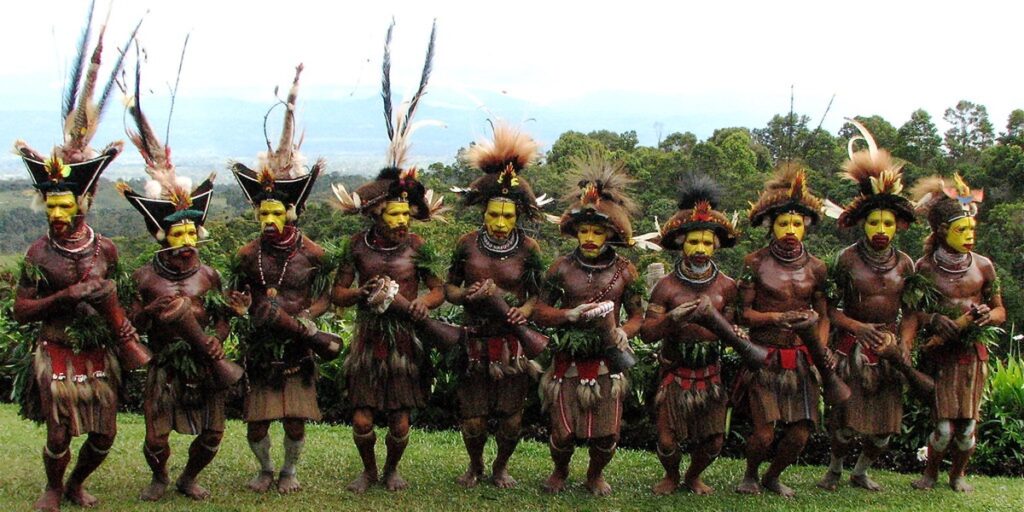
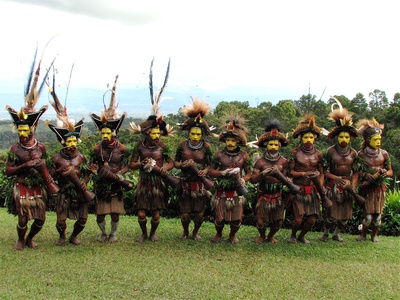
Huli people occupy the southern Highlands with striking wigmen traditions and painted body art. Huli society features elaborate ritual dress, male initiation, and a reputation for colorful performance and strong cultural continuity amid modern change.
Melpa
Melpa speakers of the Waghi Valley are known for the Mount Hagen cultural scene, elaborated sing‑sing performances and yam cultivation. Their art, ceremonial exchange and market ties connect Highlands cultural life to national urban centers.
Kuman
Kuman people dominate Chimbu Province high valleys, with strong clan ties, pig-based exchange systems and distinctive oral traditions. Their festivals, including sing‑sing and warfare history, make them central to Highland anthropology and local politics.
Fore
The Fore live in the Eastern Highlands and are widely known for the kuru disease history studied by anthropologists. Their gardening, kinship networks and initiation ceremonies shape community life, and they maintain distinctive mortuary customs.
Siane
Siane communities live in Eastern Highlands uplands, practicing gardens, pig exchange and elaborate ceremonial life. They are known for intricate ritual speech, shell‑money use, and participation in regional sing‑sing gatherings that reinforce clan identity.
Telefol
Telefol people of the Telefomin area live in rugged highland terrain and maintain complex ritual systems, including secret cults and yam‑oriented exchange. Their language and ceremonial life are important for studies of Papuan highland social organization.
Asaro
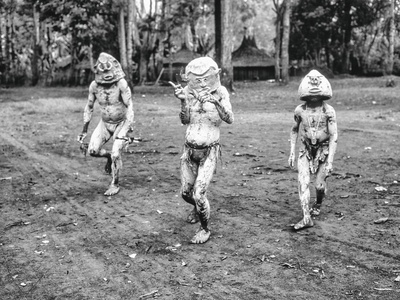
Asaro Valley people gained global notice for the Asaro “mudmen” masks used in performance. Beyond the spectacle, Asaro communities engage in intensive gardening, clan ritual life and trade with highland market towns.
Iatmul
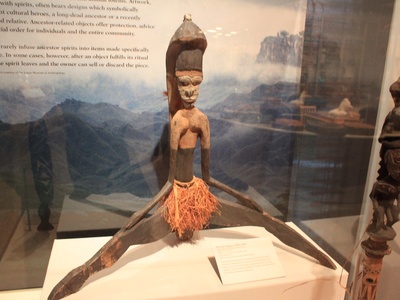
Iatmul people live along the Middle Sepik with famous carved houses, ancestor pole art and competitive yam displays. Riverine life, canoe trade and elaborate spirit houses make Iatmul culture a highlight of Sepik artistic traditions.
Abelam
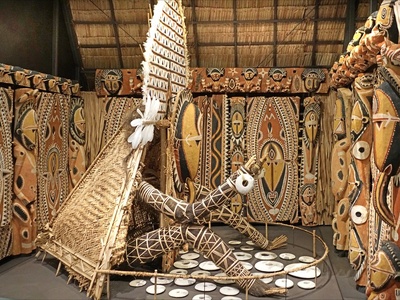
Abelam communities in the Sepik are celebrated for massive ceremonial yam gardens, body decoration and ritualized initiation. Their richly symbolic carvings and communal feast cycles attract ethnographers interested in art, agriculture and social ritual.
Kwoma
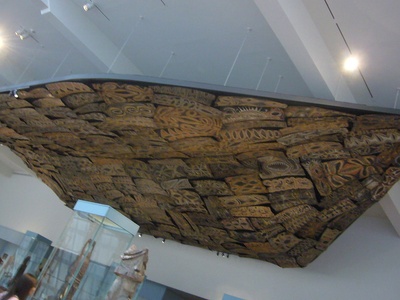
Kwoma people live along tributaries of the Sepik and are known for carved wooden figures, initiation rites and elaborated ceremonial houses. Their river‑based economy, fishery skills and clan art help sustain strong local identities.
Mundugumor
Mundugumor (Biwat) were famously described by anthropologists for their distinctive gender roles and fierce reputation. Riverine and forest resources shape subsistence; ceremonial life centers on feasting, exchange and ancestral sculptures.
Yimas
Yimas is a small Sepik river community with a highly distinctive language and ritual life. Ethnolinguists have studied Yimas grammar intensively; villagers sustain fishing, sago and yam cultivation alongside clan ceremonies.
Gogodala
Gogodala people live in the Fly River delta with canoe culture, sago and gardening economies. They are recognized for large river‑based exchange networks, mythic traditions and resilient livelihoods in a challenging wetland environment.
Kiwai
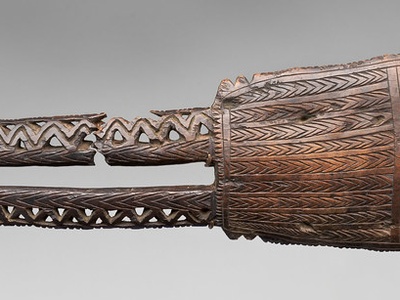
Kiwai islanders and river communities have long canoe traditions, crocodile lore and oral histories spanning coastal and inland river life. Kiwai languages and clan structures help organize trade, fishing and ceremonial exchange across the delta.
Motu
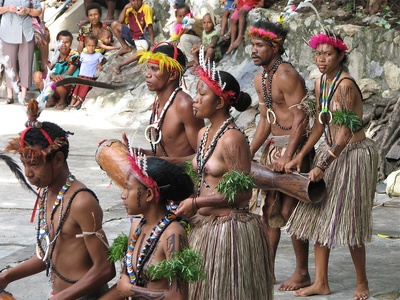
Motu people are central to Port Moresby’s pre‑colonial history, famed for the Hiri canoe trade and Motuan pottery. Today Motu cultural practices, language and singing remain influential in urban coastal identity and Papua New Guinea’s colonial history.
Koitabu
Koitabu live on the outskirts of Port Moresby with traditional ties to Motu trade networks. They maintain unique dances, salt and shell exchange traditions, and face rapid urban pressures while preserving coastal customs.
Mekeo
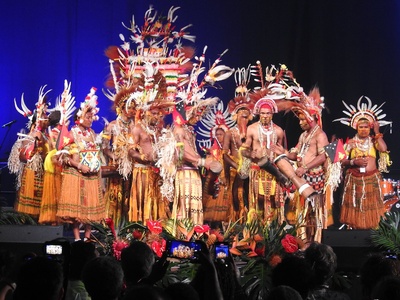
Mekeo communities occupy coastal plains and islands south of Port Moresby with distinct dance styles, gardening practices and clan rituals. Their coastal lifeways combine fishing, horticulture and long‑standing ceremonial exchange.
Orokaiva
Orokaiva peoples inhabit Oro Province and nearby areas with strong village organization, yam cultivation and elaborate mortuary and initiation rites. They played key roles in regional missions and retain visible cultural celebrations.
Tolai
Tolai from the Gazelle Peninsula around Rabaul are prominent for Lavongai exchange, shell money, and vibrant kava and dance ceremonies. Their language Kuanua and active political role make them one of Papua New Guinea’s best‑known coastal peoples.
Baining
Baining mountain peoples are famed for dramatic masked dances and bark cloth traditions used in initiation and ritual. Living on volcanic soils, they maintain gardening economies and tightly knit clan festivals that draw cultural tourism and study.
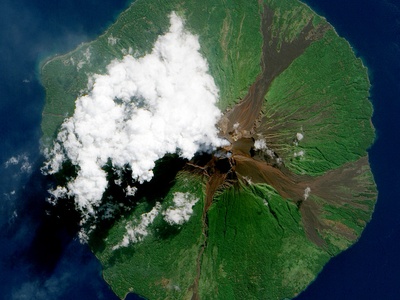
Manam
Manam islanders have a long seafaring tradition and a strong attachment to their volcanic island. Recurrent eruptions have driven migration, but Manam culture—canoe skills, tattoos and community songs—remains vibrant among diasporic and island residents.
Kalam
Kalam people live in higher Madang valleys and are well known to ethnographers for detailed knowledge of hunting, plant classification and ritual. Their skilled gardening, mythic narratives and forest expertise are widely studied.
Nalik
Nalik communities on New Ireland practice yam cultivation, ornate shell‑money exchange and carving traditions. Massim and island exchange systems connect Nalik society to wider regional networks and seasonal ceremonial life.
Rotokas
Rotokas people of central Bougainville are notable for one of the world’s smallest phoneme inventories and compact languages. Their village life centers on gardening, canoe travel and distinct cultural festivals in Bougainville’s mosaic of island and highland groups.
Nasioi
Nasioi people inhabit central Bougainville with gardening, sweet potato production and strong kinship groups. They sustained resilient cultural practices through conflict and have distinctive dance, oral history and mortuary traditions.
Kiriwina (Trobriand)
Kiriwina people of the Trobriand Islands are famous from anthropological work on matrilineal clans, the kula trading ring and elaborate yam ceremonies. Their seafaring, canoe building and carnivalized festivals draw global attention.
Dobu
Dobu islanders participate in the wider Massim kula exchange system and are known for dense kastom (custom) networks. Their myths, shell‑money practices and seafaring connections anchor social life across the island chains.
Suau
Suau coastal communities engage in fishing, gardening and inter‑island exchange. Their language and dance traditions reflect Papuan Tip cultural links, with strong village identities and participation in regional seafaring networks.
Mailu
Mailu islanders live on small islands south of Port Moresby and are known for coastal arts, ritual canoe travel and place‑based sacred knowledge. Small communities maintain strong oral history and ceremonial exchange despite urban pressures.